From grain to natural materials
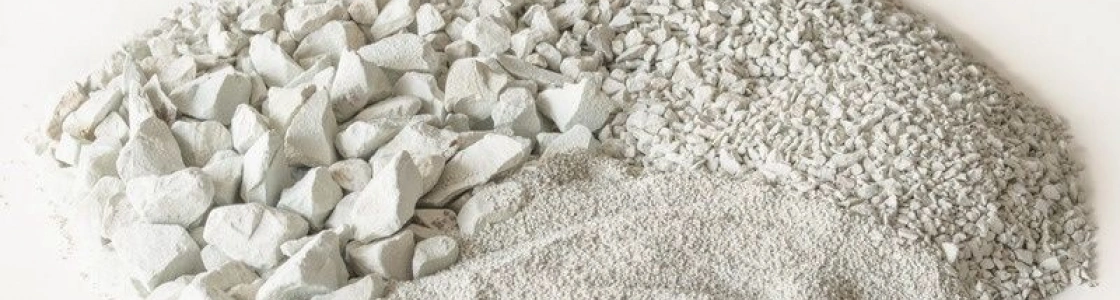
From grain to natural materials!
In today's dynamic manufacturing environment, the concept of "multifunctionality" is widely used in various types of industries. The level of multifunctionality in many cases is one of the main indicators of the stability and professionalism of an enterprise, as well as one of the main arguments in competition. Our enterprise corresponds to this concept - we are talking about the capabilities of our technology for calibrating not only grain crops, but also fine mixtures, lumps and bulk materials.
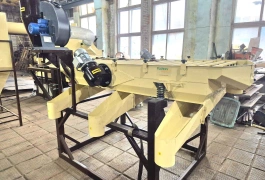
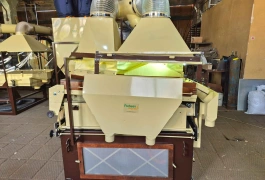
We already have experience in working with bulk materials; we manufactured Fadeev sieves (Fig. 1) for the “Grokhot” equipment ( Fig. 2) - equipment for sifting lump (granular) and bulk materials by size in order to obtain products of different particle size distributions.
Our sieves have proven themselves well when sifting limestone. In this case, the cell size (a) was 1.0 mm, the sieve dimensions were 1750x4800 ( Fig. 3).
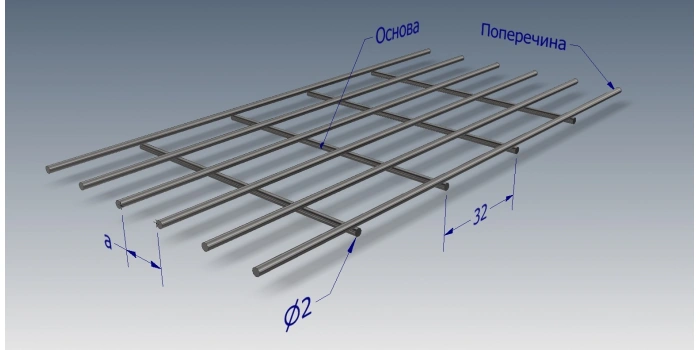
Figure 1. Fadeev sieve

Figure 2. Rumble
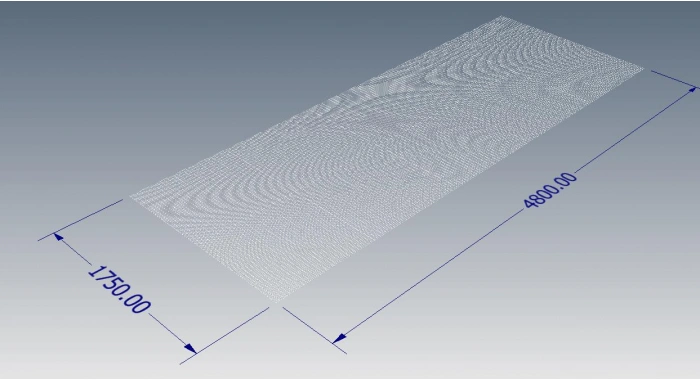
Figure 3. Sieve for “Roar”
Now we are faced with the problem of zeolite calibration ( Fig. 4).
Zeolite is a valuable natural mineral that is used in livestock farming as a mineral feed additive to strengthen the immune system, normalize metabolism and prevent gastrointestinal diseases in animals. It promotes the emergence and preservation of healthy offspring, ensures healthy growth, strength and restoration of the protective capabilities of the animal’s body.
Natural zeolite is also excellent for increasing crop yields. This mineral retains water inside itself, perfectly aerates the soil, stimulates the development of the root system of plants, and prolongs the effect of fertilizers - nitrate, phosphate, potassium and other nutrients.
Zeolite has an unusually wide range of industrial applications. It is actively used in petrochemistry - as a desiccant for gases and media, for cleaning drinking and industrial waters, for removing radionuclides and deferrizing water, and in construction - as an additive to cement. It is also used in the life support systems of the ISS space station to absorb carbon dioxide released during breathing.
The main reserves of natural zeolites are concentrated in Europe, Russia, Japan and the USA. The volume of reserves of natural zeolites in the CIS countries is about 1.6 billion tons. One of the largest and most expedient deposits from the point of view of development is located in Ukraine (Sokirnitskoye).
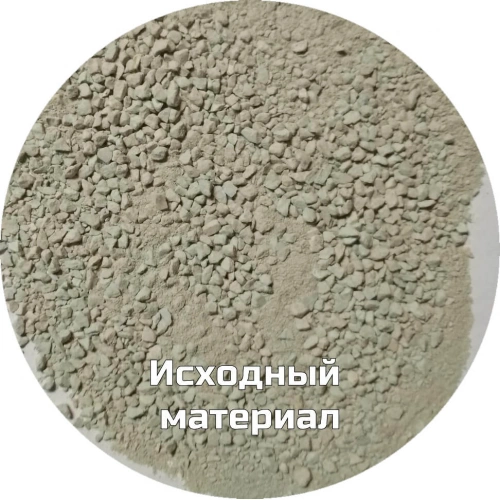
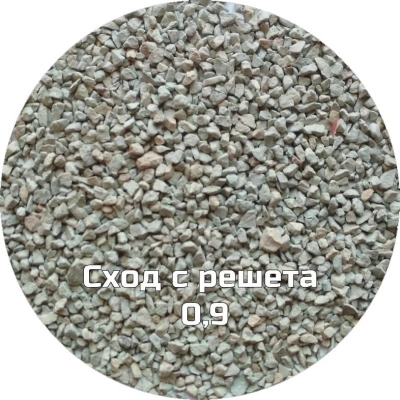
Figure 4. Zeolite
Figure 4 shows that the mineral has particles of different sizes from 0.02 mm or more. The size of these particles is important for their use in different industries, so the zeolite must be calibrated into fractions. Our calibration technology allows us to divide the mineral into fractions from 0.1 to any size in increments of 0.1 mm - for this you can use either one OKMF (Fadeev cleaning and calibrating machine) “Compact 1-2”, or an entire line of Compacts 1-2 or 1-3, and it becomes possible to calibrate 4 or more fractions in one pass.
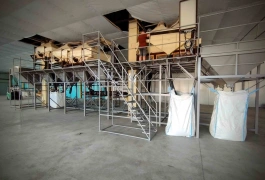
As a test calibration, we used OKMF “Compact 1-2” (Fig. 5) with 4 separation fractions. For more efficient calibration, it is better to use “Compact 1-3” with 5 separation fractions (Fig. 6).
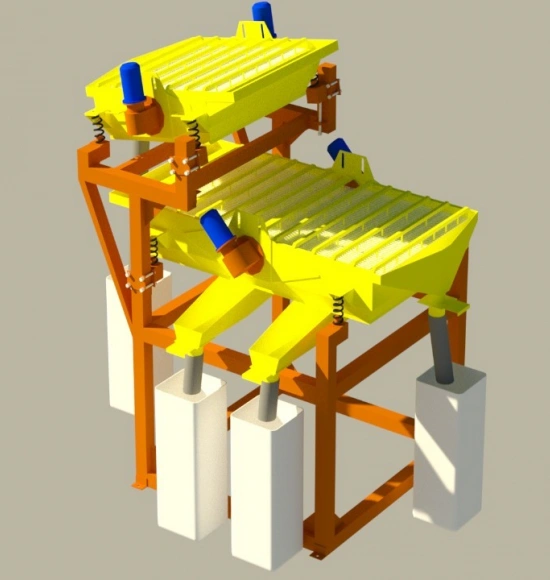
Figure 5. Compact 1-2
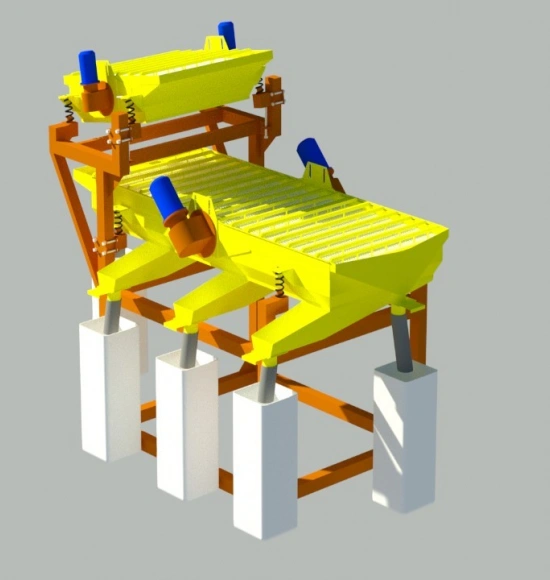
Figure 6. Compact 1-3
Below in fig. 7 shows the zeolite calibration scheme on "Compact 1-2"
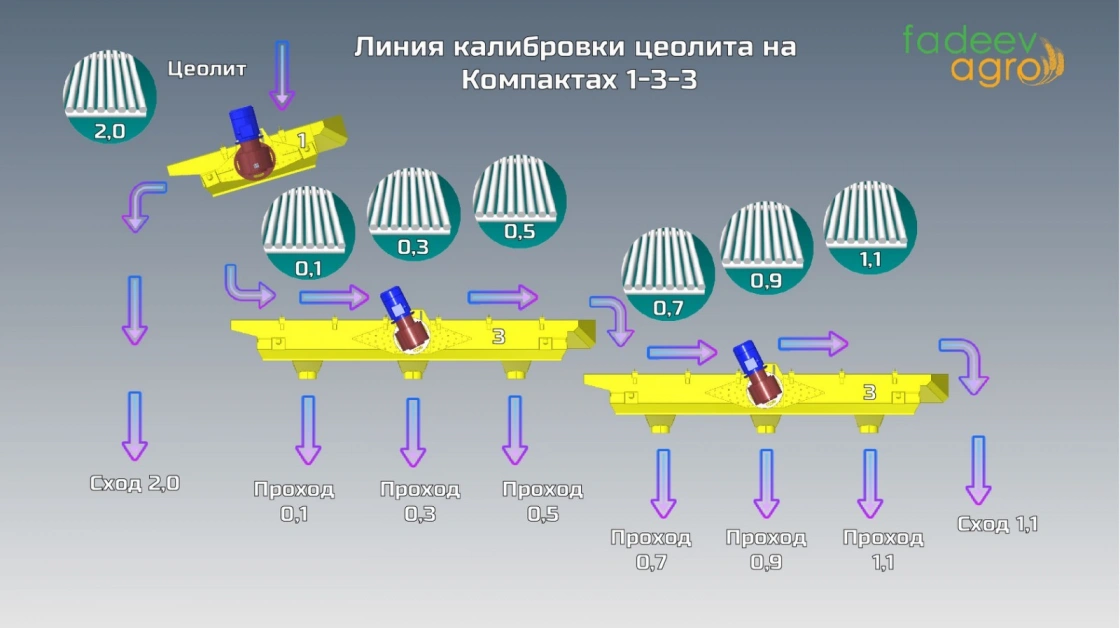
Figure 7. Compact 1-2
The zeolite is fed to the upper module of the calibrator, where Fadeev gratings with a size of 0.9 mm are installed. On this sieve, we separate the large fraction, particle sizes from 0.9 mm and more (pass 0.9), then the material passes to the lower module, on it we calibrate particles with a size of 0.1 and smaller (pass 0.1), particles with size greater than 0.1 but less than 0.2 mm (pass 0.2) and particles greater than 0.2 (descent 0.2).
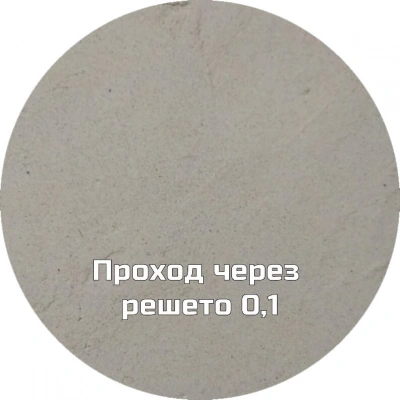
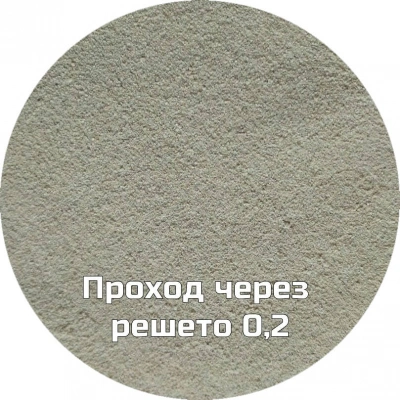
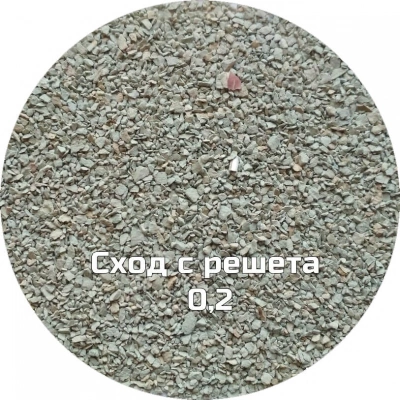
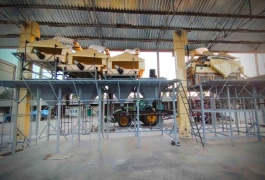
To calibrate zeolite into 8 fractions in one pass, you can use a line of calibrators 1-3-3 (Fig. 8):
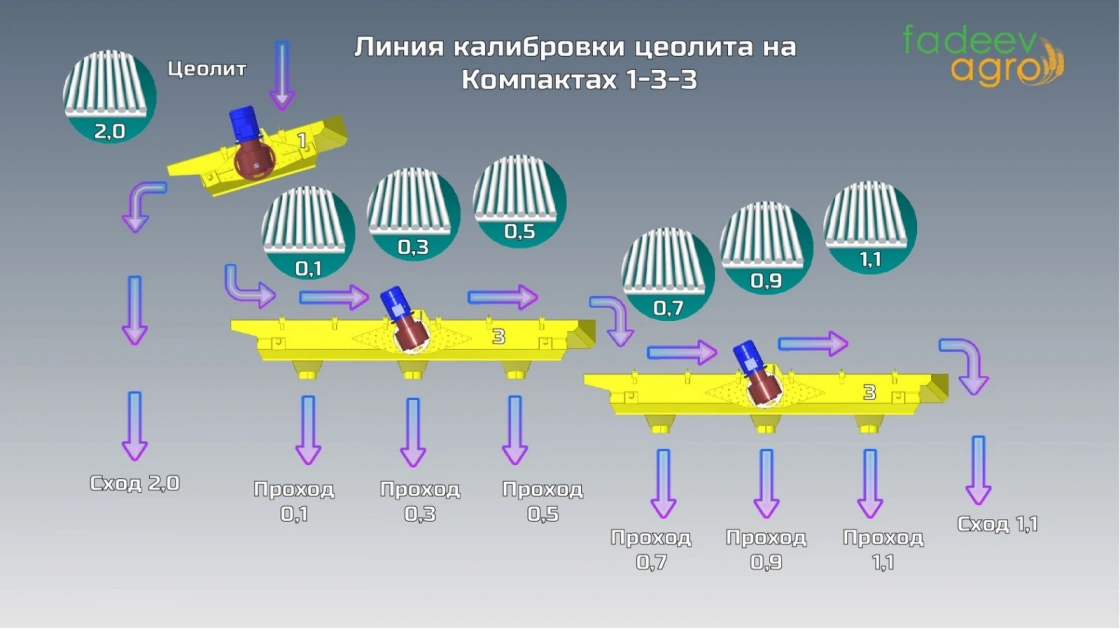
Figure 8. Zeolite calibration line on Fadeev calibrators