Mobile seed factories – solving seed production problems on site!
Mobile seed factories – solving seed production problems on site!
May 2020
The more information comes in about global quarantine, the more credible the statement becomes – the world will change after this scourge. The basis of the changes is strengthening social and economic autonomy, primarily in two directions - healthcare and food security.
Let medical specialists justify the necessary changes in healthcare, but as for food security, what kind of security can we talk about in an agricultural country if about 80% of seeds are supplied from abroad!
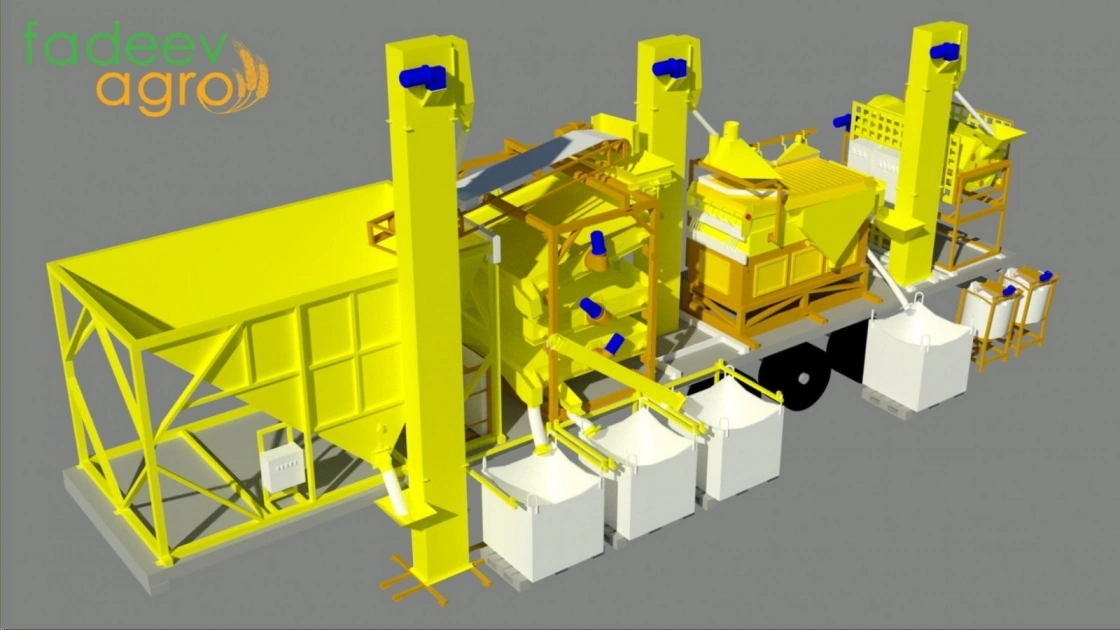
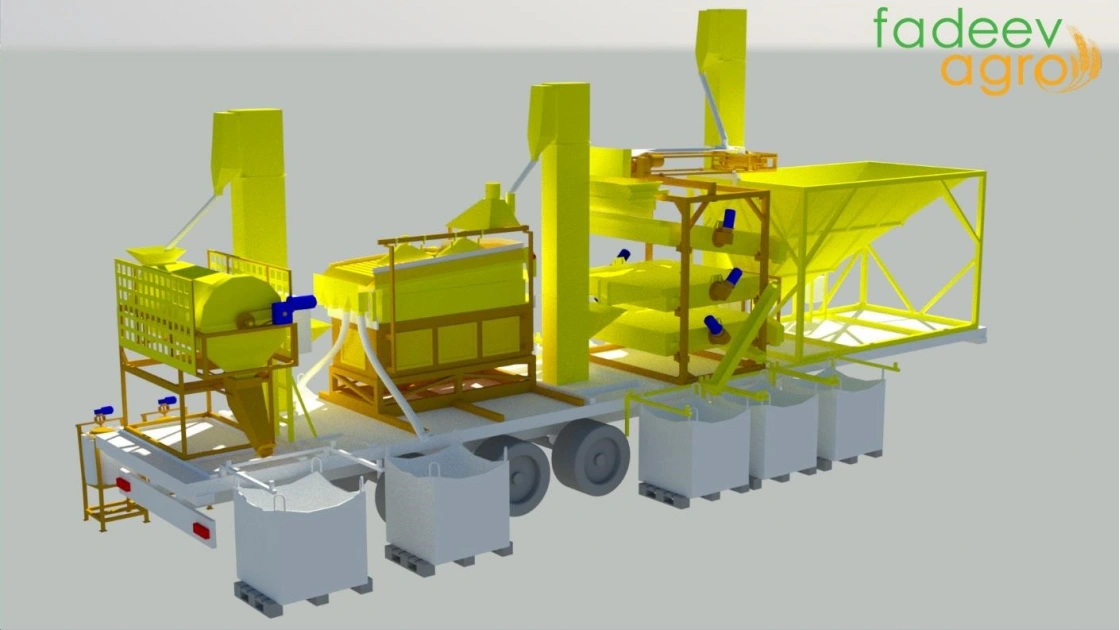
Figure 1. Mobile seed plant
A relatively quick and relatively inexpensive solution to the problem of seed production is mobile seed factories.
Despite the compactness of the mobile plant, it fully implements gentle fractional technology for the production of strong seeds.
Namely:
— all elevators are slow-moving and do not injure seeds
— only large seeds are selected from the seed material
— seeds are calibrated by size and shape, i.e. completed seeds are selected
— the heaviest ones stand out from large calibrated seeds on a pneumatic vibrating table
— pre-sowing treatment of seeds is carried out with both protective preparations and inoculants.
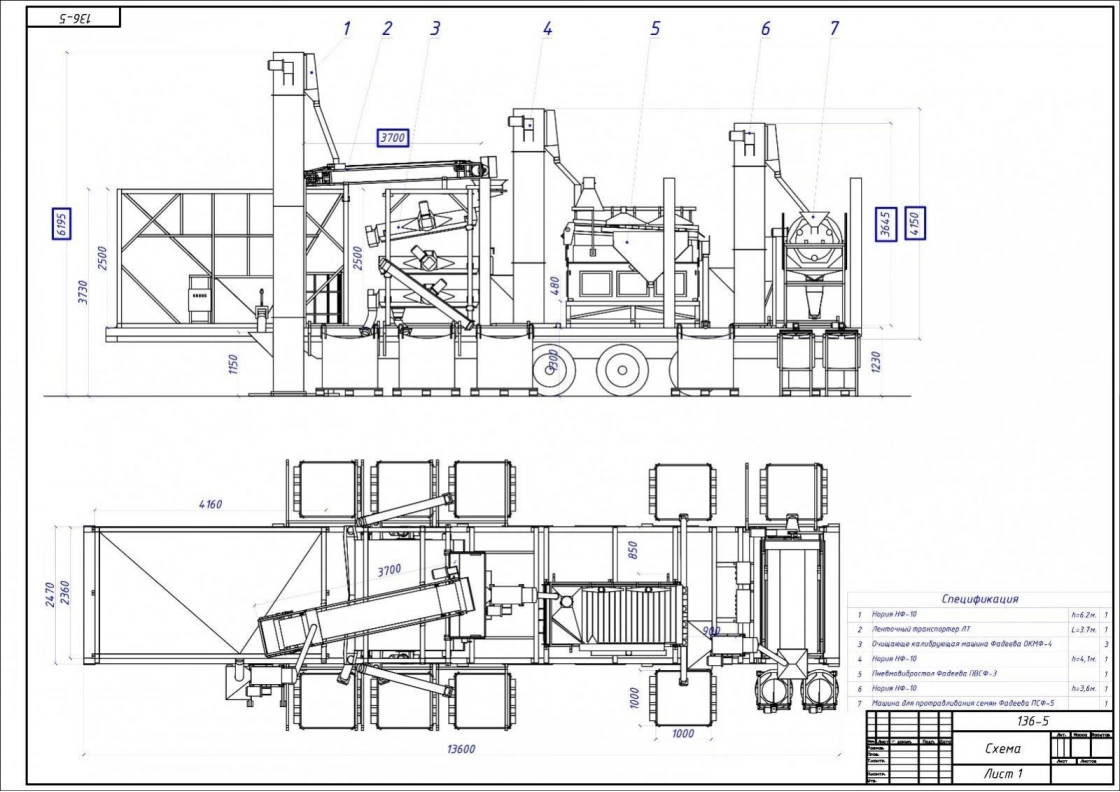
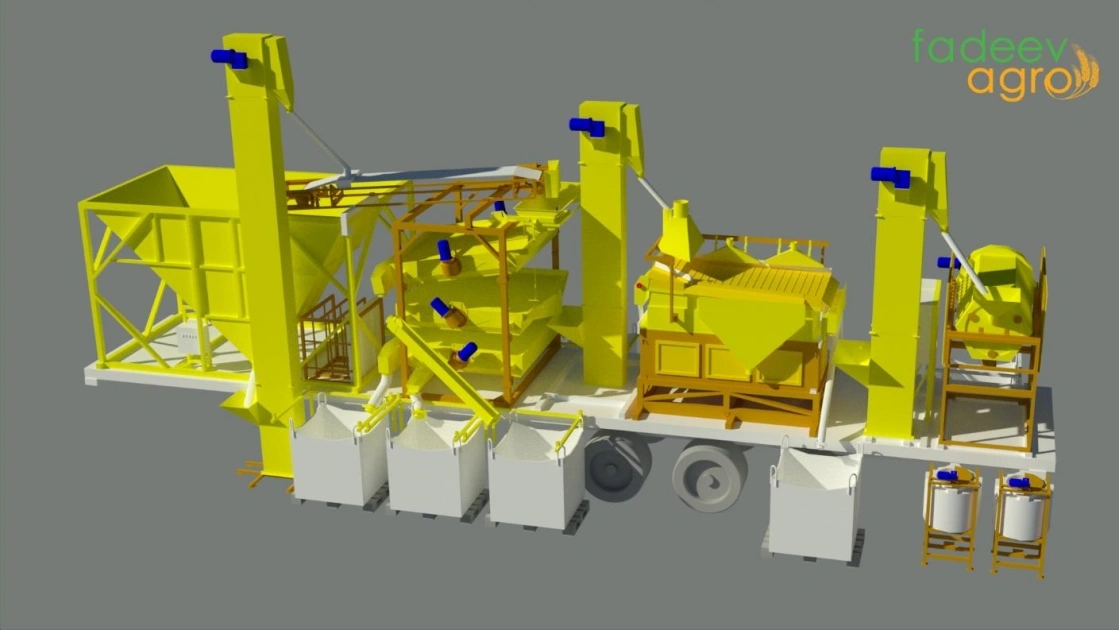
Figure 2. Drawing and specification of a mobile plant
This mobile complex is not a test prototype, but a fully functioning mini-factory (customer - Agricom Group LLC). It was launched and tested in action in September 2019.
Using Fadeev’s gentle fractional technology for the production of strong seeds, winter wheat seeds in the amount of 500 tons were successfully prepared in the Lugansk region and 150 tons in the Chernigov region. Also, in the Zhytomyr region, black bean seeds were prepared for sowing at this complex.

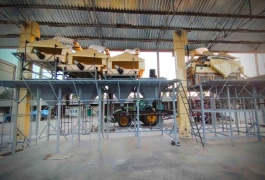
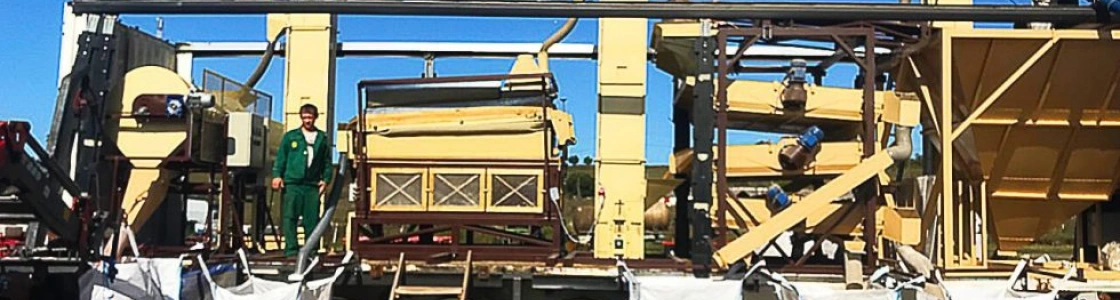
Photo. Mobile plant in operation
The technology of the process of preparing seed material on a mobile complex is no different from stationary seed plants. The layout of the equipment on the trailer was optimally adapted to the dimensions of the truck trailer. To service this complex, a forklift is required to transport the source and prepared material.
The source material is fed into the receiving hopper (1), then using an NF-10 elevator (2.1) with a height of 6.7 m, the grain is fed through a belt conveyor (3) to a vertical calibration line, which consists of 3 OKMF-4 (cleaning Fadeev calibrating machine).
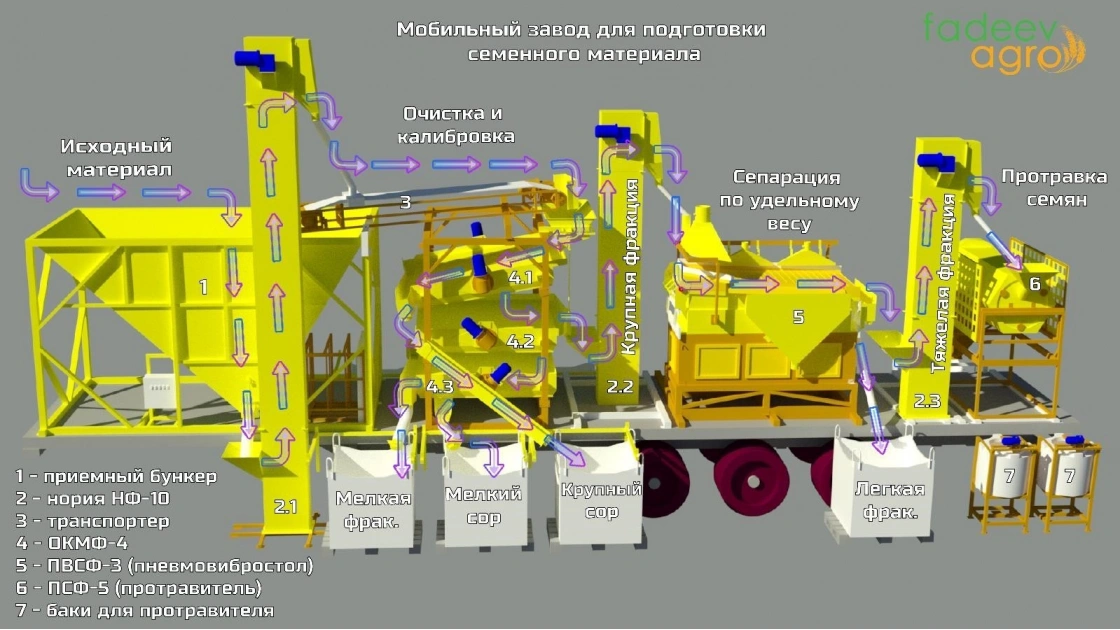
Figure 3. Process technology in a mobile plant
On the first calibrator (4.1), we select large debris using sieves or Fadeev sieves, depending on the type of grain crop. The discarded rubbish is sent to the “Large Waste” big bag.
Everything that passes through the sieve/sieve on the calibrator (4.1) ends up on the calibrator (4.2). Here we select the “Large fraction” - the removal from the sieve/sieve. The passage on the calibrator (4.2) goes to the calibrator (4.3), where the separation of the “Fine Fraction” from the “Small Rubbish” takes place.
Using an NF-10 (2.2) elevator with a height of 4.1 m, we feed the “large fraction” to PVSF-3 (Fadeev’s pneumatic vibration table) for separation by specific gravity. Heavy seeds “Heavy fraction” are sent to PSF-5 (seed dressing machine), where a film-forming composition with the addition of organic, mineral fungicides, insecticides, growth stimulants, microelements and a coloring composition is applied to the surface of the seeds, “Light fraction” with PVSF-3 served in a separate big bag.
The potential and prospects of this complex, without any exaggeration, are colossal; Fadeev Agro Plant LLC relies on such projects, since they are extremely necessary for the development of the agro-industrial complex of Ukraine!