Cleaning winter wheat from Aegilops cylindrical
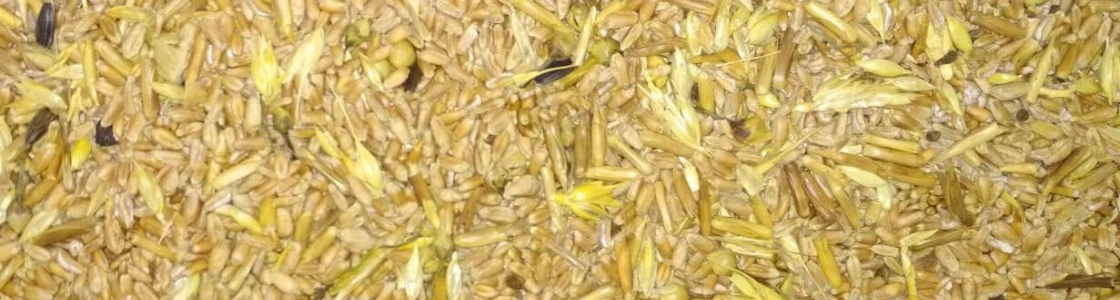
Cleaning winter wheat from Aegilops cylindrical
AEGILOPS CYLINDRICAL. HARMFUL COMPANION OF WINTER WHEAT
Not being an agronomist, I am happy when fate introduces me to the problems of agribusiness. This is exactly what happened when Svitanok Stari Mayaki LLC approached us with a request to select seeds of a weed such as Aegilops cylindrical from wheat seeds.
I admit to ignorance, I didn’t pronounce the name the first time. The fact is that
LLC "Svitanok Stari Mayaki" is a seed farm and because of this difficult-to-separate weed, the farm was forced to abandon seed production and sell the seed material as marketable grain.
I had to look into the problem. Aegilops cylindrical is a widespread weed and creates problems in the cultivation of cereal crops in Eastern Europe, the Caucasus, the Eastern Mediterranean, Asia Minor, Iran, North America and other countries.
Its widespread use is due to the following:
- It reproduces by seeds, but the seeds are little distinguishable in shape and size from the seeds of cereal crops, which creates difficulty in cleaning the seeds of cultivated plants.
- One Aegilops cylindrical plant can produce up to 3000 seeds.
- The viability of seeds when they are in the soil is at least four years.
- Aegilops cylindrical and winter wheat have the same life cycles.
- The weed is winter-hardy and drought-resistant. Soil salinity does not affect its development. Absolutely unpretentious to soil composition - grows on poor and sandy soils and rocky rocks, on roadsides and at elevations up to 2000m above sea level [1]
- Aegilops cylindrical grows actively in arid zones.
- Its peculiarity is that this weed, as a plant, is practically no different from the winter wheat plant.
The only visual difference is the presence of hairs on the edge of the leaf blade (Fig. 1)
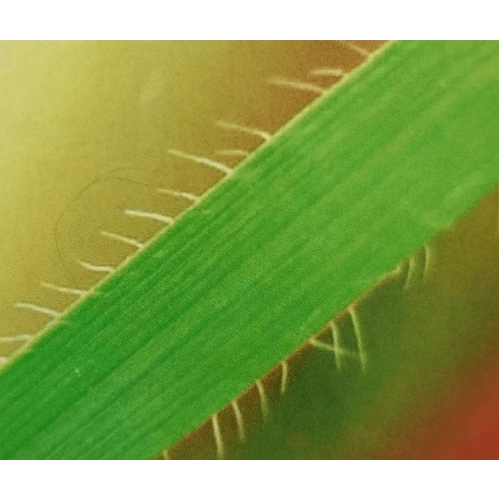
Figure 1 The visual difference between Aegilops cylindrical and winter wheat is the hairs along the edge of the leaf blade.
The persistence of this weed is evidenced by the fact that it was brought to the USA in 1800 and is still a “nightmare” for farmers. Aegilops cylindrical leads to a decrease in the yield of winter wheat by up to 30% or more (US states of Idaho and Nevada) [1], in addition, when harvesting wheat, the prickly spikelets of the weed clog the working parts of the combine. The insufficient purification of grain from this weed reduces the price of wheat. All this confirms the importance of cleaning grain from Aegilops cylindrical and, even more so, the importance of cleaning seeds.
For me, as an ardent supporter of the need to restore natural soil fertility, it is especially upsetting that deep plowing is proposed to combat this weed, since Aegilops cylindrical seeds do not germinate from a depth of more than 10 - 12 cm.
The next unpleasant thing is that recommendations for the fight against aegilops continue to use glyphosate, which is now prohibited for use in many countries. When we receive the source material for cleaning, the first thing we do is determine the distinctive features of weed particles from uninjured healthy grain. In the case of Aegilops cylindrical, it turned out that the seeds of this weed are slightly lighter than wheat seeds of the same size. This predetermined the technology for removing Aegilops cylindrical seeds - strict calibration of seeds by thickness on Fadeev sieves and subsequent fractional separation by density on a pneumatic vibrating table, then PVA.
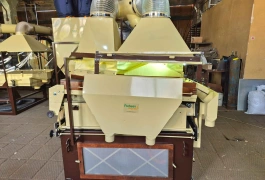
It is advisable, to select the size for the purpose of removing Aegilops from winter wheat, to use a small-sized cleaning and calibrating machine of the “Compact” type.
This is exactly what was done (Fig. 2)
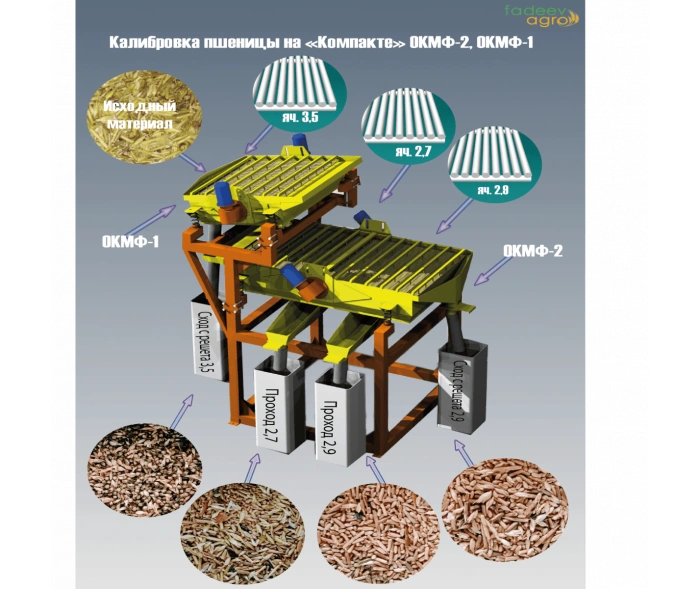
Figure 2. Results of determining the necessary sieves for cleaning wheat grain from Aegilops.
Large plant debris came off the 3.5 mm sieve, and the mixture of wheat and aegilops grains was divided into three fractions:
— Passage through sieve 2.7 mm
— Passage through the sieve 2.9 mm
— Discharge from the sieve 2.9 mm
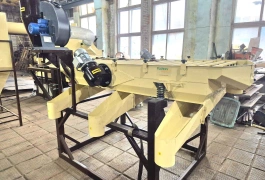
Our competitive advantage is that we can produce sieves of any size with a pitch of 0.1 mm. After calibration by size, each fraction is individually subjected to density separation on PVA to remove lighter, but identical in size to wheat grain, Aegilops seeds Fig. 3.

Rice. 3 Fractional separation of wheat grain mixture from Egilops
As a result of this separation, three fractions come off the deck of the pneumatic vibration table
— Pure wheat (≈85% of the starting material);
— Aegilops seeds (≈5%);
- a small amount of unseparated mixture of grain and aegilops (≈10%) (Fig. 3)
After accumulation, this mixture is re-sent to the PVA to remove Aegilops seeds from it.
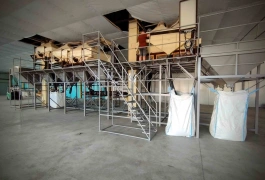
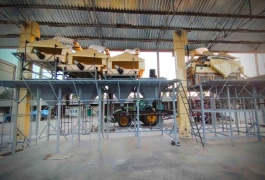
A full-size line for such cleaning is shown in Fig. 4
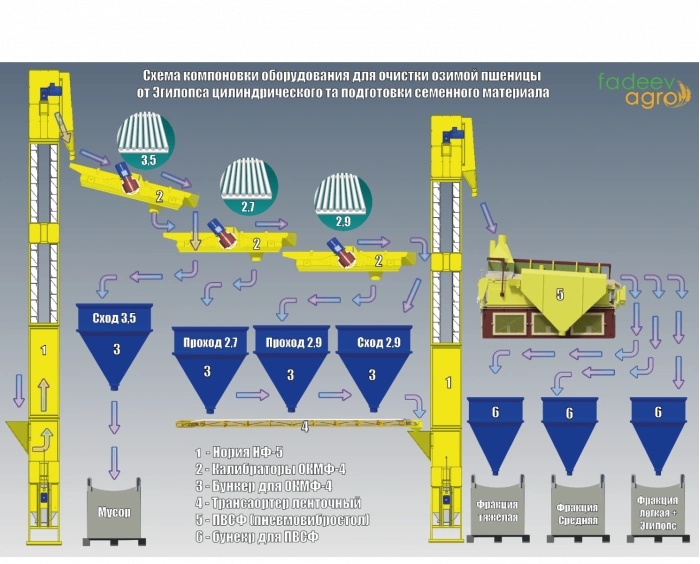
Fig.4 Complex for cleaning cereal crops from Aegilops.
Thus, the proposed technology for cleaning commercial wheat (and especially seeds) from Aegilops allows us to solve the problem and remove this weed from the fields of Ukraine.
[1] Egilops cylindrical: biological features and control methods, agronomist No. 4 leaf fall 2019.