Fadeeva Sitting
Fadeev sieve of new geometry
Today, the high demand for sieves of new geometry is primarily due to improved quality of grain cleaning and increased productivity of the machines on which they are installed.
In my opinion, no less, and perhaps more important, is the reduction, and sometimes complete elimination, of injury to grain and seeds during cleaning and calibration. Cleaning sieves cut from sheets using brushes or scrapers cannot but injure the grain.
A grain stuck in a sieve cut from a thin steel sheet, with burrs around the perimeter of the holes, when a brush or scraper “hits” it, it is loaded with a fracture and a cut (Fig. 101), while the situation is worsened by vibration of the sieve with a frequency of 10- 15 vibrations per second. And since the speed of movement of the brush is much slower than the speed of movement of the sieve when it oscillates, it turns out that the brush fixes the achene so that it is more likely to be destroyed by the oscillating sieve. We do not see these microtraumas (cut protective shell of the grain), but the paint method easily detects them.
So, the chief designer of OJSC Kuzembetyevsky RMZ, A.M. Gimadiev, in the article “Injury to seeds” (2010), provides the following data. When processing seeds on standard sieves located with the burrs down, the amount of seed injury is 3.25-3.75%, and when installed with the burrs up - 4.8-5.6%. It is clear that brushes and scrapers are an anachronism from 100 years ago; on all modern machines, cleaning is performed with elastic balls.
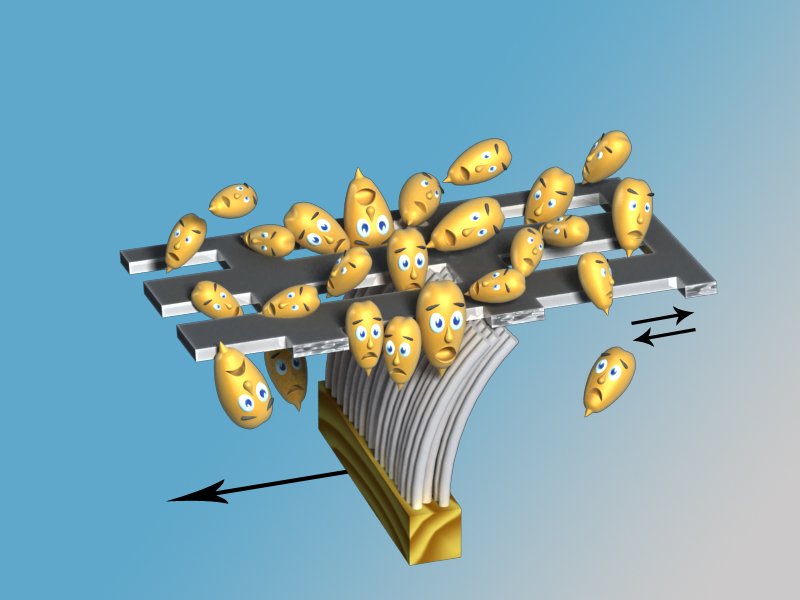
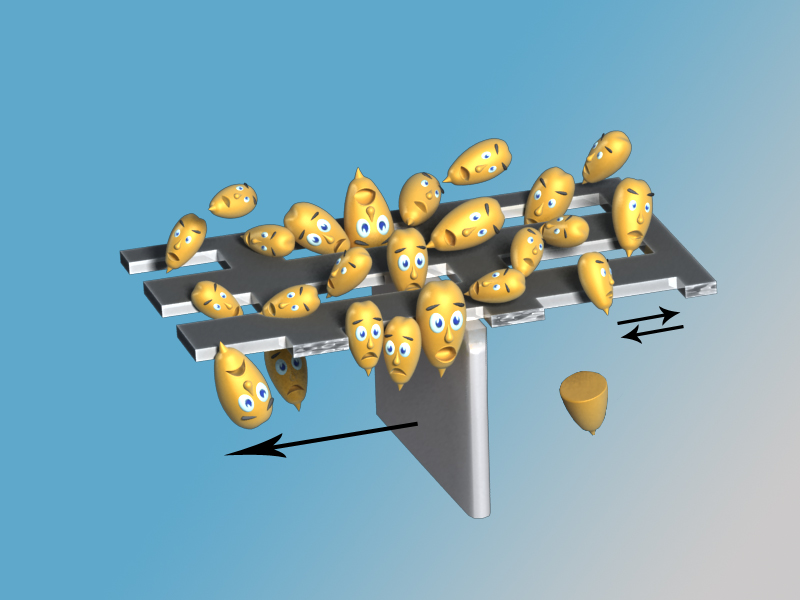
But our sieves prevent injury even where brushes are installed. Because the grilles not only have no burrs, but also no corners.
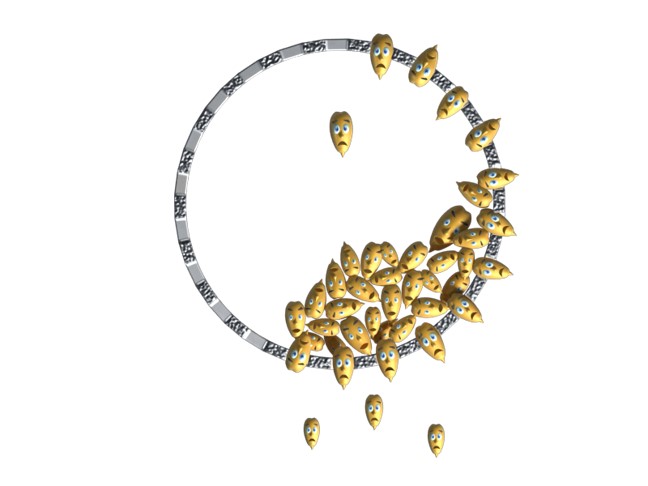
The picture is similar in drum separators. The grains stuck in the holes of the sieve, under the mass of a heap of grain when it is poured, like pins, are the mover of the poured grain and at the same time are overloaded by bending and shearing.
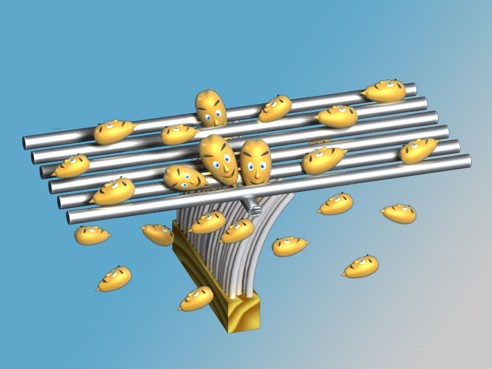
Installing sieves radically changes the picture of interaction with grain.
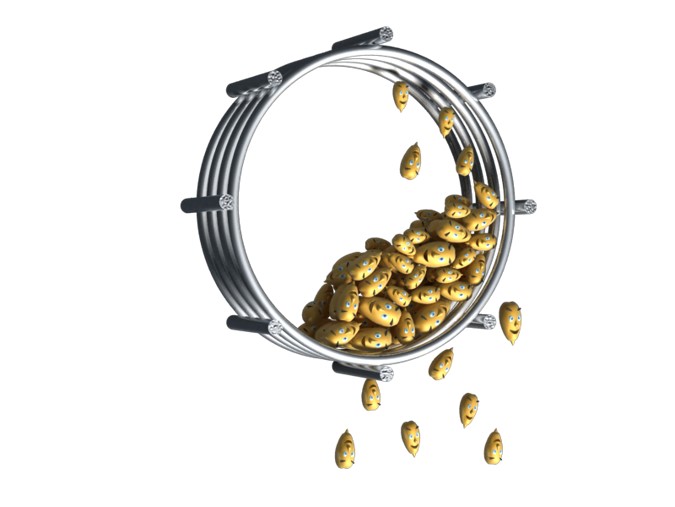
The grain, like a gymnast on the uneven bars, touches the sieve with only two points on the spherical surfaces of the sieve crossbars. Thus, sieves reduce injury to grain and seeds during cleaning and calibration.
It is clear that injury to seeds is unacceptable, but damaged commercial grain also causes problems during storage and processing. This is confirmed by the following data:
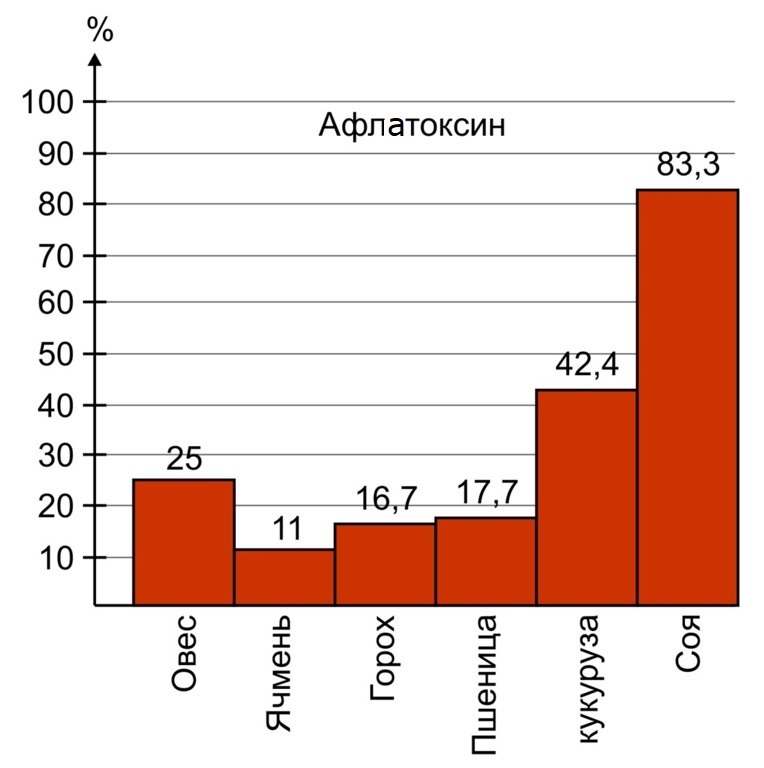
It was in the samples of corn and soybeans that high levels of aflatoxin contamination were found during storage. As you know, large seeds are more susceptible to injury.