Trademark “Strong Seeds”
TRADE MARK “STRONG SEEDS”
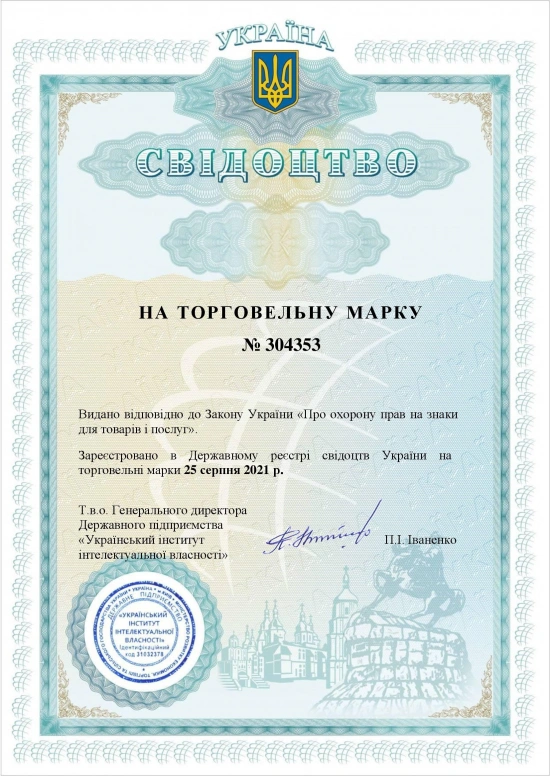
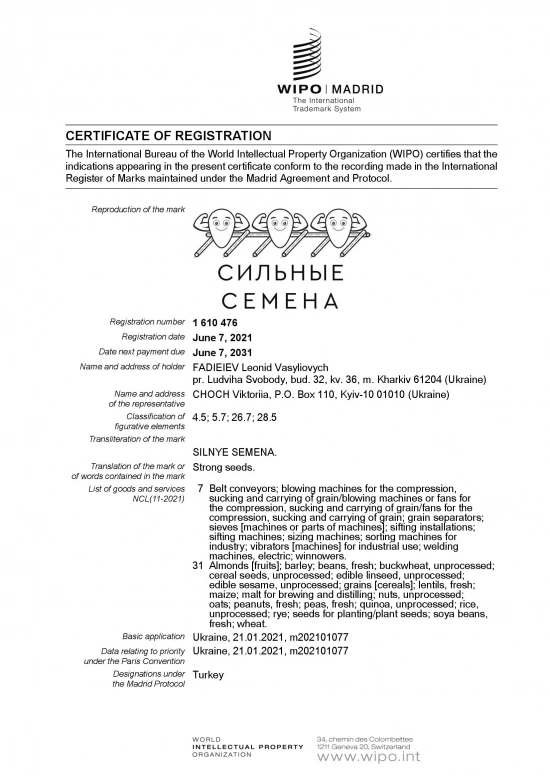
In addition to Ukraine, this trademark is currently registered in seven more countries in Europe and Asia. Many people ask the question: “What are STRONG SEEDS™?” I use the fact of trademark registration as a reason to answer this question and show the essence of the gentle fractional technology for the production of STRONG SEEDS ™.
Five Signs of STRONG SEEDS ™
First. Seeds without macro- and microtrauma.
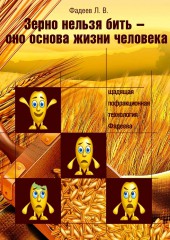
In my book “The grain cannot be beaten, it is the basis of human life,” I show the difference when sowing whole and damaged seeds in seed germination, plant development and its productivity. I will give just one example - the percentage of non-germinating wheat seeds, depending on various reasons:
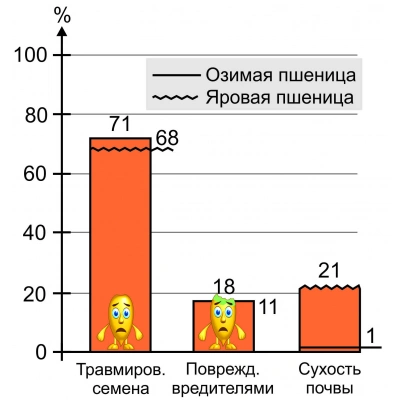
The basis of the seed preparation technology we are introducing is the absence of machines and components that injure the grain.
Second. The seeds are large.
Using wheat as an example, I will give two comparisons of large and small seeds based on the relative mass of the embryo and the number of germinal roots
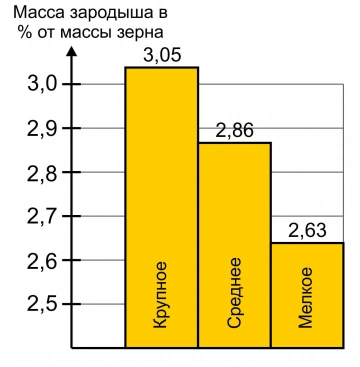
Comparison of the relative mass of the embryo (%) in wheat grains of different sizes
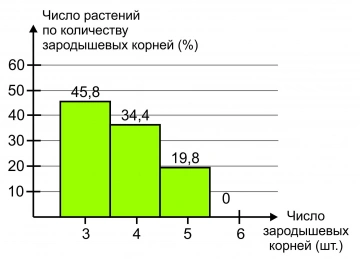
Number of plants (%) by the number of embryonic roots in small wheat seeds (weight 1000 pieces - 22 g)
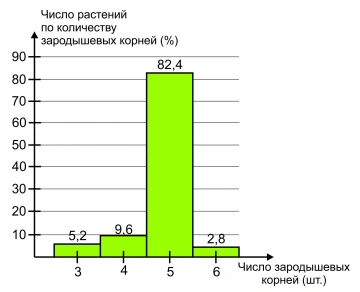
Number of plants (%) by the number of embryonic roots in large wheat seeds (weight of 1000 pieces - 43.3 g)
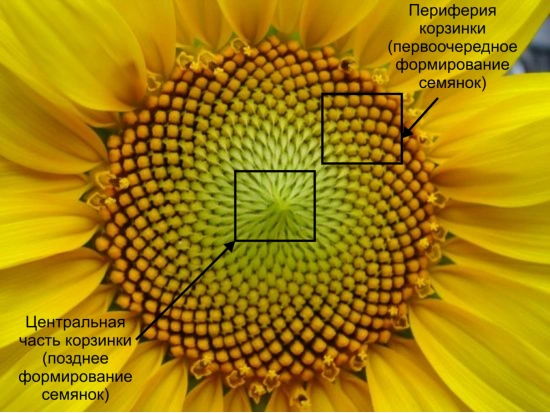
Another example is sunflower.
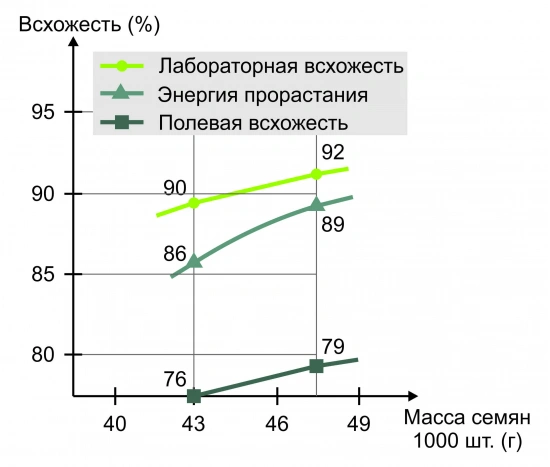
Third. Seeds are calibrated for completion.
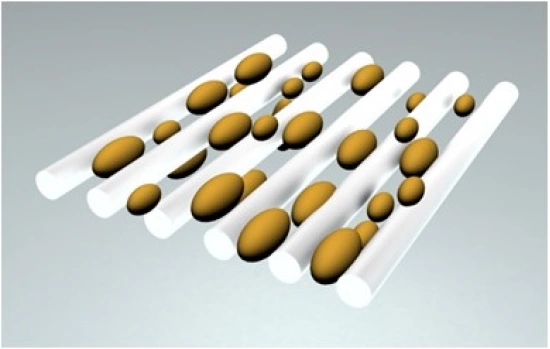
Such calibration is performed on sieves of new geometry that we have developed, on which the achene is “doomed” to turn and “fit” to the slot opening of the sieve with the smallest (of three) size – thickness. Essentially, this is a calibration based on the amount of nutrients in the achene.
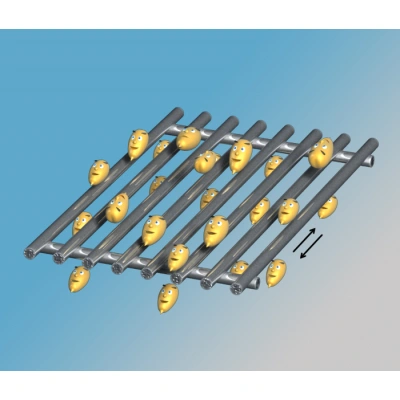
This is an extremely important feature, since all puny seeds are removed on the very first sieves during the calibration process. This is especially important when there is a large difference in the size of the thickness and width of the achene (sunflower, corn, lentils, flax, etc.). The equipment we have developed allows us to make such sieves with caliber sizes ranging from 0.1 mm, in increments of 0.1 mm and up to 30 mm.
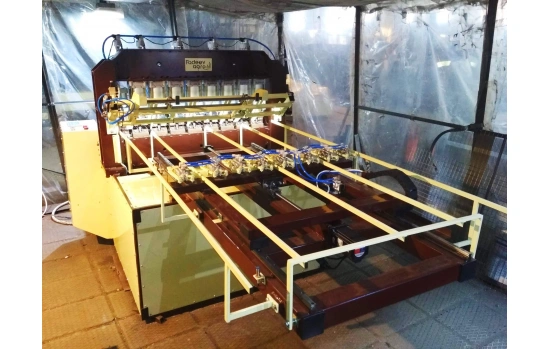
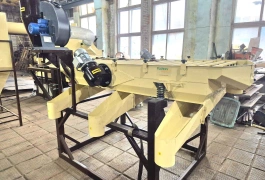
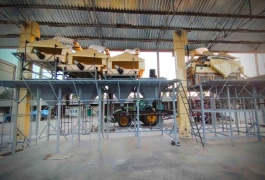
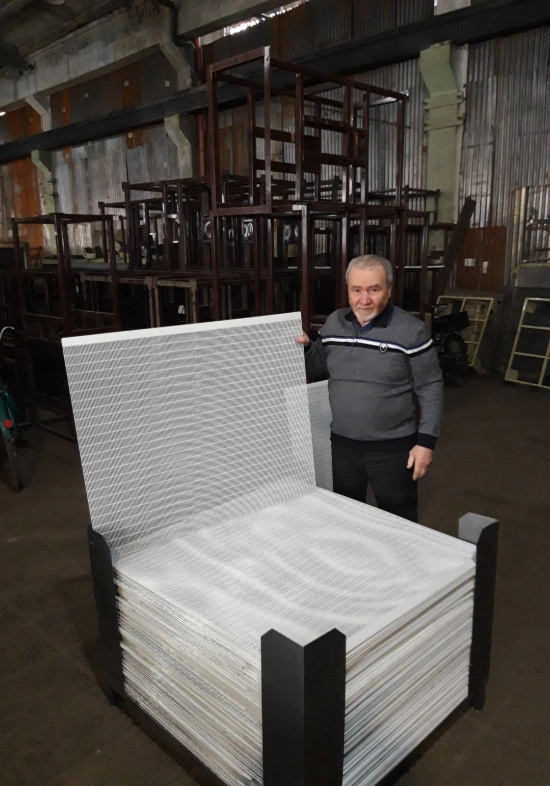
Exterior view of one of the sieve production machines.
When completing seed plants, an obligatory component is the necessary set of sieves for all crops grown by the customer.
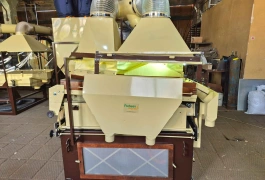
Seed calibration is performed in one step when moving them through sieves (calibrators) on which sieves of the required caliber are installed (slot hole width accuracy + 0, 04 mm)
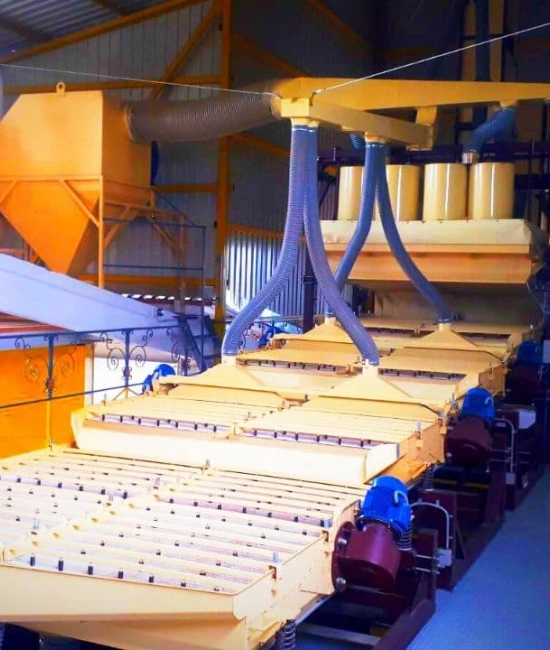
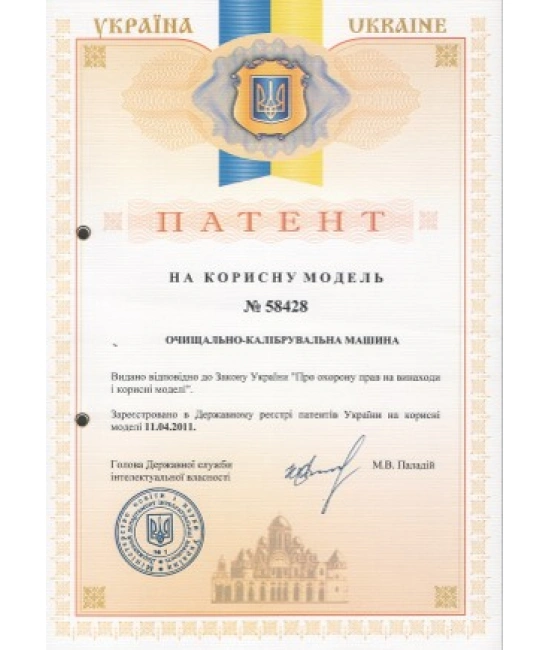
The effectiveness of grain cleaning and calibration on such sieves is confirmed by the fact that today they are installed on various types of cleaning machines produced in countries such as Germany, France, Denmark, Switzerland, Turkey, South Korea, etc. Due to such demand, we have set up the production of our sieves in Europe.
Fourth. Heavy seeds.
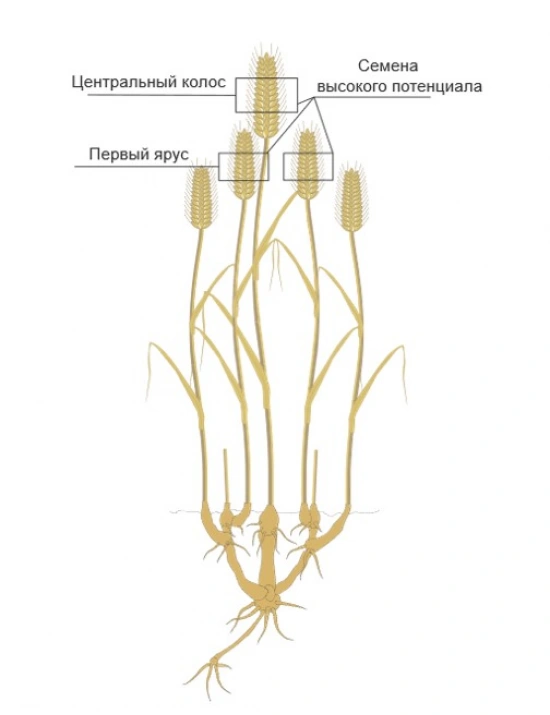
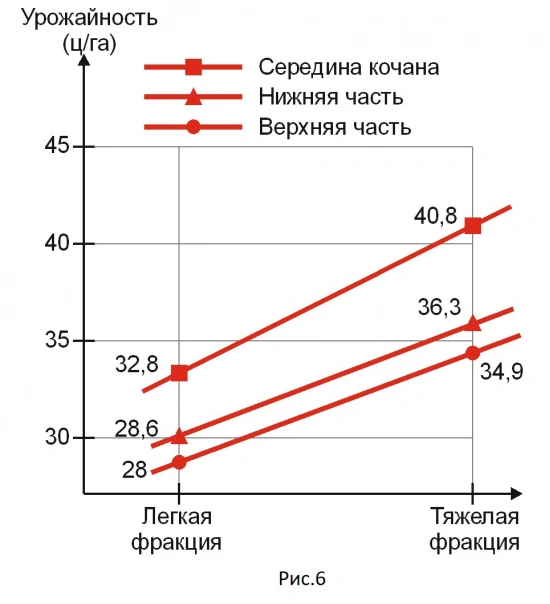
The main distinguishing feature of the seeds that plants form first, which are the first to bloom, the first to bloom, the first to ripen is density. Density dimension g/mmᵌ (kg/dmᵌ). In cereal grains, such seeds are located in the middle of the ear. Not only are they larger, they are also denser.
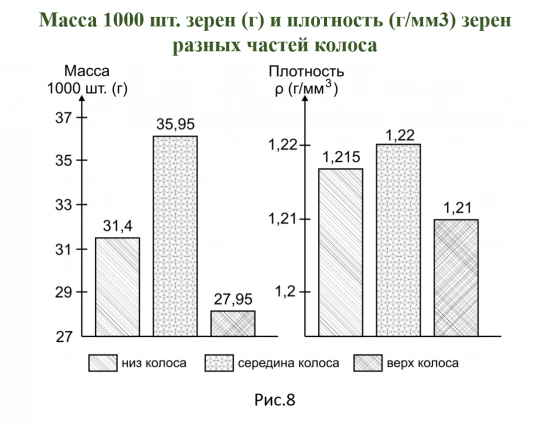
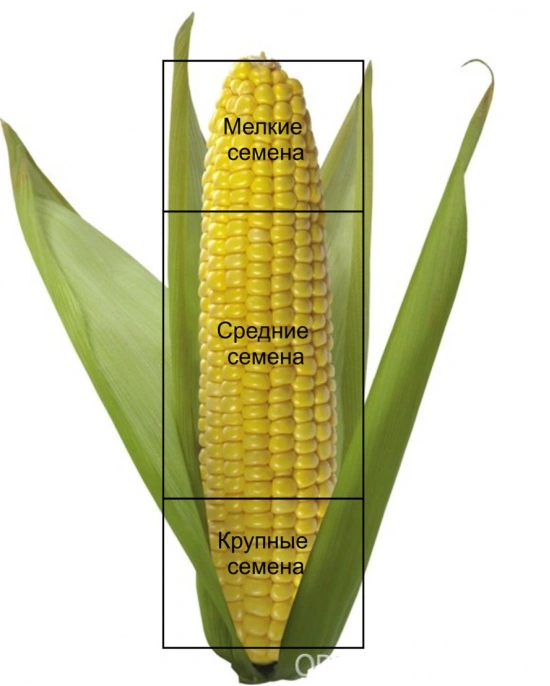
In corn, this is the middle of the cob. What is manifested in productivity.
The technology is also effective for small seeds.
The farmer brought us mustard seeds ready for sowing. Cleaned and passed through a photo sorter. Despite the apparent similarity of the seeds, their differences in size and density turned out to be significant.
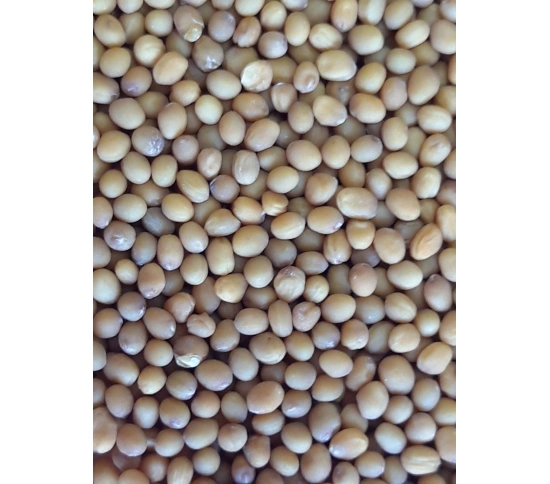
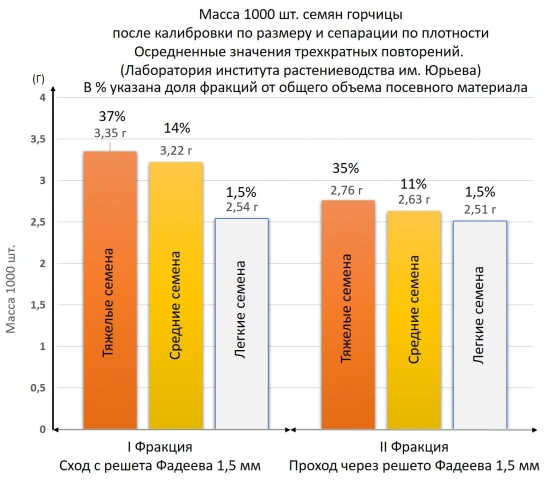
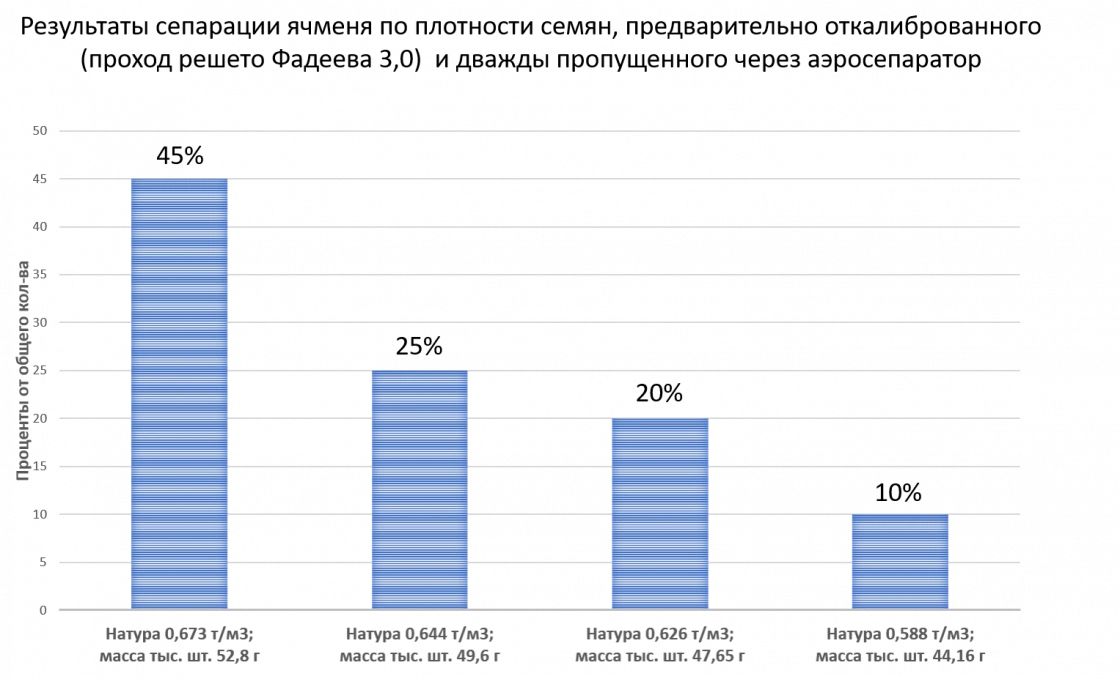
It is clear that the seeds of the fraction with a mass of 53 g/1000 pcs. will be more productive than others. Seeds weighing 50 g/1000 pcs. can be considered as a reserve, and with a mass of 47 g/1000 pcs. and more than 44 g/1000 pcs. It’s not worth sowing at all.
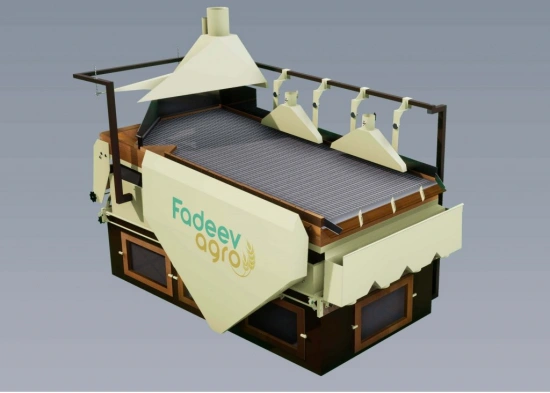
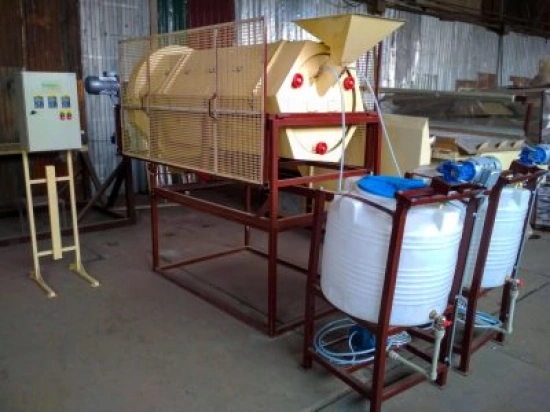
Fifth. Treatment of seeds before sowingin addition to traditional means of protection, also with microbial or mycorrhizal preparations. Provided that seed treatment is carried out using equipment that does not damage the seeds. For example, at PSF-5.
It is this technology of isolating STRONG SEEDS ™ from seed material that provides a significant increase in yield.
Thus, we use the term “STRONG SEEDS™” to those that meet the following criteria:
- Seeds without macro- and microtrauma
- Large seeds
- Seeds are calibrated for completion
- Heavy seeds
- Seeds are treated with drugs and inoculants
More details about the technology for producing STRONG SEEDS ™ are presented in the books: