Rice Is The Leader In Demand Among Cereal Crops
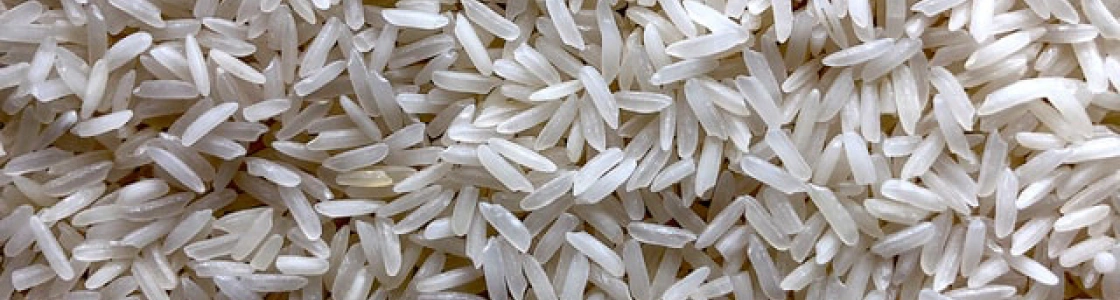
When we talk about population growth on earth, we must take into account that the main increase occurs due to Asian countries, i.e. those countries whose population prefers rice and rice products in their diet. In this regard, a rice shortage is predicted on the world market. Thus, in 2020, the demand for rice will be 781 million tons, which will exceed the demand for wheat by 2-3%, since rice production in 2020 is expected to be no more than 750 million tons.
Rice was domesticated about nine thousand years ago in East and South Asia. Domestication in both regions occurred independently of one another. In Africa, wild rice also grew on the banks of the Niger River. About 2-3 thousand years ago it was domesticated, but by now it has been replaced as an agricultural crop by Asian varieties of rice as more productive. The word “rice” appeared in Russia only at the end of the 19th century. Before this, rice was called “Sorochinskoe millet”.
Rice is rich in carbohydrates and relatively poor in proteins. The share of dry carbohydrates is 70%, and protein is no more than 12%.
Rice is a staple food in Southeast Asia and China. Cereals and starch are produced from rice grains , and oil is obtained from rice germs . Rice flour is supplied in large quantities to cosmetic factories for processing into powder. In America, Africa and Asia , rice is used to prepare various alcoholic beverages. In Europe, I get alcohol from rice . Vodka made from rice, produced in Japan, is known throughout the world - sake. The so-called “puffed rice” - an analogue of popcorn - is widely used in the form of caramelized tiles such as kozinaki. Rice straw is used to produce rice paper and cardboard. The bran left over from cleaning rice is a good feed for poultry and domestic animals.
More than half of the world's rice production comes from three countries: China – 30% (200 million tons); India – 20% (125 million tons); Indonesia – 10% (67 million tons). In addition to Asian countries, the USA and Brazil produce at least 11 million tons of rice each.
Beneficial properties of rice.
Dear reader, when I once again read about the beneficial properties of any culture, then, firstly, I am convinced that humanity has preserved its population because it fed on what met the vital needs of man, and secondly, it is interesting to know specifically about the benefits of a particular culture for humans, in order to enjoy food with even greater appetite, and thirdly, even out of respect for nutritionists and food scientists for their research, it is necessary to get acquainted with such information. They carried out these studies for us.
So, rice . An important source of vitamin group B, B1, B2, B3, B6 and vitamins PP and E, which help strengthen the nervous system and have a beneficial effect on the condition of the skin, hair and nails. Rice contains trace elements: potassium, phosphorus, zinc, iron, calcium, iodine and selenium. Rice contains complex carbohydrates, but is low in calories and, on the contrary, promotes overall weight loss.
Rice contains 8 amino acids that are required by the human body to create new cells. Of the 7-8% protein contained in the rice grain, there is no protein containing gluten, unlike other grains. Rice protein contains lecithin, a known brain booster, a gut-repairing oligosaccharide, and gamma-aminobutyric acid, which helps stabilize blood pressure.
Rice is very useful for people who are trying not to gain excess weight or even lose weight. Rice , especially unrefined rice, contains a whole cocktail of active substances, thanks to which it is an ideal means for removing excess moisture and toxins from the body. The best variety for removing toxins from the body is brown brown rice , since it is in the brown bran shell that most of the vitamins, minerals and other nutrients are found. Apparently, this is why doctors recommend giving preference to rice , which is slightly refined.
Over the past 50 years, the number of people with diabetes and celiac disease has increased 10-fold. As a change in the diet of such patients, it is proposed to replace confectionery products based on wheat flour with products using gluten-free rice flour. Thus, at the National University of Food Technologies, baking muffins based on rice flour was successfully mastered.
Among all the cereal crops in demand on the Ukrainian market, rice comes first. Consumption: 31% rice , 30% buckwheat, 15% millet. Today, the total rice production in Ukraine is 70 thousand tons, consumption is 170-180 thousand tons. The deficit is covered by rice imports worth US$30 million. Changes in climatic conditions make it possible to grow rice to the latitudes of Kropyvnytskyi-Vinnitsa.
Terminology:
Rice grain is grain collected in the field with unbroken membranes.
Hulled rice is rice from which the films have been removed.
Milled rice is rice from which the shells, which create seedings, have been removed and the germ has been partially removed.
A whole kernel is a whole grain of milled rice .
Cereal yield is the amount (%) of cereal divided by the amount of rice received for processing.
Whole kernel yield is the number (%) of whole undamaged rice grains divided by the amount of rice received for processing.
Grinded and polished rice is divided into commercial grades: highest, first and second, depending on the presence of various admixtures allowed in the grain.
Drying rice grains is extremely important for rice as for any other crop. Drying is allowed at a coolant temperature of no more than 40°C with moisture removal in one pass of no more than 2-3%.
The by-product of rice processing is: 61% films; 35% of seedings; 4% flour. Rice oil is a high quality vegetable oil. It contains from 12 to 17% lipids.
Hulled rice contains much more vitamins than polished rice, since they are found in the aleurone layer and germ, which are removed during polishing.
Rice varieties are divided into three types based on the size and shape of the grain: short-grain, medium-grain and long-grain rice . Since rice grains are calibrated on flat slotted sieves, a characteristic parameter for assessing the type of rice is the ratio of grain length to width (and not to thickness). Color is one of the important criteria for rice quality. Breeders are trying to develop rice varieties that, as a result of grinding, have shiny, colored, highly transparent grains without powdery inclusions.
The threshed grain (shala or brown rice), after being cleaned of foreign impurities, goes to the millstone to separate the grain from the film (scales). The final operation, grinding, is performed on special machines. On average, 100 kg of rice when processed yields: 60 kg of large grains, 15 kg of medium grains, 15 kg of small grains and 10 kg of flour. From 100 parts of unhusked rice , the following is obtained: pure grain - 74 parts, waste (hulls, skin, germ) - 26 parts.
The yield of whole rice seeds during grinding can be increased if the rice grain is subjected to steaming, which is a water-steam treatment of soaked rice . The method has been known since ancient times. Classic water-heat treatment consists of three operations: soaking in water, steaming and drying. During this treatment, starch gelatinizes, which ensures the closure of internal cracks and maintains the shape of the whole kernel. In addition, when grains are steamed, nutrients diffuse from the shells and germ into the endosperm, which has a positive effect on the taste characteristics and nutritional value.
The technology of water-thermal processing of rice has been developed at the Department of Grain Processing Technology of the Odessa National Academy of Food Technologies. Humidification up to 20-25%, resting for 6-8 hours, during which moisture leveling in the grain occurs, swelling and closing of surfaces separated by cracks in the endosperm occurs. The next stage is steaming under a pressure of 1.5-2.5 MPa for 3-10 minutes. At this stage, gelatinization of starch and partial denaturation of protein occurs. Gelatinization keeps the crack surfaces in a closed state, which occurred during swelling, and subsequent drying to 14.5-15% does not lead to their opening. In fact, this is a technological method of returning the grain kernel to its integrity. This explains the increase in the number of whole grain kernels during subsequent milling of rice by 16.5%.
The peculiarity of rice is that it is highly susceptible to injury.
Of all agricultural crops, rice requires special attention during its production, seed preparation and processing due to its exceptionally high susceptibility to injury.
The peculiarity of this culture is its high hygroscopicity. Those. Rice grains can very actively absorb moisture from the air, but it is much more difficult to release it when dried. During the dry season, cracks appear in the rice grains even before harvesting begins. In most cases, the cracks reach the aleurone layer. It is clear that during harvesting, post-harvest processing and drying, the number of cracks increases significantly. The appearance of cracking in standing rice depends on the specific conditions in the cultivation zone (air humidity, heavy dew, daily temperature changes, etc.). Thus, during the harvesting period in the conditions of the Far East, fracturing was 10-15%, and in Kuban 30-35%. Large cracks during threshing, as a rule, lead to crushing of the grain, but a much larger number of grains that have received a crack are not crushed, since the flower film firmly holds the shape of the grain.
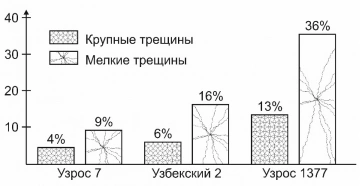
Fig. 1. Predisposition to cracking of various rice varieties.
This defect is detected when polishing rice or analyzing the sowing qualities of seeds.
Rice cracking- highly depends on the variety and ranges from 4 to 13% for large cracks, from 9 to 36% for small cracks. The data is shown graphically in Figure 1.
A large number of mechanical damage to grain during threshing is also explained by the fact that rice is a difficult-to-thresh crop, and cracking while standing makes the situation even worse.
Rice grain in the technical ripeness phase contains from 2 to 10% cracked grains. When the crop is overstagnated, cracking reaches 15-20%. In the case of separate harvesting, fracturing in the upper layer of the windrow increases greatly. In addition, when rice sits in windrows for a longer period of time, cracking can reach 62%. Figure 2 shows such a relationship.
Overstaying of rice in checks leads to overdrying of the grains, and large cracks provoke the destruction of the flower film, which in turn leads to this type of damage such as crushing and collapse.
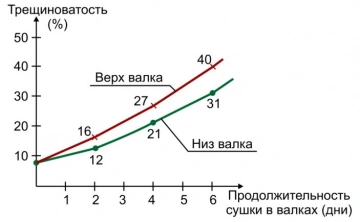
Fig. 2. Increase in the cracking of rice when drying it in windrows, depending on the drying time (days).
Today's technology for cultivating rice provides for direct harvesting, but from the standpoint of injury to rice during harvesting, it makes sense to compare separate and direct cleaning. The data says that with separate harvesting, the share of crushed seeds is 6-9%, with direct harvesting from 9 to 21% with a humidity of 15-16% and 16-17%, respectively. The data is shown graphically in Figure 3.
Apparently, the difference in injury rates is explained by the possibility of more gentle threshing during separate harvesting. During post-harvest processing of rice seeds the following types of injury occur: the endosperm cracks and the floral film is damaged. For example, when cleaning seeds using a Petkus separator, 3% of rice seeds are injured, of which at least 1% are crushed, and a transition from one type of injury to another occurs (some of the cracked seeds with damaged floral film partially collapse and are subsequently crushed). This is easily explained, since the presence of even one crack reduces the strength of the grain by half. Figure 4 shows the decrease in strength of a rice grain depending on the number of cracks under the flower film.
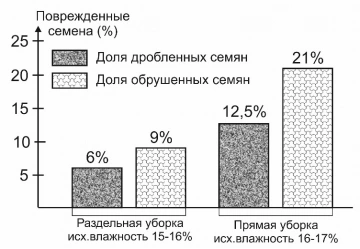
Fig. 3. Comparison of damage to rice seeds during separate and direct harvesting.
According to A.I. Aproda, cracks in the endosperm of rice do not affect laboratory germination, and when sown in soil, even in laboratory conditions lead to a sharp decrease in germination. The weight of seedlings obtained from injured seeds is noticeably less than from whole seeds. When germinating in soil, cracked seeds reduce germination by 30-40%. Throughout the entire germination phase, the difference in height of the experimental and control plants is 20-30%, respectively (Fig. 6). The main negative impact of injuredrice seedsis on the development of plants in the field and, naturally, on productivity. At one time, this influence was carefully studied by A.I. Aprodom. Figure 7 shows the corresponding results of the study.
The scientific literature has accumulated a large amount of material on the effect of injuries to rice seeds on yield. At the same time, the problem of field germination of the seeds of this crop is one of the most important, since injury has a particularly strong negative effect on the germination of rice seeds due to the fact that they lie in storage for a long time. waterlogged soil. When sowing cracked rice seeds the productivity of the plants is only about 70% compared to the productivity plants from whole seeds. Figure 8 shows the effect of ricericeinjuries on theirproductivity. The figure shows that cracking of the flower film has a great negative impact on yield.
rice often experiences complete collapse. Hulled seeds, when germinated in laboratory conditions, reduce germination by 20% compared to whole seeds, but when sown in field conditions, they practically do not sprout. So, under the same conditions with whole seeds, the crushed ones showed 76% laboratory germination, and 2 plants per 1 sq.m. germinated on the field.
A few words about drying raw rice. Due to its high susceptibility to cracking, drying raw rice requires gentle conditions, both at the level of coolant temperature and in terms of moisture removal. Research by Aprod A.I. and Lebedika G. showed that an increase in coolant temperature by 15°C in a shaft dryer DSP-32 led to increased productivity from 13 t/hour to 16 t/hour, an increase in moisture removal from 3.9% to 6.2%, but the number of cracked rice grains (from 6% to 12.2%). The corresponding data is shown in Figure 9.
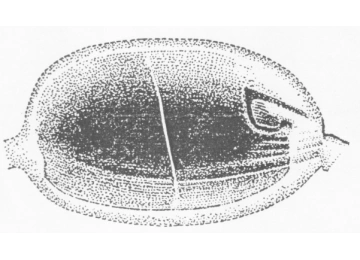
Fig. 5. X-ray examination of a cracked rice grain with an intact flower film.
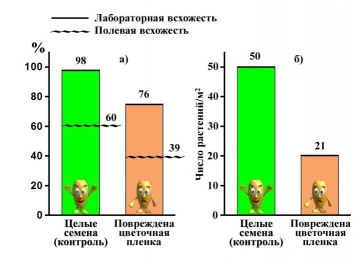
Fig. 6. The effect of rice seed injuries on germination (a), development (b).
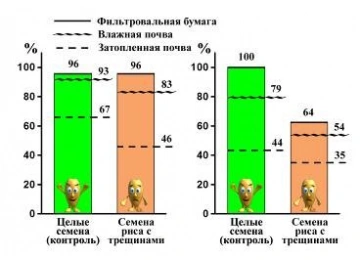
Fig. 7. The effect of rice seed cracking on germination (a) and seedling weight (b).
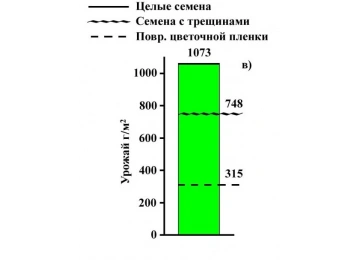
Fig. 8. The effect of rice seed injuries on plant productivity.
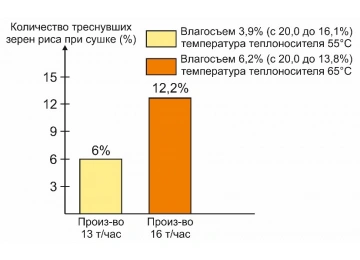
Fig. 9. Injury to rice seeds during drying in a shaft dryer at different average temperatures of the coolant and different amounts of moisture removal.
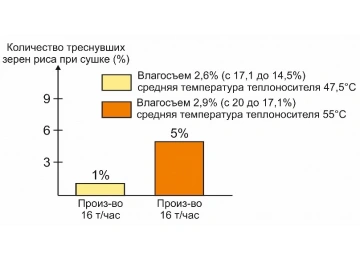
Fig. 10. Injury to rice seeds during drying-resting-cooling technology.
If the goal is to minimize injury to rice seeds during drying (for example, in relation to seeds of high reproduction), then you need to combine cooling with resting, reduce the temperature of the coolant and come to terms with small amount of moisture removal. The above authors conducted studies of this drying regime. The data is shown graphically in Figure 10.
Based on the above: the temperature of the heating agent when drying grain should not exceed 30-35°C, the decrease in humidity in one pass should not exceed 2.5-2.6%, resting and cooling should be carried out under natural conditions. Thus, the given data on injury to rice during harvesting, post-harvest processing and drying require gentle handling of the seeds of this crop, which means it is necessary to use seed material treatmentriceusing Fadeev’s gentle technology. The costs of introducing gentle technology are recouped twice in one year. The technological line using this technology is capable of preparing seeds for an area of about 10-15 thousand hectares.
Agrotechnology of rice cultivation
Rice — family Cereals, cereal crop. Restrictions on the cultivation of riceare due to two factors:
– for its full development at an average summer temperature of 22-30°C during the growing season (150 days), the total temperature should be 3300-4500°C.
– rice, as a marsh plant, requires a lot of standing water during a long time of its being under water (90-100 days). Seeds germinate at 10-12°C.
Today, the technology of growing rice on dry land has been mastered. Naturally, this requires irrigation, but the water consumption with this growing technology is half that of growing “wet” rice.
Rice responds well to fertilization. During the growing season, the need for nitrogen is especially evident during the emergence of seedlings, the formation of generative organs and when filling grain. Compared to other crops, the field germination rate of rice is exceptionally low, usually not exceeding 25%, rarely reaching 35 % [1]. With the optimal number of panicles per 1mⁿ - 400 pcs. and taking into account bushiness, the optimal number of seedlings per 1 m2 is 250-300 pcs. Thus, taking into account the low field germination rate, it is necessary to sow at least 7 million pieces. per hectare.
Research conducted at the Rice Institute of NAAS to optimize seeding rates showed the following results. Three varieties with different growing seasons were studied: Ontario (109-113 days), Viscount (116-121 days), Admiral (125-129 days). For all varieties, fertilizing with N90+30P20 turned out to be optimal. Figure 11 shows the dependence of the yield on the seeding rate (million units/ha) with optimal application of nitrogen and phosphorus. From Figure 11 it can be seen that the optimal seeding rate for early and mid-ripening varieties is 7 million units/ha, and for late varieties - 11 million units/ha.
Growing ricerequires a lot of nitrogen. This is explained not only by high productivity (about 10 t/ha), but also by the fact that irrigation leads to soil salinization and, accordingly, to a deficiency of soil nitrogen, and at the same time high losses during the cultivation technology itself.
In order to prevent unproductive costs of nitrogen fertilizers, it is recommended to apply the total planned dose in two or more periods: 50-75% - in the main pre-sowing application and 25-50% in the germination phase, full tillering, in the booting phase, after weed suppression.
Figure 2 shows the dependence of rice yield on the rate and type of fertilizer applied.
Rice is harvested either by direct harvesting or by separate harvesting. The uneven ripening of rice (the upper part of the panicle ripens first, followed by the lower) necessitates separate harvesting - rice in In the windrows, after drying, it is threshed more completely. For food needs, rice is harvested when 75-78% is fully ripened, and for seeds - when 90-95%. In order to reduce injury to rice, its desired moisture content during harvesting should not be lower than 23-25%. In general, rice of all grain crops releases moisture very slowly after completion of biological maturity. Therefore, at harvest the grain moisture content is 26-30%.
The stems of rice reach up to 1.5 m in height. Component – a separate spikelet; the caryopsis is tightly covered with four scales; the spikelets form a panicle, which ends the stem of the plant.
Timely harvesting of rice is significant, because overstaying for 7-10 days leads to a yield loss of at least 5% due to shedding of the top grains of the panicle, and early harvesting does not allow the lower grains of the panicle to complete biological ripeness.
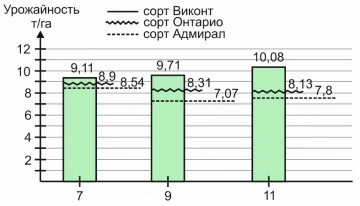
Fig.1. The yield of rice of early, middle and late-ripening varieties depending on the seeding rate (average data for three years).
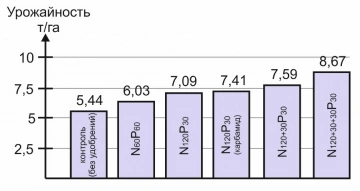
Fig.2. Rice yield depending on the variant and dose of fertilizer application (average data for the Ontario, Admiral and Debut varieties for two years 2011-2012).
Regulation of the water level in the checks before cleaning is as follows:
“When the grain reaches milky ripeness (15 days after mass flowering), the water supply is reduced, and on days 18-20 after flowering (before the onset of waxy ripeness), it is completely stopped. 10-15 days before harvesting there is no water at all in the fields.”
The optimal cutting height is 15-20 cm, which allows you to place the windrow on the stubble and does not clog the threshing apparatus.
As you know, strong seeds are located at the end of the panicle. Flowering begins with them, these seeds primarily and fully receive nutrition from the mother plant and, naturally, these seeds ripen earlier and are easier to thresh. Therefore, sometimes threshing is done in two stages: after the first, the grain is sent for seeds, and after the second, for food purposes as a commodity. After the first threshing, 6 to 10% of grain can remain in the straw, which is “shaken out” during repeated threshing. To do this, a simple modification is made to the combine.
Modern rice harvesters have rubber tracks, which reduces the specific load on the soil and ensures good maneuverability. Recently, stripping headers have been used, but their use requires good adhesion of the root system to the soil, which depends on its moisture.
After harvesting, rice must be cleaned of plant debris and dried to a moisture content of 14-15%. Cleaning must be carried out after cleaning without delay. This is due to the fact that the straw inclusions in the heap are much wetter than the grain and can easily trigger its self-heating.
Without going into the details of pre-sowing seed treatment, although we make gentle two-component dressings for this purpose, protection against weeds, diseases and pests, I will only give a list of the preparations and the norms for their use.
Treatment ↑ 0.7-1 t/ha. Maxim 025 FS (1.5-2.0 l/g), Select Top 312.5 FS (1.5-2.0 l/g). Increases germination by 7-10%.
Protection against weeds: Citadel 250 D (1.2-1.6 l/ha), Peak 75 WG (0.25 kg/ha).
Protection against diseases: fungicides Til + 250 EU (1 l/ha), Amistar Trio 255 EU (1.2 l/ha).
Desiccant: Region Super (2 l/ha) 5 days before harvesting. Reduces threshing.
From pests: Karate Zeon 050 SL (0.2 l/ha).
The practice of rice production shows how costs (% of total expenditure) are distributed among the various means necessary for intensive agricultural technology (Fig. 3).
Figure 4 shows, as an example, the effectiveness of using the herbicides Citadel 250 D and Peak 75 WG.
Practice also shows that if you refuse to use means of protection against weeds, diseases, and insects, the yield losses, although different, are very significant (Fig. 5).
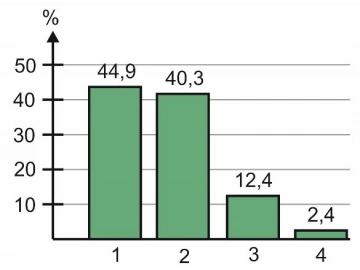
Fig.3. Share of costs (%) in rice production from total costs of protective equipment:
1. Fungicides 2. Herbicides 3. Protectants 4. Insecticides.
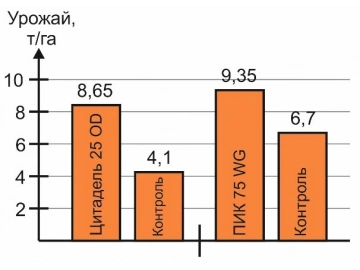
Fig. 4. The effectiveness of the use of herbicides Citadel 250 D and Peak 75 WG in rice production (averaged data).
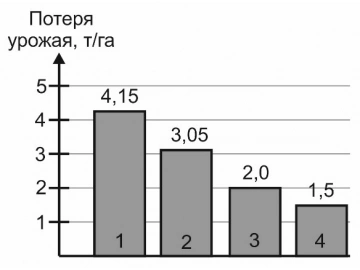
Fig.5. Rice yield loss (t/ha) if not applied
1. Fungicides 2. Herbicides 3. Protectants 4. Insecticides (averaged data).
Prospects. Rice on dry land?
It is clear that we are talking about the technology of growing rice on irrigated fields. More specifically, with drip irrigation.
When we talk about the prospects for irrigated crop production, it is difficult to argue with anything. This is a special case withrice. Firstly, without irrigation, and abundant root drip irrigation, it is impossible to grow it in fields where flooding with water for some reason (most often material) is impossible.
Secondly, without expanding the area for the production of rice in Ukraine it is impossible to eliminate the shortage of its production.
The Rice Institute of the National Academy of Sciences of Ukraine has today developed a technology for the production of rice using drip irrigation, which is being successfully implemented in the Southern regions. With drip irrigation, it is easy to introduce crop rotation rice-soybeans-rice-cornand other options. In addition, there are advantages when combating the most common weed in rice crops - millet.
In a word, to satisfy the demand for rice in Ukraine, it must be grown on an area of 250 thousand hectares, and without drip irrigation it is difficult to spread wet technology over such areas.
Rice cleaning using gentle technology.
We don't have much experience with rice. Therefore, when they brought it to us for cleaning, we were interested in this crop.
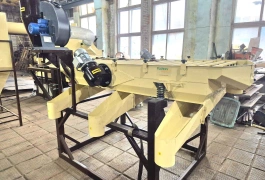
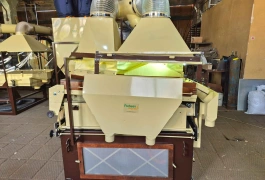
Below is the technological process of cleaning and calibrating rice seeds, the “Marshal” long-grain variety. First, the res seeds were calibrated by size on the OKMF “Compact 1-2”, then each fraction was separated by specific gravity on the Fadeev Pneumatic Vibration Table (PVSF-3)
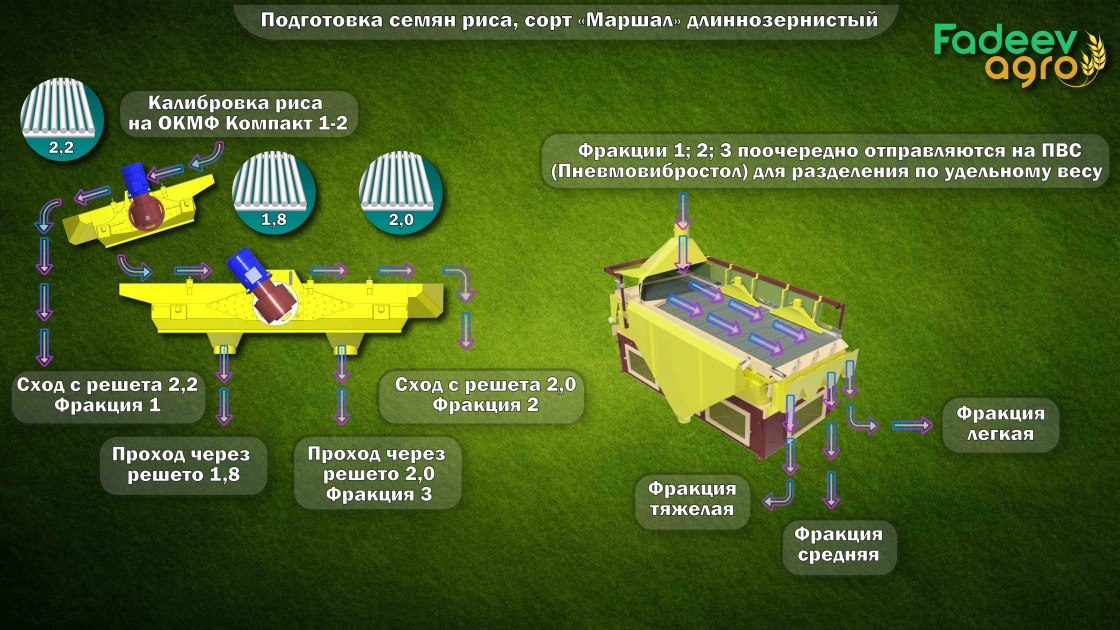
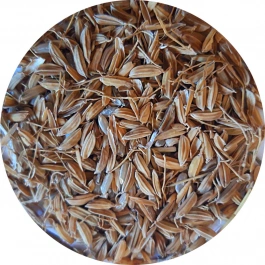
Passage through Fadeev sieve 1.8 mm
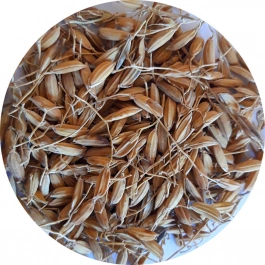
Fraction-1 Escape from the Fadeev sieve 2.2 mm (Light)
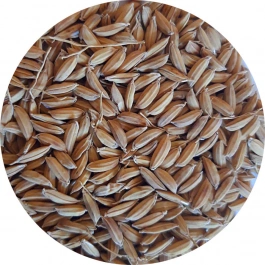
Fraction-2 Escape from the Fadeev sieve 2.0 mm (Lungs)
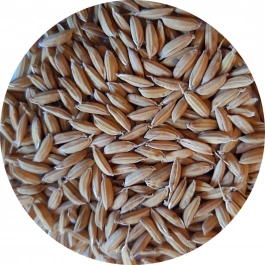
Fraction-2 Escape from the Fadeev sieve 2.0 mm (Heavy)
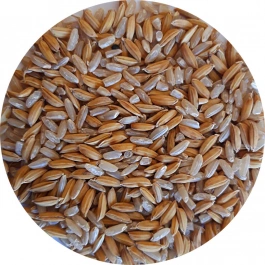
Fraction-3 Passage through the Fadeev sieve 2.0 mm (Holozernye)
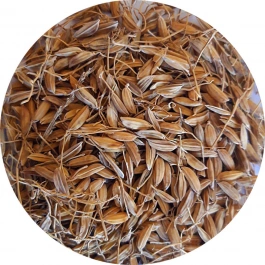
Fraction-3 Passage through a Fadeev sieve 2.0 mm (Light)
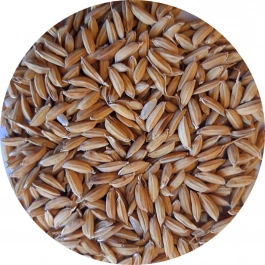
Fraction-3 Passage through the Fadeev sieve-2.0 mm (Heavy)