Spelled – its time has come

Spelled – its time has come
Challenges of the time. Dear reader, we were contacted by the head of a company that produces flour from spelled grain and pasta from it. The request sounded simple - can we bring spelled down? Since we had no experience in hulling spelled, but since we produce unique equipment for hulling sunflowers into kernels (vacuum crusher), we agreed to check how this equipment would cope with hulling spelled. The result is absolute.
When I took up this article, I intended to write only about the spelled hulling technology and show the result. But, having delved into the topic of spelled , I discovered so many interesting things that I considered it necessary to share my thoughts with the reader, some of which lie in the plane of some kind of philosophical generalizations. I'll share two of them.
First. Our ancestors fed exclusively on natural products. The revival of organic farming and the production of natural products, which today timidly make their way through the asphalt rolled up by intensive technologies, will be established and their market share will grow. This is a challenge of the times.
The healthy food trend is steadily gaining popularity. The progress of preventive medicine, dietetics, and the development of food technologies convincingly show the dependence of the quality of life on a person’s diet. High quality of life is the duration of active longevity.

Fig.1. Case IH robotic tractor.
During one generation, at least the one to which I belong, a revolution took place - the transition from physical to mental labor. As an example, Figure 1 shows a tractor-robot. Everything is the same, only there is no cabin, no tractor driver. Who's driving the tractor? Programmer. The Singapore metro has no drivers. In 20-25 years, 60% of jobs will be replaced by robots. We have entered an era of breakthrough technologies. What does healthy food have to do with this, the reader might think?
Very much so. Creative work requires an exceptionally high level of human physical condition. You can’t write a program with a headache, much less a hangover. The decrease today in systemic physical activity, caused in the past by human physical labor, has led to the need to change the diet from any kind to a strictly balanced one in composition. Healthy food meets this requirement, and healthy food is only possible from raw materials obtained from organic farming. Spelled , like no other crop, meets the requirements of organic farming.
In the coming years, the market will largely demand legumes, buckwheat, and, among the cereal grains , spelled .
Second thought. The question arises, how did it happen that relatively recently (just some 150 years ago) our ancestors preferred “spelt-spelt” from cereal grains, and today soft wheat has flooded the world market and is second only to corn in global production. What about “spelt” ? Yes, she almost disappeared completely.
This happened because the globalization of the market brought to the forefront agricultural crops that meet the laws of business - minimum production costs, the ability to handle large volumes, simple processing. For this reason , spelled , buckwheat and other extremely important crops for a balanced human diet were supplanted by the expansion of business crops. Next, a little more about spelled spelled.
Spelled and spelt, differences. I specifically use the combination of names “spelt-spelt” in order to draw attention to the fact that it is necessary to clarify the interpretation of these words and separate them. Since ancient times, wild species of wheat, the most likely ancestors of today's soft and durum wheat, were called spelt , without dividing them into species. Today this division exists and the distinctive characteristics of spelt and spelled have been identified. In addition, spelled is in turn divided into einkorn and einkorn. But their more strict difference is in the number of chromosomes, protein structure and nutritional value.
Thus, einkorn has two sets of chromosomes, einkorn has four, and spelled has six. Externally, spelled and spelt seeds, especially hulled ones, differ slightly, but there is a difference in the main characteristics (Table No. 1).
| Index | Spelled (Fleece variety) | Spelled (Alcoran variety) | |
| grain sizes: | length, mm | 7.4 | 7.8 |
| width, mm | 3.05 | 3.4 | |
| thickness, mm | 2.8 | 2.97 | |
| weight 1000 pcs. g (collapsed) | 32-39 | 45-54 | |
| nature g/l (not collapsed) | 440-520 | 420-480 | |
| nature g/l (collapsed) | 750 | 795 | |
| filminess % | 25 | thirty | |
Spelled is most often considered as a cereal crop, and spelled as a crop for the production of flour and products from it (bread with the addition of soft wheat flour, noodles, pasta, etc.).
Fig.2. The difference in the amount of macro and microelements in regular wheat and spelled.
In order to increase production volumes, the selection of cereal grain crops was aimed at increasing productivity and facilitating threshing. It can be argued that today both problems have been solved. Wheat is produced in sufficient quantities; transitional residues from year to year confirm this. A winter wheat yield of 10 t/ha no longer surprises anyone, and threshing by a combine harvester of up to 16 kg/s is becoming an ordinary event.
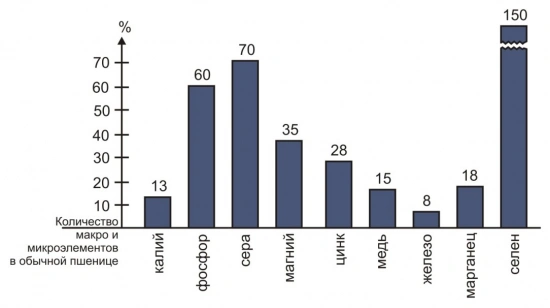
Fig.2. The difference in the amount of macro and microelements in regular wheat and spelled.
Nature allowed man to make such a change in plant productivity, but at the same time imposed a price - a decrease in the quality of grain. And the reduction is significant. Thus, in spelled the proportion of protein is more than 25%, gluten is 43-45%, and in wheat it is 12-13% and 25-28%, respectively. As for the difference in the amount of macro and microelements, Figure 2 shows this difference in % for the main ones. The level of amounts of macro and microelements in ordinary wheat is taken as the abscissa axis, and the relative difference in % of each of the elements contained in spelled is shown on the ordinate axis [2]. As they say, comments are unnecessary.
Selection. Today the selection went to the second round. More precisely not today. In 1926, geneticist N.I. Vavilov, while in Spain, was surprised by the rare valuable properties of chaff wheat. Before the war N.I. Vavilov organized an expedition to the Carpathians and collected a backpack of spelled ears there. It didn’t get to the point of research and selection then. Vavilov only managed to take off his backpack and give it to the guard at the hostel where his expedition was staying. The backpack remained on watch, and Vavilov was tied up by the enkovedists and colleagues N.I. who were waiting for him. Vavilov was not seen again. Today his fate is known.
In Ukraine, to the credit of the breeders of the All-Ukrainian Scientific Institute of Breeding (VNIS), research work on the selection of spelled varieties has been carried out for more than 10 years, which was started by biologist F.N. Pariy. As a result, spelled varieties bred by VNIS “Zorya Urainy” and “Europe” are now included in the register of Ukraine. The main indicators of these spelled varieties are given in Table No. 2.
Table No. 2. Characteristics of spelled varieties “Zorya Ukrainy” and “Europe” [3].
| Characteristics of the variety | Varieties | |
| Zorya of Ukraine | Europe | |
| Vegetative period, days | 280-290 | 285-290 |
| Productivity, t/ha | 6.2 | 6.5 |
| Protein percentage, % | 23-24 | 18-20 |
| Gluten, % | 48-53 | 40-45 |
| Plant height | 110-120 | 110 |
| Masa 1000 pcs. grains, g. | 43.5-45.0 | 43.5-45.0 |
| Seeding rate, million/ha | 5.5 | 5.5 |
A comparison of the performance of spelled and conventional wheat grown today allows us to draw the following conclusions:
- spelled is less demanding on the availability of nutrients in the field;
- tolerates low temperatures well in the early stages of development, which allows it to be sown in the range from September to the end of November;
- responds to fertilizing, especially with the gradual introduction of nitrogen and with sufficient phosphorus in the soil;
- the yield is about 70-80% of the yield of conventional wheat under identical growing conditions.
The disadvantages include the following:
- sowing is difficult due to the developed filminess of the seeds;
- for the same reason, threshing is difficult;
- The height of the plants provokes lodging, but since the spelled ear does not fall off, lodging does not cause large losses during harvesting.
In Ukraine, in addition to VNIS, active selection of spelled is carried out at the Institute of Plant Growing named after. V.Ya. Yuryeva. In general, today great attention is paid to spelled breeding in many countries: Central European countries, Serbia, Canada, and the USA.
Spelled yesterday and today. Since spelled , and under this name the ancient cereal grain crops were united, grew in the region of the Fertile Crescent, where agriculture arose, it is not surprising that it is in the Mediterranean that traces of spelled are found dating back to several millennia BC. In later times, spelled was cultivated in the Volga region among the Tatars, Bashkirs, Chuvashes, and Udmurts. In the Caucasus, spelled was grown by Armenians, Ossetians, and Khevsurs.
There is a mention of spelled in the Bible. “Take yourself wheat and barley and beans and lentils and millet and spelt , and put them in one vessel, and make bread from them.” Some authors claim that the bread that was on the table during the Last Supper was baked from spelt .
Even today in Dagestan, at elite weddings, pilaf is prepared not from rice, but from spelled . In Switzerland , spelled is grown exclusively for medicinal purposes. Swiss scientists explain that all food products obtained from spelled : bread, pasta, cereals - help strengthen the body. Eating these products makes the body less susceptible to allergic diseases. It is no coincidence that these products are primarily provided to children's institutions, sanatoriums and hospitals, and only then they go on sale. This is how the Swiss protect their younger generation, primarily from allergies. Bakery products and cereals made from spelled and spelt are approximately 3-5 times more yeasty than similar products made from regular wheat.
In North America, spelled products are in the niche of expensive dietary products. Not only porridge and pasta are made from it, but also soups, cutlets, pancakes, desserts, puffed creams, or sprinkled with cheese and fried in breadcrumbs. In Italy, spelled is used to prepare risotto, and in India, Iran and Turkey, among other things, it is used as side dishes for fish and poultry.
This preference for spelled spelled is explained by the fact that the protein of this crop is not as allergenic as the protein of ordinary wheat. Today, pollution of the human environment causes allergic diseases that are difficult to diagnose, and spelled products are a powerful preventive measure for preventing diseases such as celiac disease.
Spelled grains contain more essential fatty acids, fiber, minerals, antioxidants and ligians compared to modern wheat, which help in the prevention of cardiovascular diseases and cancer.
Spelled agricultural technology. The agricultural technology for growing spelled differs little from the technology for cultivating ordinary wheat. The only difference is the need for foliar nitrogen fertilization, since a large proportion of protein in the grain cannot but require more nitrogen. The agricultural technology for cultivating spelled is described in specialized literature, in particular in the article “Spelled is coming back” [4]. It follows from the article that that part of the nitrogen that is consumed by the plant from the soil during the grain filling period is clearly insufficient for yield formation and foliar feeding is also required during the growing season.
Agronomists are well aware that the efficiency of nutrient absorption is determined by their balance. This is extremely significant for the nitrogen-phosphorus complex - a deficiency of one of them reduces the absorption of the other. When growing spelled, it is recommended to add P 60 K 60 to the pre-sowing cultivation to form a background and then apply nitrogen using the foliar method based on an analysis of the nitrogen content in the soil. Spelled plants responded most noticeably to the application of nitrogen in the phase of plant emergence into the tube.
As with all cereal grains, the yield is determined by the number of spikelets in the ear, grains in the spikelet, the size of the grains and their completion. Research shows that gradual fertilization with nitrogen helps to increase the number of grains in the ear.
Three years of cultivation experience showed that, on average, over three years the yield increase (1.2 t/ha) was achieved by applying N 60 in the spring, N 30 in the tillering phase and N 30 during the formation of the flank leaf. On this plot, spelled had a protein proportion in the grain of more than 23% and gluten of 46%. The best predecessor for spelled is corn for silage, legumes, and green manure.
Spelled is a crop of organic farming.
Dear reader, I am writing about this, but I myself am impressed by the conference on organic farming, from which I just returned and realized that spelled is an extremely suitable crop for organic farming. There are several reasons for this.
Firstly, the spelled achene is so “wrapped” in a protective film that it naturally protects itself from pathogens before germination after sowing.
Secondly, for the same reason, the spelled plant better resists diseases characteristic of ordinary wheat during the growing season.
Thirdly, since organic farming requires mandatory crop rotation with the inclusion of legumes, which leave ammonium nitrogen in the soil, this makes it possible to meet the nitrogen needs of spelled when sown after legumes.
Fourthly, since sowing spelled can be done in a wide range of times from the beginning of September to the end of November, you can use various green manures (mustard, lupine, oilseed radish, horseradish, poppelushka, etc.) and sow spelled in the most suitable phase of green manure standing.
If spelled grain is the starting material for the production of dietary and preventive food products, then organic spelled meets this task even more fully.
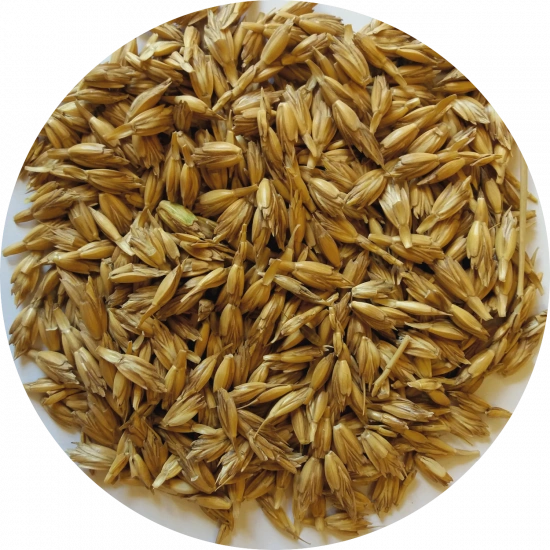
Fig.3. Spelled (source material).
Spelled hulling technology.
Now about the subject for which I took up writing this material. The spelled brought to us (Fig. 3) had a nature of no more than 400 g/l. At the first stage, we passed it through a ZAF-30 grain aspirator and took away all the easily permeable debris from it.
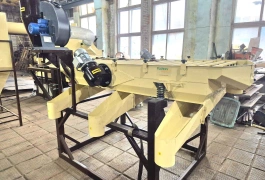
At the second stage, they passed it through a SIF-1000 handle. The handle is vacuum, i.e. it passes through the rotor channels only the material sent for collapsing, while the air is cut off by a sluice gate at the inlet.
The rotor of the handle is mounted on a horizontal shaft and has a pulley for transmitting torque from the electric motor. This connection between the motor and the rotor provides friction during starting to reduce starting torque. The rotation speed of the electric motor is controlled by a frequency converter. Such monotonic (non-discrete) adjustment allows optimizing the collapse mode. The rotor contains 400 closed guide channels. The channel is profiled in such a way that it does not allow the seed to fly to the deck either flat or sideways; it forces the seed to orient itself with its major axis along the guide channel and hit the deck only with its sharp end. In the guide channels, the achenes fly to the deck one after another, since the small size of the guide channels does not allow more than one achene to be accommodated. The deck is cylindrical, which ensures an equal impact on each seed because the seeds will hit the sharp end at a 90° angle. Sliding of seeds in the axial direction is excluded. To remove debris from each seed, blades are attached to the rotor between the channels, thanks to which the impact of the seed on the particles of the debris is eliminated; all of them hit only the deck.
These fundamental differences in the SIF-1000 seed crusher made it possible to obtain results much better than those of its analogues. Figure 4 shows the appearance of the SIF-1000 handle.
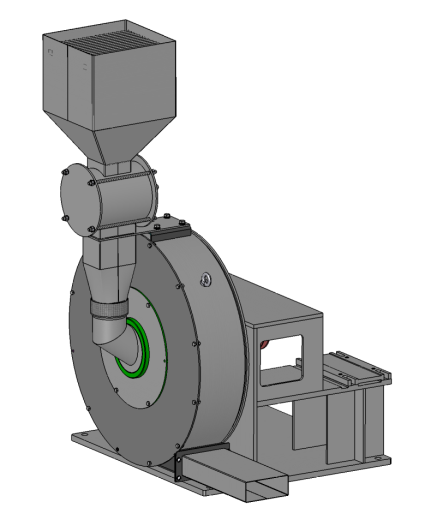
Fig.4. Centrifugal handle and the principle of its operation.
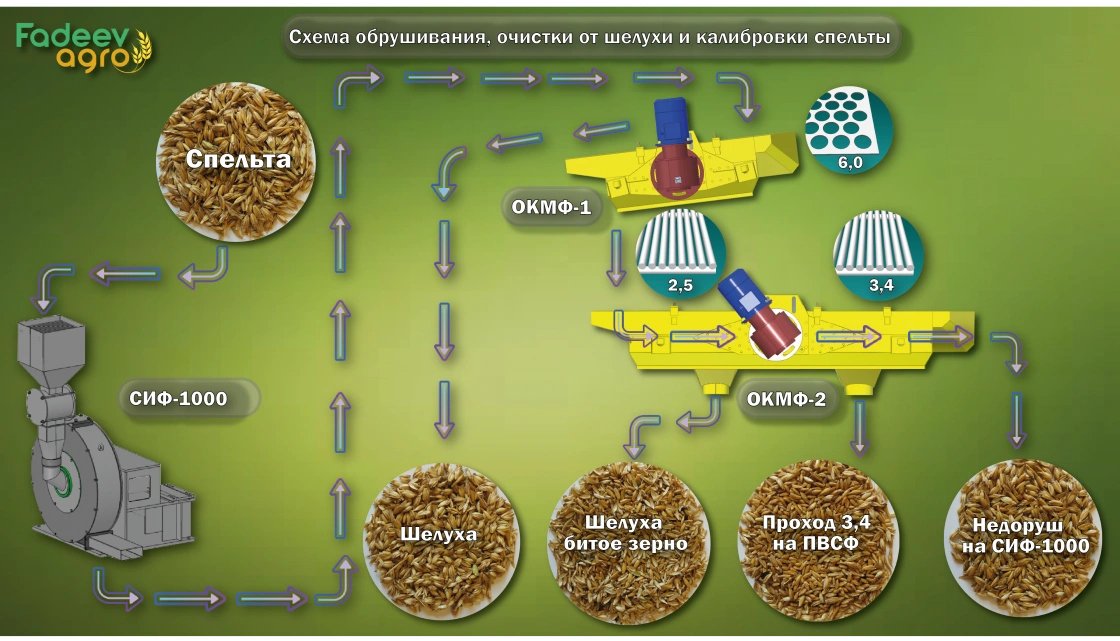
Fig.5. Scheme of hulling, cleaning and calibration of spelled
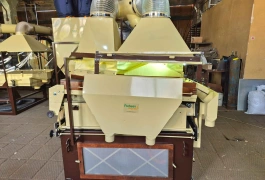
After hulling the spelled on the SIF-1000, we obtain a rushanka, which includes the spelled grain, film and unbroken spikelets. Rushanka goes to the OKMF-1 Fadeev cleaning calibrator with a 6.0 round sieve for cleaning from husks (film), then the spelled goes to OKMF-2 with sequentially installed Fadeev sieves 2.5 and 3.4 (Fig. 5).
The lightweight co (protective film of the grain) is easily selected by the aspiration system and on a 2.5 sieve directly during the movement of the rushanka on the cleaning calibrators. The underrush is sent for re-hulling, and the grain, pass 3.4, is sent to a pneumatic vibration table for final cleaning
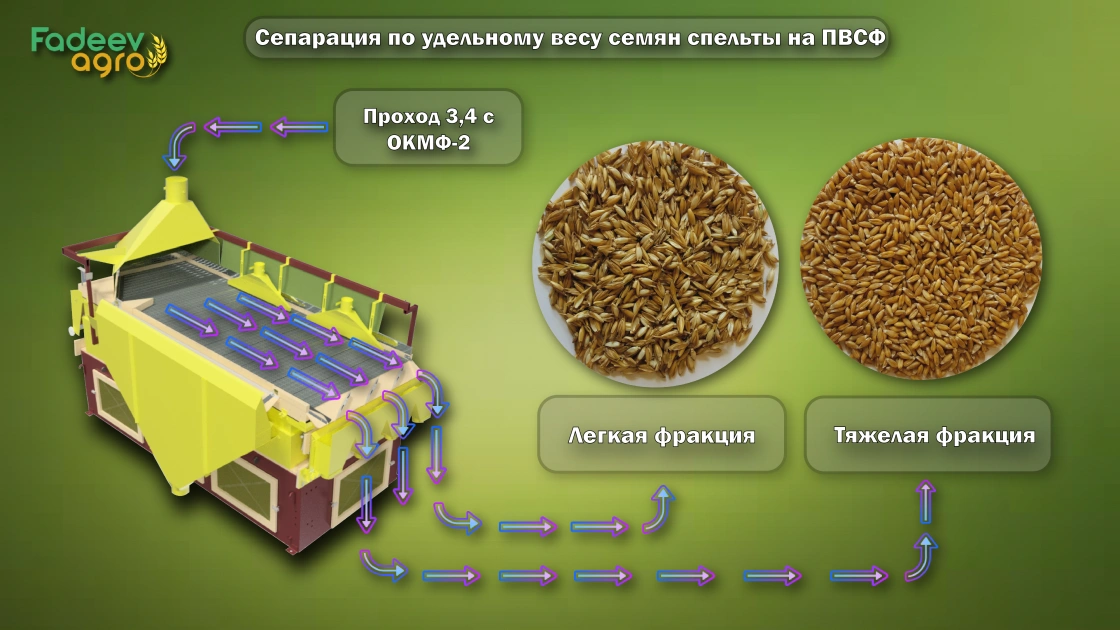
Fig.6. Spelled separation using PVSF
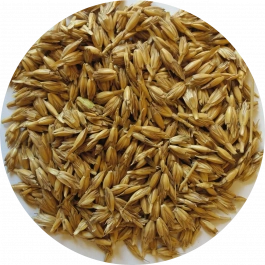
Source material
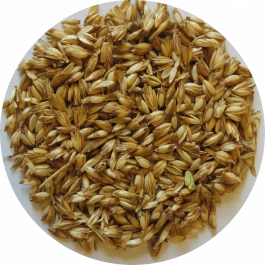
Round sieve discharge 6.0 mm
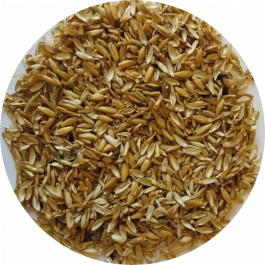
Husk, broken grain
2.5 mm passage
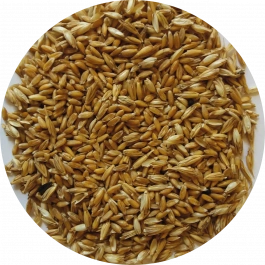
3.4 mm passage
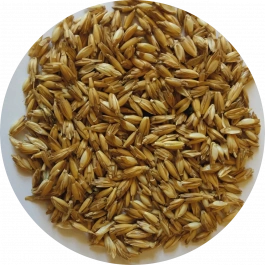
Toe-off 3.4 mm, undershot
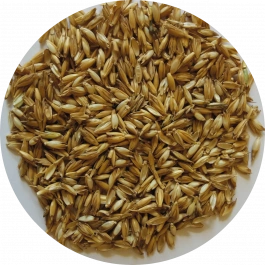
Light fraction after PVSF
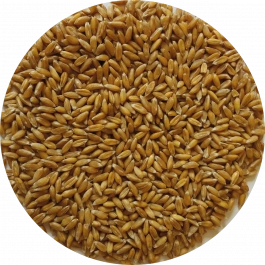
Heavy fraction after PVSF
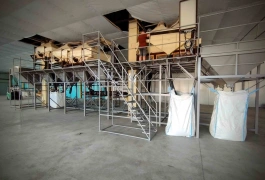
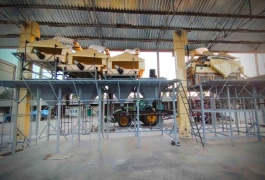
The pneumatic vibrating table strictly selects pure whole spelled grain, ready for any subsequent processing. Grain content 0.8 kg/l (Fig. 6). The assembled complex layout is shown in Figure 7.
Thus, dear reader, if the task arises of carefully collapsing spelled, then please contact us. The technology has been proven.
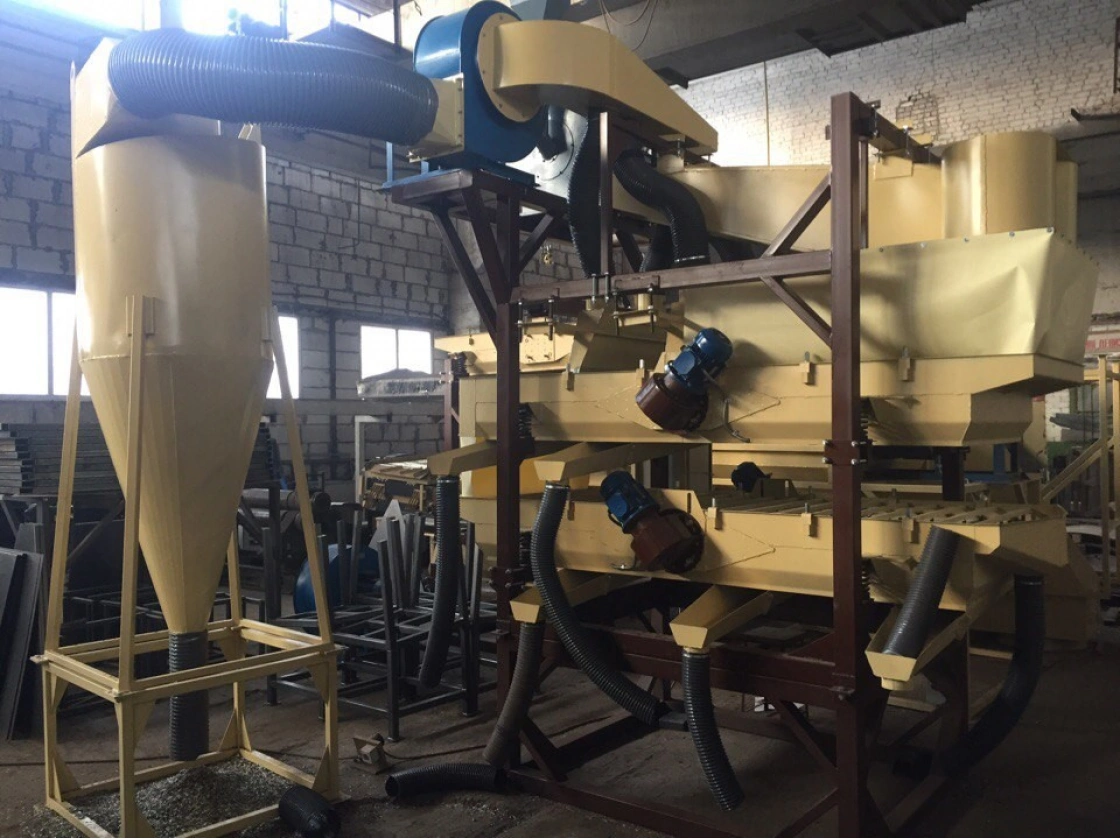
Fig.7. Layout of the complete complex.
References:
- Revival of spelled./Current agricultural systems. - year. - number. - month. – p.
- Andriy Vasilchenko, chief specialist in grain crops, All-Ukrainian Scientific Institute of Breeding (VNIS). Spelled (Triticum Spelta L.) is a new wheat trend/Vasilchenko A.//Agronomist. – 2016. – No. 3. - sickle. – P. 90-92.
- Katerina Polishchuk, Ph.D. S.-G. Sciences Institute of Water Problems and Melioration NAAS. Spelled is promising./Polishchuk K.// The Ukrainian Farmer. – 2016. – Spring. – pp. 62-63.
- Sergiy Kramariov, Doctor of Social Sciences Sciences, Prof., Valery Isaenkov, Ph.D. S.-G. Sciences DU Institute of S.-G. steppe zone of the National Academy of Sciences of Ukraine, Grigory Gospodinenko, Dr. S.-G. Sciences, Prof., Igor Tkachenko, Ph.D. S.-G. Sciences Uman National University of Gardening, Oleksandr Kramarov, graduate student of the NSC Institute of Agrarian Economics of the National Academy of Sciences of Ukraine. Spelled turns./Kramaryov S., Isaenkov V., Gospodinenko G., Tkachenko I., Kramaryov O.// The Ukrainian Farmer. – 2015. – Spring. – pp. 40-41.