Noria Fadeeva
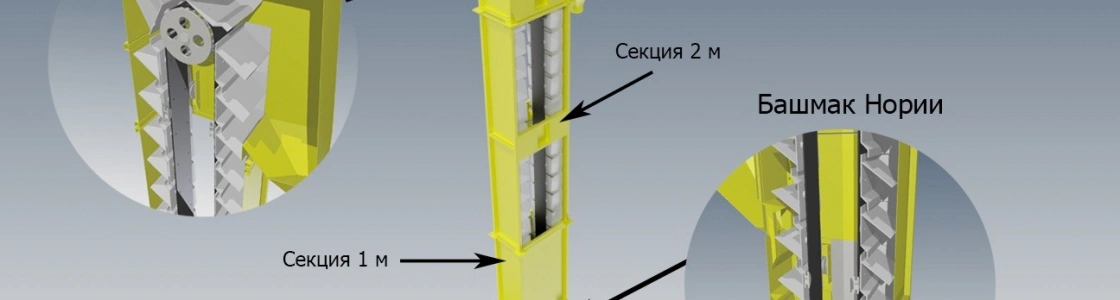
SLOW Elevator as a component of gentle technology
Friends, perhaps the most common machine in the world for vertically moving grain is the elevator. Regardless of the manufacturer, all scooping and throwing elevators can operate at a bucket speed of at least 2...2.5 m/sec. A decrease in speed leads to a decrease in centrifugal force when the bucket is rotated on the drum of the elevator head, and the grain is poured into the elevator channel.
Everything would be fine, but the grain is injured in this mode. Studies have shown that grain is injured equally in the elevator shoe (loading) and in the head (unloading). During loading, injury is caused by the impact of the bucket on the grain located in the shoe of the elevator and the impact of the grain, first of all, on the edge of the front wall of the bucket during loading. In the head of the elevator, the grain is injured when it hits the breaker wall of the device. Multiple studies of quantitative assessment of elevator injuries give approximately the same results.
So, according to research (V. M. Dryncha 2006), the increase in microdamage to grain (barley, oats) in one pass through the noria of Refinery-50increased by 4% M. M. Tukhvatulin puts the figure from 2 to 5%. The situation is even worse with crops prone to injury (corn, rice, peas, sunflower, soybeans). So, according to I. G. Stron, the amount of external damage caused by a elevator during the transportation of corn is about 10%. For injury of sunflower with a bucket elevator with a belt speed of 2.5 m/s, the figure is 3% and this is in one pass.
Figure 1 shows data on injury to rye, barley and oat seeds by Noria Refinery-100. The diagram clearly shows that oats, compared to rye and barley, “holds the blow” better, but its protective film is destroyed and the amount of grain dust (and dust is a destroyed shell) increases 25 times in one pass. In membraneless crops, injury is even stronger.
If the growth of broken grains characterizes macrotrauma, then a multiple increase in flour indirectly indicates an increase in microtrauma< /em> grain, because it is nothing more than the destroyed shell of the grain and its knocked out particles.

But if you ensure that the bucket is fully loaded, the proportion of damaged grain will be less than when the bucket is underloaded. And this is easy to explain - the relative proportion of grain hitting the front edge of the bucket when the bucket is completely filled is smaller. Research on rice has confirmed this.

We have developed and produced elevators that: do not injure the grain, do not collapse the sunflower , do not cause cracking in the grains of corn, rice, peas and other crops prone to injury, and thereby do not reduce the yield potential of the seeds and improve the safety of the grain during storage. In short, we propose to replace all scooping and throwing elevators with pouring ones.
The elevators we produce are intended both for outdoor placement (at receiving grain after unloading transport) and for transport connections between machines installed indoors.
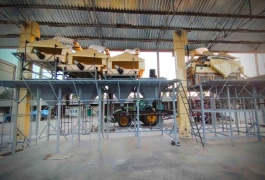
Their fundamental difference is that external elevators are chain-type, have a vertical and inclined section, which allows for low speed ( in the range from 0 to 0.7 m/s) move the buckets and pour the grain from them into the receiving device without any impact. In addition, the inclined section of such a elevator allows you to feed grain under the roof of the premises, while avoiding the long length of channels for transporting grain (gravity), and significantly simplify the maintenance of the upper part noria, protected from precipitation and icing (Fig. 3, 4). In elevators of this design, the buckets do not have any bolts inside the bucket volume.
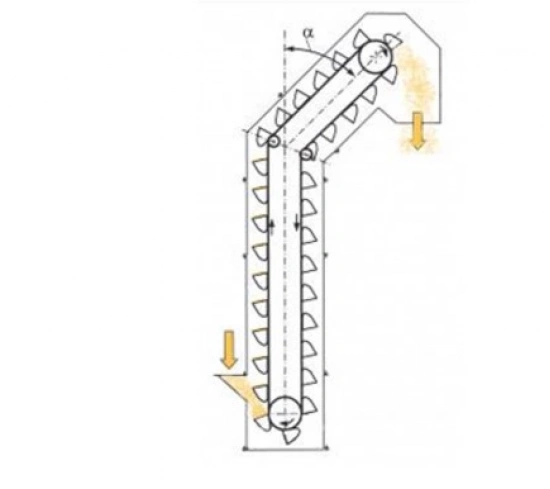
Fig. 3 Gentle elevator for outdoor installation
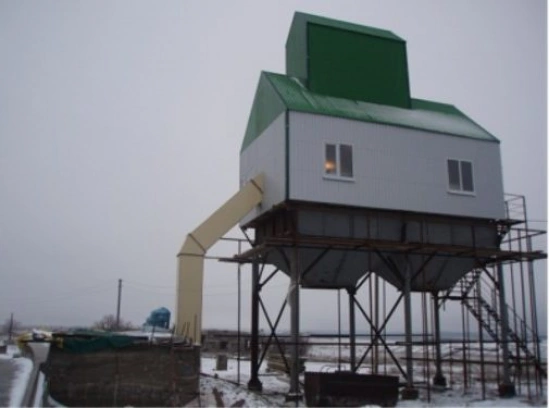
Fig. 4 Gentle elevator for outdoor installation
In-shop elevators are made in a vertical version. In them, gentle interaction between the elevator and grain is achieved due to low speed and gradual unloading of grain from the bucket (Fig. 5, 6).
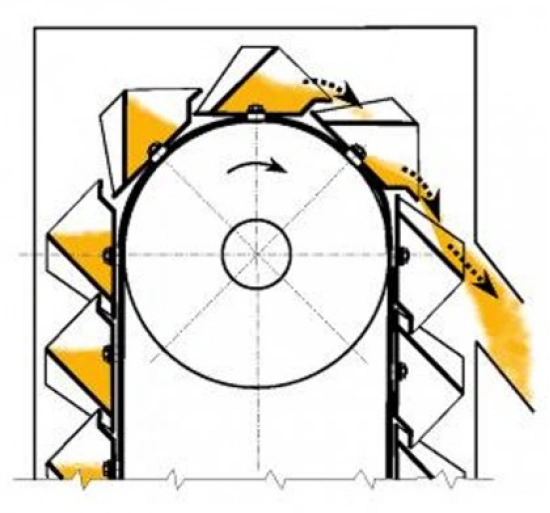
Fig. 5 Gentle elevator for indoor installation
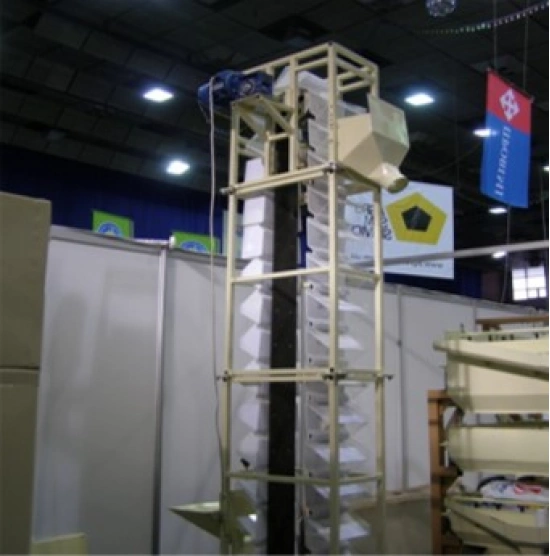
Fig. 6 Gentle elevator for indoor installation
The shape of the bucket and their relative position on the elevator belt ensures loading and unloading of grain at any speed. When the belt is slowly turned on the upper drum, the grain is not thrown out of the bucket and does not hit the head of the elevator, but is poured out at the beginning onto the surface of the rear wall in front of the moving bucket, made in the form of an open tray, and then, due to the angle of this wall inclined to the horizon (45º or more) into the receiving device.