Beans are the leading legume crop
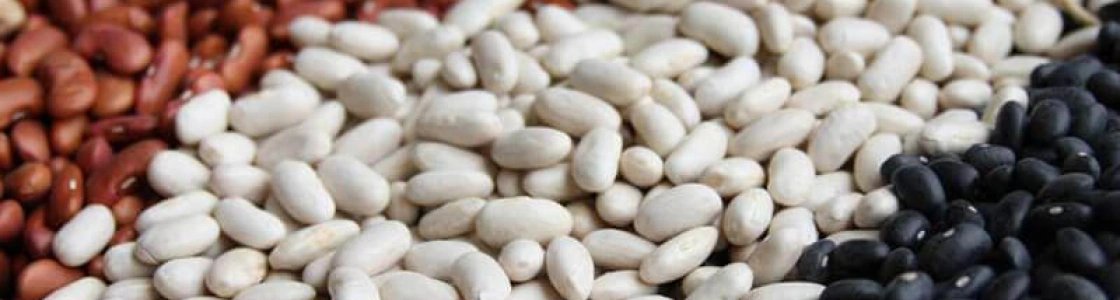
Beans are the leading legume crop
The homeland of beans is Latin America. If today global agribusiness responds to any market request, and even the most remote region of the planet is supplied with everything that is necessary for adequate nutrition of the people living there, then once upon a time, relatively recently, just some five hundred years ago, the population of America did not have the diet contained neither bread products from wheat and barley, nor soy products, and was forced to feed on corn grain - from cereal crops, amaranth and quinoa - from cereal crops, legumes and, above all, beans - from high-protein crops.
Bean grain has high nutritional value due to its composition:
- Proteins 24-25%;
- Carbohydrates 60%;
The energy value of bean seeds is 333 kcal (1393 kJ).
Bean protein is digestible by 70-80%, and its nutritional value surpasses many types of meat.
In addition, beans contain potassium, calcium, sulfur, magnesium, phosphorus, iron, vitamins B1, B2, B3, B6, C, E, K and PP, as well as essential amino acids. The presence of vitamins and, more importantly, metals in beans ( beans hold the record for the presence of aluminum, boron, potassium, calcium, magnesium, and copper in their seeds) led to the recommendation of nutritionists to eat bean dishes at least 1-2 times a week.
Such dishes are classified as dietary and medicinal products. It is believed that beans prevent and promote the treatment of atherosclerosis, kidney stones, hypertension, pyelonephritis, and are recommended for cardiac arrhythmias. Beans normalize carbohydrate metabolism in the body, activate the production (synthesis) of adrenaline and hemoglobin. Beans have an insulin-like effect on metabolism, which significantly reduces blood sugar levels and has a beneficial effect on diabetes. Thanks to their antibacterial properties, bean dishes prevent the formation of tartar. In addition, they are good at calming the nervous system. Beans are recommended to be consumed for tuberculosis, as well as to reduce inflammatory processes in the liver.
Dear reader, let me go back in time by more than 70 years. The forties of the last century, the war ends, I am five years old, there is general famine. Winter. In one of the unheated rooms of our home, my mother laid bean seeds on the window sills and closed the room. How I got into this room, I don’t remember, but how I ate beans from the windowsills with the greed of a hungry boy, I remember, but I remember even more clearly how I vomited inside out afterwards. My deep poisoning turned out to be a mitigating circumstance and, as they say, I didn’t get hit for destroying the beans, but I myself, as they say today, “got it” in full.
And now, more than 70 years later, I am writing about beans and find on the Internet: “Beans should not be eaten raw, as this can cause poisoning.” Greetings to you, boy Lenya, from Ph.D., Associate Professor Leonid Vasilyevich - don’t eat raw beans anymore.
And also about warnings about beans - doctors do not recommend bean dishes to people predisposed to gout, although this statement is considered controversial - some experts believe that gout is caused by purines, which are found only in fish and meat, and purines in plant foods do not provoke gout and do not aggravate its development.
Post-harvest processing of beans.
It is known that beans are the most damaged of all leguminous crops. This is explained by the fact that the cotyledons in the bean achene are not even closed, as in the seeds of other leguminous crops . Once the shell bursts, the bean achene is no longer one whole, but two cotyledons.
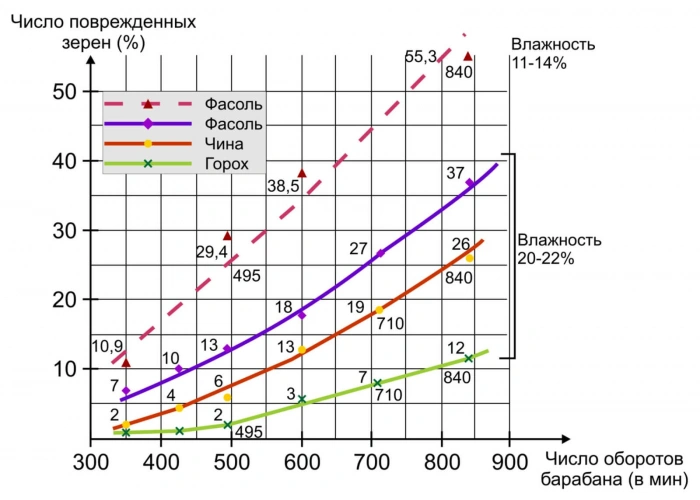
Fig.1. Dependence of injury to legumes (beans, peas, peas) on the number of drum revolutions during threshing and seed moisture.
Figure 1 shows the injury rate of grain legume seeds when harvested with a combine (direct threshing).
The graph shows that under the same threshing conditions, the number of damaged bean seeds is three times higher than when threshing peas. Bean seeds are especially damaged at a humidity of 10-14% and high drum speeds. The least damage to beans occurs when the humidity is around 20% and the drum speed is no more than 450 rpm.
It is clear that this raises the question of drying the bean grain after harvesting. Here we need to set priorities. At least for seeds, it is preferable to minimize injury and dry to equilibrium moisture content (~14%) at a coolant temperature of no more than 40°C.
Since the gentle fractional technology we are introducing for the production of strong seeds does not cause not only macro, but also micro-injuries, when beans were brought to our plant, eaten away by some insect, from which the farmer did not have time to treat the field, we were absolutely confident that we could cope with task.
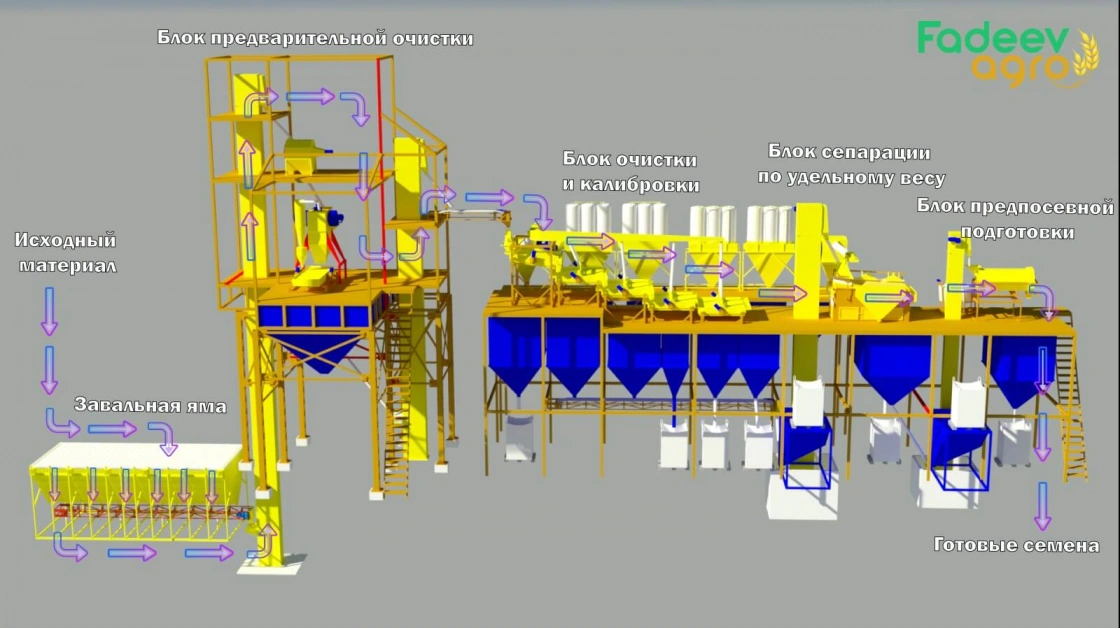
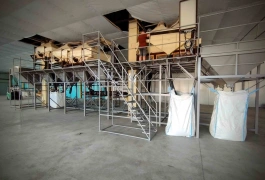
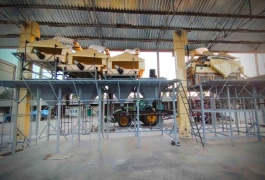
Fig.2. Layout of the seed plant.
Figure 2 shows the layout of our plant. After harvesting, the beans are poured into the waste pit. A grate with a cell of 50x50 mm is installed on the bunker of the dam pit (the strength of the structure can withstand the passage of a loaded grain truck); when grain is poured, large debris and random objects are retained on this grate. The grate also reduces the speed at which bean grains fall, which prevents injury.
A reversible belt conveyor is installed under the hopper, the speed of which is controlled by a frequency converter, which allows you to accurately provide the required amount of grain when feeding it into the first elevator. In order to reduce injury from shear stresses caused by the shear between the stationary grain in the hopper and the grain moving on the conveyor belt, the grain exits the hopper onto the belt through a device that provides echelon undercut. The grain is poured from the conveyor belt into the elevator.
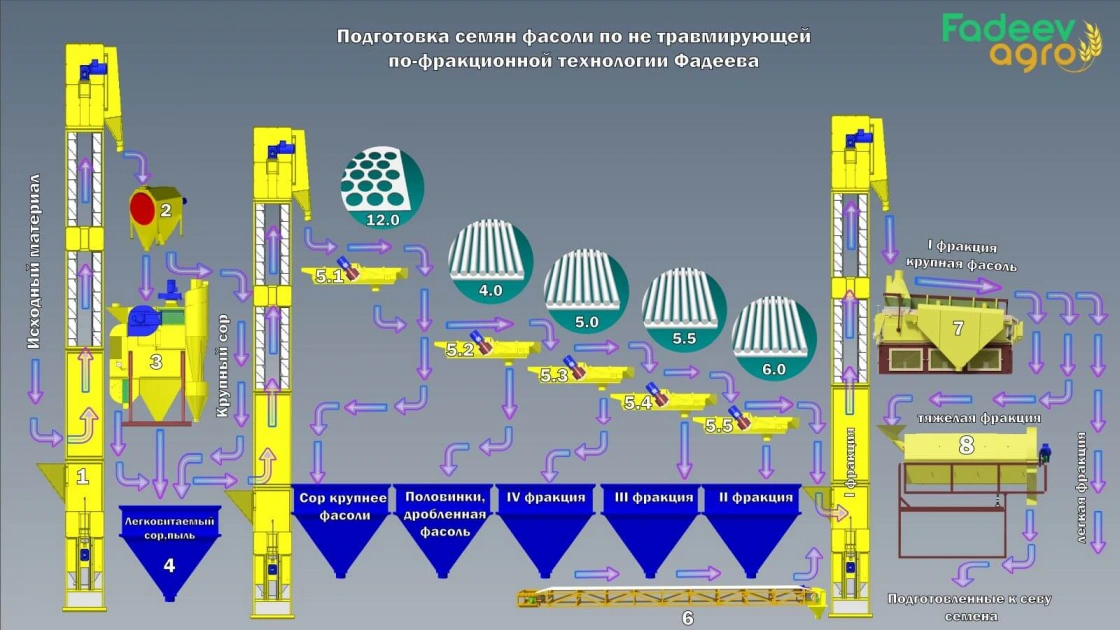
Fig.3. Scheme for preparing bean seeds
Gentle low-speed elevator pos. 1 lifts the bean grain and pours it into the scalper pos. 2 fig. 4 to remove large plant debris. Figures 4, 5 show photographs of beans before cleaning and debris selected by a scalper.
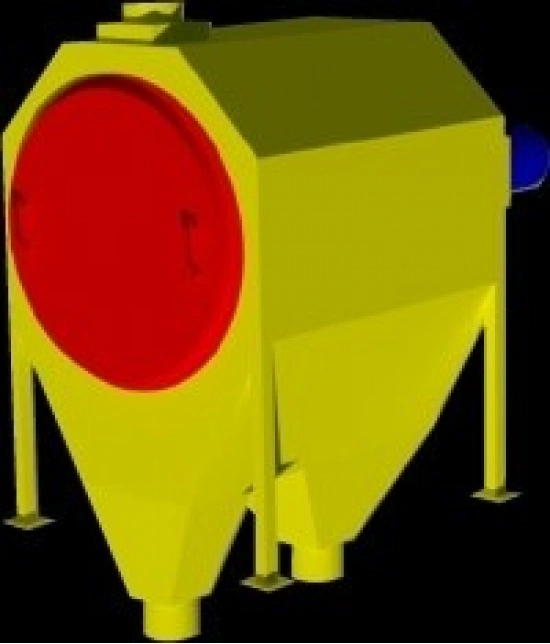
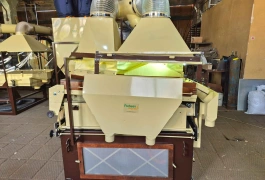
Fig.4. Scalperator
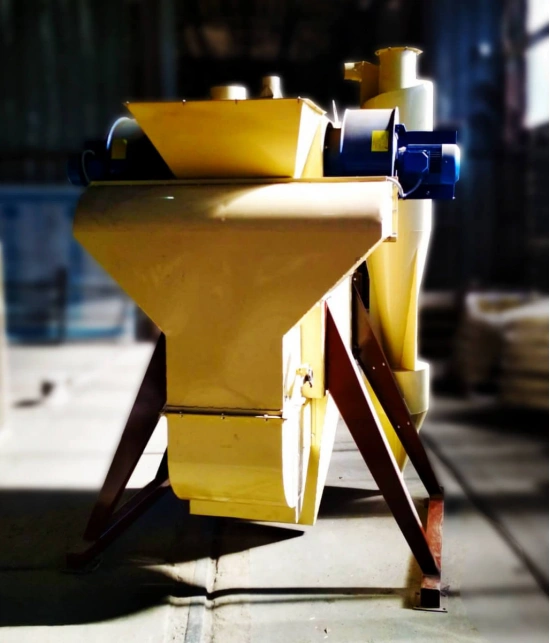
Fig.5. Grain aspirator ZAF-30
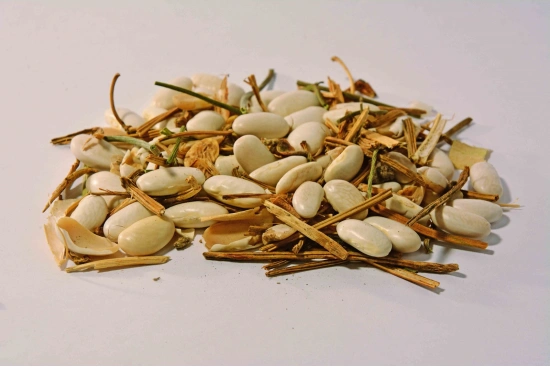
Fig.6. Source material before purification.
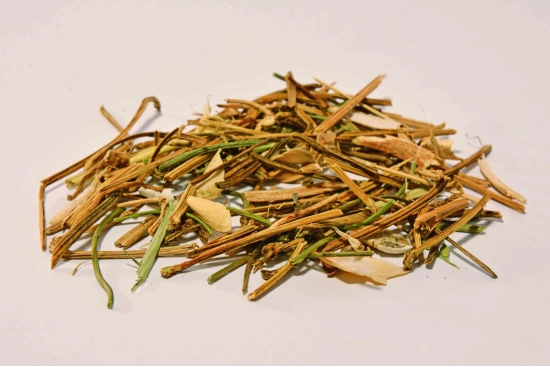
Fig.7. Large trash that came off the scalper
From the scalper the grain is poured into the grain aspirator (ZAF) pos. 3 fig. 5 to remove loose dirt and dust. The selected waste is poured into the appropriate bin. Grain is also poured into the grain hopper, and from it into a gentle elevator for delivery to the final cleaning and calibration unit.
The cleaning and calibration unit consists of five cleaning calibrators, in which the remaining large and small debris, grain impurities, halves of bean seeds are sequentially removed from the seed and the beans are calibrated into fractions, each of which differs in the thickness of the seeds. A diagram of the cleaning and calibration unit is shown in Figures 2 and 3.
To the first cleaning calibrator pos. 5.1 fig. 3, a sieve with round holes 12.0 is installed, through which all the beans pass, and large litter, thanks to plane-parallel vibrations (the vibrator is placed vertically), comes off the sieve.
The next calibrator along the bean path is pos. 5.2 fig. 3 is designed to remove halves and grain impurities from the bean composition. A Fadeev sieve is placed on it, Fig. 8, the characteristic size of which “a” allows a half to pass through, which is turned by the sieve itself (this is the shape), and all the whole beans come off from this calibrator to the next one. For this batch of beans, a sieve with a characteristic size of a = 4.0 was sufficient. All the grain admixture and halves of beans (Fig. 8) passed through it.
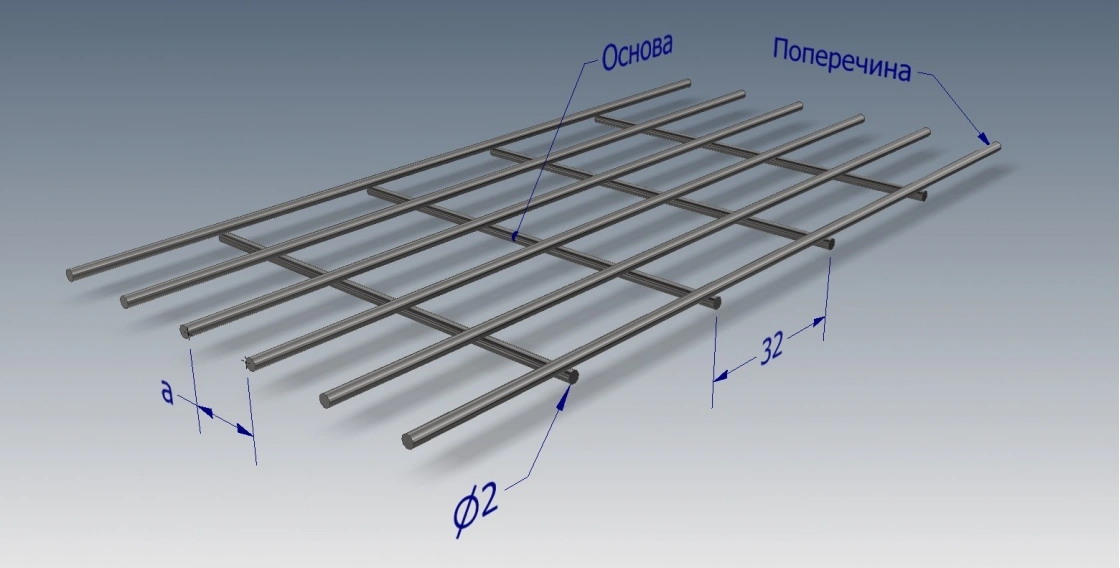
Fig.8. Fadeev's sieve
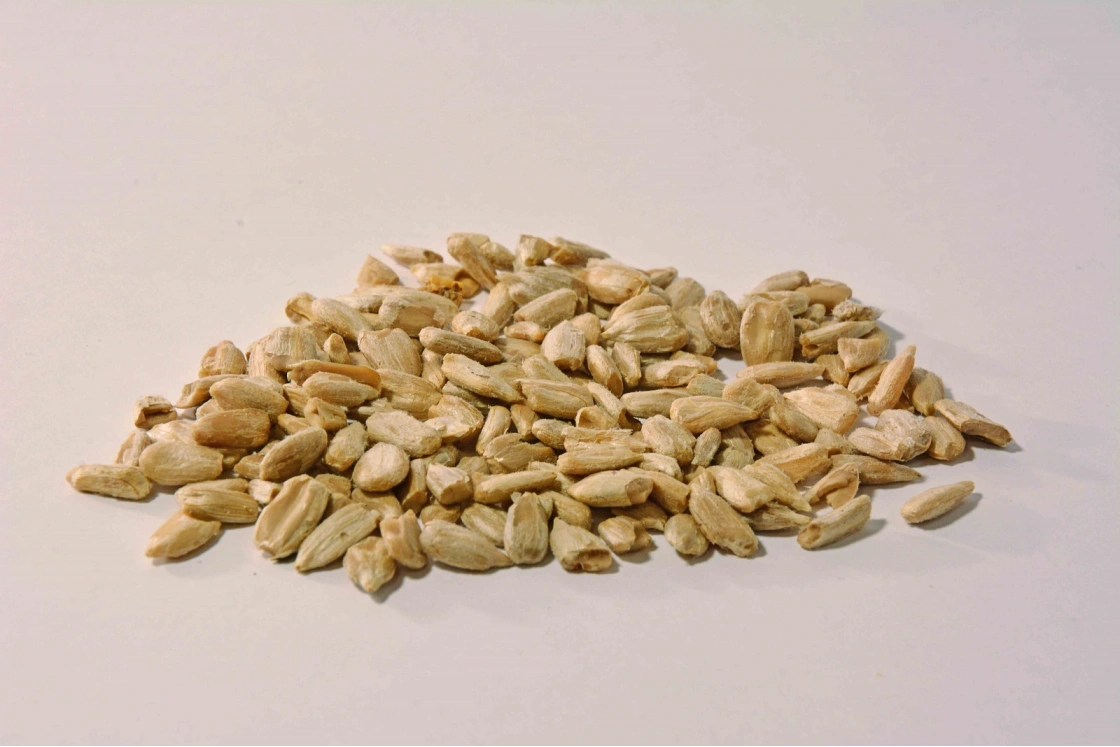
Fig.9. Grain mixture and bean halves.
The next three cleaning calibrators pos. 5.3; 5.4; 5.5 Fig. 3, the beans are sequentially divided by size into four fractions; for this purpose, Fadeev sieves of the appropriate sizes are installed on them: a = 5.0; 5.5; 6.0 (Fig. 3).
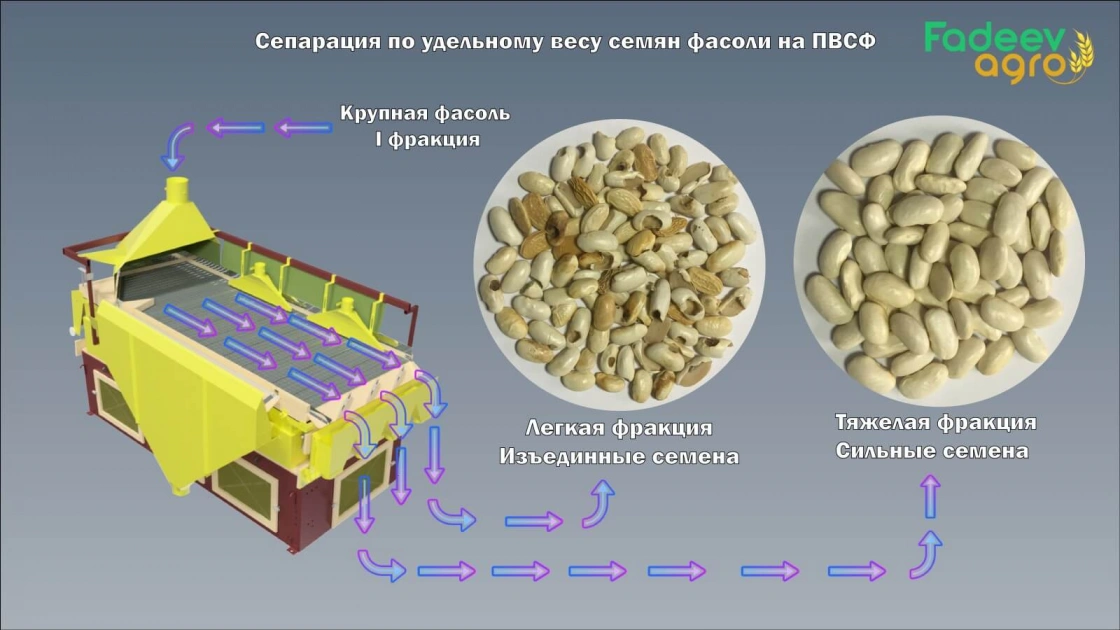
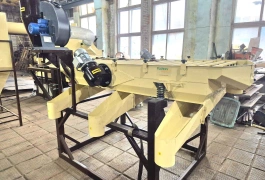
Fig. 10. Scheme of separating bean seeds on a pneumatic vibration table.
From the last cleaning calibrator pos. 5.5 Fig. 3 The largest beans come off (fraction I). It should be noted that on Fadeev sieves the seeds are rotated and calibrated according to the smallest size - thickness. In fact, only such calibration ensures the separation of seeds according to the amount of nutrients in them, because Calibration is performed practically by volume. Each fraction is poured into the corresponding bunker. From each bin, seeds can be poured one by one onto the conveyor belt pos. 6 Fig. 3 and direct it to the seed separation unit by density. Grain consumption is regulated by the speed of the conveyor belt.
The seed density separation unit consists of a gentle elevator and a pneumatic vibration table, pos. 7fig. 3. On the pneumatic vibrating table, the final separation of the heaviest seeds, equalized in size and shape, occurs, i.e. strong seeds. In this case, seeds of equal size, but light or eaten by some pest, are easily separated from heavy seeds. Figure 10 shows a diagram of seed separation on a pneumatic vibration table.
Figures 11 and 12 show photos of strong seeds and photos of corroded lightweight seeds separated on a pneumatic vibration table. The seeds selected on a pneumatic vibration table are poured into the appropriate bins. Strong seeds go to the next block - the pre-sowing seed preparation block.
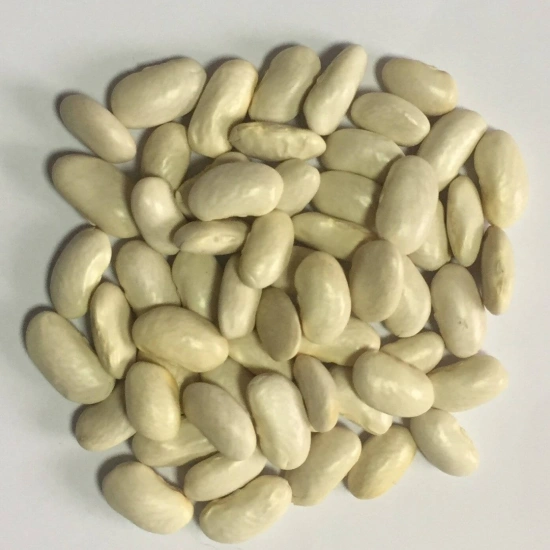
Fig. 11. Strong seeds
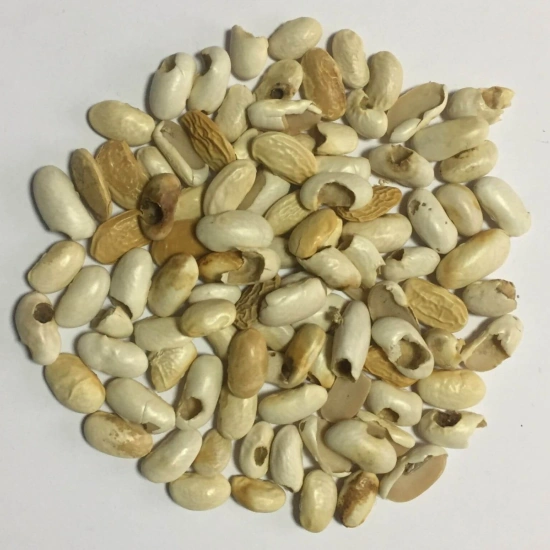
Fig. 12. Corroded seeds.
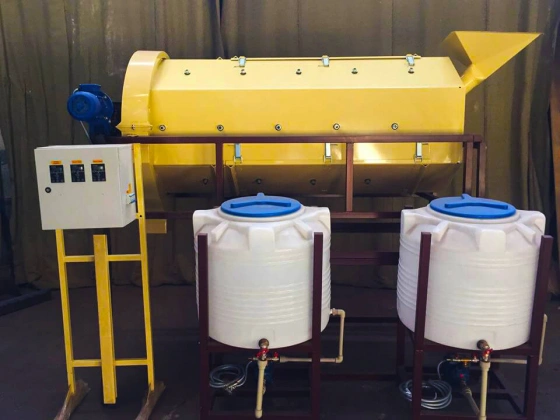
Fig. 13. Seed treater Fadeev (PSF).
The pre-sowing preparation block consists of a gentle elevator, the dressing agent itself, two containers for various liquid preparations and drying of seeds after treatment in the dressing agent. Figure 9 shows a seed treater (PSF).
In the treater, the treatment of seeds with preparations is carried out due to their free pouring, and the equal distribution of the drug over the surface of the seeds is ensured first by spray nozzles, and then by the mutual contacts of the seeds in the process of pouring them. Two autonomous systems for supplying and applying the drug make it possible to use drugs that cannot be combined in one container. Seeds prepared for sowing are poured into big bags and from the same big bags are loaded into the receiving containers of the seeders.
This seed preparation provides:
- high seed uniformity in size, which, in turn, determines high quality sowing - without gaps or double seeds;
- absolute uniformity in sowing characteristics, since germination and germination energy of strong seeds coincide;
- complete absence of affected seeds - they, as experience shows, are separated on a pneumatic vibrating table as lighter ones with the same dimensions;
- complete absence of both macro and micro trauma, which ensures almost 100% germination;
- uniformity of germination, uniformity of all phases of the growing season, uniformity of ripening, and most importantly, high productivity.
Agricultural technology.
Growing beans on large areas is new for Ukraine. Just ten years ago, employees of the magazine “Grain” were convinced that beans on an industrial scale were grown in Ukraine by only one agricultural company, Rost Agro, which is located in the Poltava region (director - Bernatsky M.V.). Today, beans are considered one of the leading legume crops, and the demand for bean grains is increasing.
Today, beans are grown on an area of more than 25 million hectares in the world, and global production is about 30 million tons. More than 95% of the global gross harvest comes from Asia, South and North America and Africa. In England and other European countries, vegetable beans are popular, which are grown under film. But we are interested in the technology of open bean cultivation.
Tilling the field for sowing is given in many sources [3], but since I am deeply convinced that the global prospect of crop production lies in gentle soil cultivation technology, I do not provide recommendations on the depth of plowing with a moldboard and the subsequent technology for leveling the field. I will wait for the experience of those wise farmers who have mastered growing beans using Strip-till or, even better, No-till.
In Ukraine, there are about 51 varieties of beans in the State Register, and about 15 of them are grain-oriented. Bean selection today in Ukraine is carried out by the National Research Center and the Institute of Agriculture of the National Academy of Sciences, the Institute of Plant Growing named after. V.Ya. Yuryeva NAAS, Institute of Forage NAAS, etc. Potential - 3.2 - 3.4 t/ha. The average yield in Ukraine is 1.5 c/ha.
By weight 1000 pcs. bean seeds are divided into three groups: small seeds - 140-150 g; medium seeds - 250-400 g and large seeds - 400 grams or more. Laying the lower bean - 7 cm.
Europeans prefer white beans, while the population of Asian countries prefers red or multi-colored beans. Beans in crop rotation help to increase soil fertility, since beans produce at least 60 kg/ha of organic nitrogen, and crop residues increase the enzymatic activity of soil biota and the availability of nutrients to subsequent crops.
Beans are a heat-loving crop. Begins to germinate at soil temperatures of 8-10°C. Germination is delayed for the reason that, like all legumes , swelling requires the absorption of water greater than the mass of the achene (1.2-1.4 times), and the swelling process, as is known, is very dependent on temperature. Thus, at an air temperature of 24-30°C, germination occurs in 7-8 days, and at 15°C - in 14-15 days.
The seedlings do not tolerate spring frosts well. The most favorable temperature for growth and development is 20-28°C. High temperature is unfavorable. Thus, at temperatures above 30°C, the number of seeds in a bean decreases, abortivity of fruit elements occurs, and at a temperature of 39°C, growth processes in the plant stop [1].
The culture tolerates moderate shading. The optimal seeding rate is 400-600 pcs. viable seeds per hectare. According to the duration of the growing season, beans can be divided into three groups: early ripening (75-85 days), mid-ripening (85-100 days) and late ripening (100-120 days or more).
Beans do not compete well with weeds. This plant has one peculiarity - in moderate weather the leaves of the plant are located horizontally, and in the heat they become vertical, allowing access of light into the aisles. When there is moisture, the weed becomes active.
The crop simultaneously requires good soil moisture during germination and, at the same time, excessive waterlogging significantly reduces seed germination. The root system of beans is located in a layer no deeper than 20 cm, so drying out the soil negatively affects the development of the plant and its productivity. The average transpiration coefficient is 550-600 units.
The best predecessors: winter and spring crops, corn for silage. It is not advisable to sow after sunflower, buckwheat and leguminous crops. Sow in one field at intervals of 3-4 years.

Fig. 10. Dependence of soybean and bean yields on sowing density, t/ha (average data for three years) [2].
It is interesting to note that the yield of beans depends little on the density of sowing - unlike, for example, soybeans. Obviously, with a low seeding rate, the yield is compensated by the number of beans and the weight of 1000 pieces. seeds (Fig. 10). To some extent, this is a resource for reducing costs due to seeding rates.
Beans, compared to other legumes , are more demanding on soil fertility. Soils with high acidity, salinity, high groundwater levels, and clay soils are unsuitable for it. Soils with neutral acidity (pH 6.0-7.5) are suitable for beans - this is important, first of all, because this level of acidity promotes good nitrogen fixation.
A hundredweight of bean grain consumes 5-6 kg N from the soil; 4-5 kg K 2 O; 1.5-2 kg P 2 O 3 and 4.0-4.5 CaO [1]. When sowing, it is recommended to apply phosphorus 15-20 kg, potassium 20-30 kg, nitrogen 10-15 kg per hundredweight.
With proper inoculation, beans are provided with organic nitrogen in the required quantity during the growing season. For inoculation of seeds before sowing, “Rizobofit” or “Rizogumin” is recommended. The application of microfertilizers is mandatory, but the specific amount and composition depends on their presence in the soil. In the two-component dressings we produce, when treating seeds, microfertilizers can be applied to the seeds: sulfur, molybdenum, manganese, copper, zinc, regardless of the dressing.
Recently, growing organic products has become more and more in demand in the market. Beans , as a food crop that is subject only to heat treatment, occupy a worthy place in the organic products market. This requires herbicide-free soil treatment. Agronomists who grow organic products know well that success is possible if the previous field was cleared of weeds. It is clear that there is no absolutely clean field.
Beans are a late-sowing crop; this allows 2-3 mechanical treatments to be carried out before sowing and weed removal in the “thread” phase, and since seedlings appear slowly, this allows for two more agrotechnological pre-emergence treatments.
Strong bean seeds, prepared using gentle fractional technology, can be sown 1 cm deep when sowing, i.e. sow to a depth of not 2-3 cm, but 3-4 cm, in which case the shoots will emerge smoothly, and a short delay before the start of germination allows once again to mechanically remove the germinating weeds. The optimal sowing time is May 15-25.
Sowing methods: wide-row, with a row spacing of 30-45 cm; row - 15-18 cm, and can also be sown in a line 45x15x45 [3].
During the growing season, at least two inter-row treatments are required. It is recommended to carry out inter-row processing twice: the first time when forming the second trifoliate leaf, and the second time before closing the rows.
Herbicidal technology is quite well described in special recommendations. Insurance herbicides are recommended: against broad-leaved plants - “Bazargan” (1.5 l/ha) in two doses, and if in one, then the maximum dose (2 l/ha); against cereals - “Fusilade Forte 150 EC” (1.2 l/ha) or “Miura” (0.7 l/ha) [3].
Beans are a more or less disease-resistant crop, but, nevertheless, they are affected by fusarium, bacteriosis, and root rot. Protection – strong seeds, well-treated before sowing. If damage does occur, it is recommended to spray the pysol twice during the growing season with “Impact K” (0.6-0.8 l/ha), “Corenet” (0.6-0.8 l/ha). The main pest is bean weevil, protection against it is treatment with insecticides before flowering and 8-10 days after “Conect” (0.5 l/ha) [3].
Sometimes during harvesting it is recommended to fumigate grain.
If the growth and development of plants is delayed for some reason, it is advisable to perform desiccation. “Glyphosate” is used as a desiccant (especially if the field is clogged with weeds) - when the bean moisture content is 30% 10-14 days before harvesting, the norm is 3 l/ha or “Diquat” (“Reglon, etc.”), which is used at 75 % browning of pods 5-7 days before harvesting, norm 3 l/ha at a concentration of 200 l of water per ha [3].
It is advisable to perform cleaning at a humidity of 19-20%, drum speed 400-500 rpm. Cleaning is best done in the morning or evening - less cracking of the beans.
Dear reader, agribusiness is perhaps the most complex of all businesses, but at the same time, vital for humanity. In it, like in no other, you need to keep your nose to the wind. Legumes have a traditional demand in Eastern countries, but the global trend of “healthy food” convincingly proves the prospects for the production of legumes , including beans . And if we also take into account the ennobling effect of legumes on the soil (organic nitrogen), then legumes cannot be left without attention.
List of used literature:
- Sergiy Ivanyuk, Ph.D. S.-G. Sciences Institute of Feeds and the Rural State of Podillya. Kvasol grains./Ivanyuk S.// The Ukrainian Farmer. – 2015. – Berezen. – pp. 96-97.
- Oleksiy Kirilesko, Dr. S.-G. Sciences, Professor Institute of Feeding and Rural Government Podillya NAAS. Balance for grains./Kirilesko O.// The Ukrainian Farmer. – 2017. – lyuty. – pp. 34-35.
- Genetic Plant Cells. Innovative technology for the cultivation of kvass./ Genetic Plant Cells // conference “BEAN CULTURES. NAZUSTRICH WEEKS OF GLOBAL DRINKING.” – November 23, 2017