Oilseed flax is the most valuable crop
Sometimes it is difficult to predict the prospects for cultivating a particular crop. It’s easier to say – the world’s population is growing, which means agricultural production will also increase. But against this background, as they say, “nuances” arise.
In recent years, the trend of “healthy eating” as a component of a healthy lifestyle has been gaining momentum. This is due to several reasons. The importance of mental work has grown significantly and will continue to increase. Mental work, unlike physical work, does not have a working day “from” to “to”. The process of comprehending the task at hand is practically not interrupted, except perhaps by sleep, and then sometimes in the morning a solution suddenly dawns on us that was not there in the evening. Breakthroughs in the intellectual sphere are made by teams that are in constant creative shape. Hence the requirement for the physical fitness of each team member.
A balanced diet is an essential component of a healthy lifestyle. Advances in science in the field of dietetics and medicine provide clear recipes for a balanced diet. In addition, mental activity is less limited than physical activity by age-related changes. In this regard, the importance of some agricultural crops takes on new meaning. They are becoming more in demand. These, along with others (chia, quinoa, etc.), also include flax.
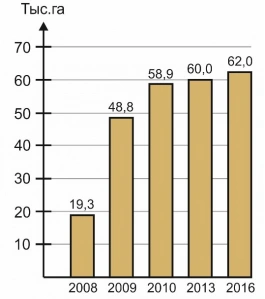
Fig.1. Dynamics of flax crop area in Ukraine (2008-2016) [1].
The homeland of this plant is the mountainous regions of India, China, and the Mediterranean. Today, flax is widely cultivated in temperate Europe, Asia and North America, as well as North Africa. Flax came to Russian territory from Asia. Flax seeds were discovered during excavations dating back to the beginning of the 2nd millennium BC. In the 10th-11th centuries in Kievan Rus, peasants cultivated flax for fiber and oil, and paid them dues and taxes. Commercial flax growing in Rus' arose in the 13th century.
Today, there are more than 1.5 million hectares under flax in the USA, and more than 1 million hectares in Canada and India. Ukraine is just beginning to understand what role it could occupy in the market of healthy products, having such agricultural potential and, in particular, in the production of flax , especially since the natural and climatic conditions allow the flax grown in Ukraine to be more environmentally friendly and have competitive advantages in the global market. Even with a relatively small gross harvest of oilseed flax, Ukraine exports it to countries such as Belgium, Poland, Lithuania, Germany, and Italy [1].
In recent years, there has been a noticeable increase in the area under flax in Ukraine (Fig. 1). And this is not surprising, because the demand for flax has gone to a new level thanks to science, which has assessed its importance for human health.
Flax belongs to the flax family. The genus consists of more than 200 species, but only common flax is cultivated. Morphologically, common flax is divided into five subspecies. The most common is the Eurasian subspecies. There are also four varieties of this subspecies: fiber flax , curly flax , mezheumok flax and stale flax .
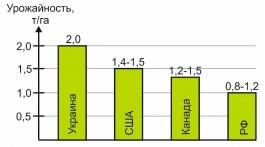
Fig.2. Conditions for growing flax in Ukraine are better than in other countries. This confirms the yield [2].
World flax production in 2016 amounted to 2.65 million tons, and market needs are about 3 million tons. Ukraine ranks 7th in the world in flax exports.
Flax seeds contain a large amount of vitamin F - 4.6%. This is an anti-cholesterol fat-soluble vitamin consisting of a combination of several unsaturated fatty acids - omega-3, omega-6 and omega-9. Vitamin F (by the way, a very conventional name) removes low-density (bad) cholesterol from blood vessels, strengthens their walls, improves blood circulation, normalizes blood pressure and pulse. Therefore, flax shows its beneficial properties for atherosclerosis, diseases of the cardiovascular system, helps to reduce and normalize weight and metabolism, and is extremely useful for hypertension, diabetes, and bronchial asthma. Flax also prevents immunodeficiency and cancer diseases, and due to the normalization of tissue nutrition, it prevents osteochondrosis and rheumatoid diseases.
Vitamin F also determines the use of flax seeds for the treatment of skin diseases - eczema, dermatitis, allergies, because It also has an anti-inflammatory effect.
The antioxidant activity of substances prevents many diseases: cardiovascular, neurogenerative, malignant neoplasms, various toxicoses, accelerated aging of the whole organism. Flax seeds are a rich source of substances with high antioxidant properties. The main ones are lignans (Fig. 3).
Thus, flax seeds are the strongest antioxidants, which allows us to consider them as an effective way to protect cell membranes from various oxidative processes and as a promising raw material for the production of natural antioxidant dietary supplements to prevent a number of diseases.
Flax seeds contain vitamins A, B1, B2, B5, B6, B9, C, E, K, PP, choline, trace elements potassium, calcium, magnesium, sodium, iron, phosphorus, manganese, copper, selenium, zinc, as well as proteins , fats, carbohydrates, dietary fiber, large amounts of mucus, enzymes, glycoside linamarin.
The following beneficial properties of flax seeds have been noted:
• bactericidal, anti-inflammatory, wound healing, regenerating,
• enveloping mucous membranes,
• cleansing blood vessels from cholesterol plaques,
• laxatives and cleansers of the gastrointestinal tract.
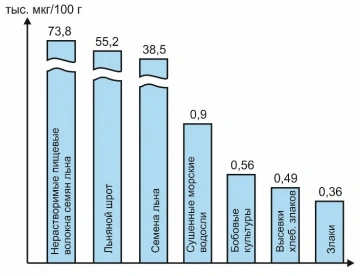
Fig.3. The amount of lignans (thousand mcg/100 g) in flax seeds and products based on it and other foods [3].
Use of flax seeds
In medical practice and in folk medicine, flax seed mucilage is used internally and externally. In both cases, an enveloping and anti-inflammatory effect is used: when taken orally, the mucus envelops the affected area, relieves irritation and pain during inflammatory processes on the mucous membranes of the gastrointestinal tract with stomach and duodenal ulcers, colitis and Crohn's disease. The mucilage and glycoside linamarin cause the mild laxative effect of flax seeds. The beneficial properties of flax mucus are also used for poisoning (especially with irritating substances), inflammation of the kidneys and bladder, cholelithiasis, and dry cough.
Preparing flax seed mucilage is quite simple and quick: 3 grams of flax seeds are poured into 1/2 cup of hot boiled water and shaken for 15 minutes, then filtered. The resulting mixture is taken 1 tablespoon 4 times a day. You need to prepare the mucus every day, because... it quickly deteriorates during storage.
In crushed form, flax seeds are used in the form of flaxseed porridge as a mild laxative and weight loss, cleansing the intestines. In this case, the effect of the glycoside linamarin, which has a regulating effect on intestinal motility and secretory function, is manifested. Can be taken as a mild laxative and cleanser with fresh whole seeds or crushed flax seed paste.
Swelling in the contents of the gastrointestinal tract, the seeds mechanically irritate the receptors of the intestinal walls, thereby enhancing peristalsis, promoting the movement of feces, also providing an enveloping and anti-inflammatory effect. For these purposes, take 3 teaspoons of whole or crushed flax seeds per 1 glass of water or milk, leave for 3 hours with frequent shaking, and drink immediately before bed.
As part of complex preparations, flax seeds are used for cholelithiasis, urolithiasis, pancreatitis, overweight and obesity, atherosclerosis, early stages of oncology as an antioxidant, for radiation therapy, and for helminthic infestations.
Recipe for cleansing and relieving intestinal inflammation: place 2 tablespoons of flax seeds in a thermos and pour 0.5 liters of boiling water, leave overnight, strain and drink 1/2 cup before meals.
Externally, flax seeds are used in the form of compresses for inflammation of the skin, boils, and burns. Dry heated seeds in bags are applied for deep heating for colds, radiculitis, myositis.
Linseed oil.
Flaxseed oil is widely known as a folk healer. It contains unsaturated fatty acids: omega-3 - 60%, omega-6 - 20%, omega-9 - 10%. Moreover, in terms of the content of omega-3 and omega-6 polyunsaturated fatty acids, flaxseed oil is even twice as high as fish oil! This is very important because patients at risk for complications of cardiovascular disease are looking for preventive measures. And linseed oil is simply unique in this sense. We do not have the opportunity to follow a Mediterranean diet and eat high-quality red fish often, as centenarians do, for example, in Japan, where the mortality rate from heart attacks and strokes is the lowest. And no need, we have linseed oil!
Flaxseed oil treats and prevents atherosclerosis and vascular diseases, the formation of blood clots. Course use of flaxseed oil helps prevent cardiovascular diseases and hypertensive crises. Daily consumption of flaxseed oil helps prevent the development of heart attacks, because. Blood viscosity and cholesterol levels decrease, and the load on the heart decreases. It should be remembered that flaxseed oil does not need to be heated when consumed. Flaxseed oil eases menopause, improves the condition of hair and skin when taken orally, and has anti-inflammatory, enveloping, diuretic, and laxative effects.
Apply 1.5 tablespoons orally in the morning before meals for a course of 21 days to 4 weeks.
Externally, flaxseed oil is used for radiation injuries of the skin, burns, it promotes rapid tissue regeneration. To treat burns, apply linseed oil to the affected areas in the form of a three-layer gauze bandage.
Today, flax-based chips have begun to be produced in Ukraine. This is an absolutely healthy product that entered the market as an antithesis to harmful potato chips.
The very name of the Future chips (translated from English as food of the future) says a lot. The ingredients are exclusively based on plant crops; the production technology itself leaves all nutrients in their native form.
Flax is widely used as a base for food in Canada and the USA. In Ukraine, they are just beginning to understand the importance of crops such as quinoa, chia and flax for the food industry [4].
Dear reader, I’m trying to reduce the length of the article on flax, but it’s not working. It would seem that I’ve already finished everything, and then I come across information about the use of flaxseed flour (flaxseed meal after pressing the oil) in baking bread. Below is just a conclusion about the result.
In “Polezny” bread, compared to “Ukrainian New”, with a decrease in the content of digestible carbohydrates, the content of: fats – by 66.7%; proteins – by 19.8%; dietary fiber – by 3.5%, vitamin B1 – by 6.4%; B2 – by 4.2%, minerals: Ca – by 59%; Mg – by 29.5%; P – by 34.4%; Fe – by 2.6%; new vitamins have been added: B6, H, E.
The feasibility of using flaxseed flour to increase the nutritional value of bread made from a mixture of wheat and rye flour has been theoretically and experimentally proven. It is recommended to use a new type of bread for people who want to lead a healthy lifestyle [5].
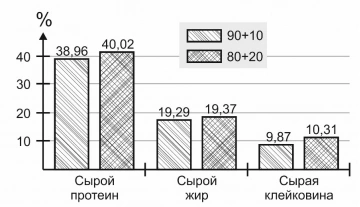
Fig.4. Physico-chemical parameters of a mixture of soybean and flax seeds in different ratios before extrusion [6].
After I appreciated how important flax seeds are for human health, I put a cup of flax seeds on the table and eat a full teaspoon of it on an empty stomach twice a day.
Studies have shown that the inclusion of flax seeds in feed recipes can increase the level of crude protein and PUFAs, and increase the biological value of the final product [6].
Flax seeds and products of its processing can occupy a prominent place in the production of compound feeds as a source of proteins, fat, polyunsaturated fatty acids, essential amino acids, as well as vitamins and minerals [6].
As an example, we can show the results of a study conducted at the National University of Food Technology to evaluate mixtures of soy with flax seeds in different ratios (90% soy + 10% flax and 80% soy + 20% flax).
Like all plants, oil flax has its own peculiarities in the agricultural technology of its cultivation [7].
Advantages [8]:
- Grow in different natural and climatic conditions.
- Drought resistance. The root system grows deeper during the entire growing season.
- Crop rotation. Short growing season, prepare the field for winter grains.
- High resistance to shedding and lodging.
- Simplicity of growing technology.
- “Not picky” about soils.
Recommendations on the preference for soil acidity depending on the type of soil, the amount and time of application of basic fertilizers (N, P, K), microelements (boron, manganese, copper, molybdenum, cobalt) are set out in specialized literature. In particular, in the article “Fertilization of olive oil” [7].
From the soil, oilseed flax removes 55-65 kg of nitrogen per 1 ton of seeds, 40-45 kg. potassium and 10-15 kg of phosphorus.
The predecessors are winter grains, legumes, melons, after which the field is clear of weeds. Sunflower, rapeseed, Sudanese grass and flax are not recommended.
Return after 6-7 years. Planting depth is 3-4 cm. Sow simultaneously with early grains.
Germinates +6°C. It germinates well at +10-12°C. Withstands frosts of -3-4°C, dies at -7°C.
Seeding rate 4-5 million pcs. (40-45 kg/ha).
Compulsory rolling (100% moisture absorption) [9].
The sum of effective temperatures for flax is on average 1400-2200°C.
The optimal temperature for growth and development is +16-17°C.
At a temperature of 30-35°C, flax germination stops.
The traspiration coefficient can vary from 690 at soil moisture of 80% to 340 at 40% humidity.
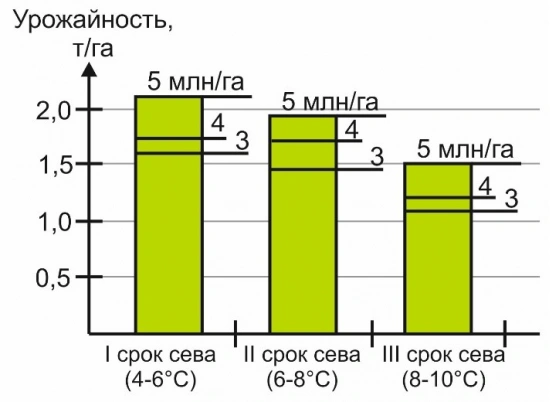
Fig.5. Flax yield depending on density and sowing time [10].
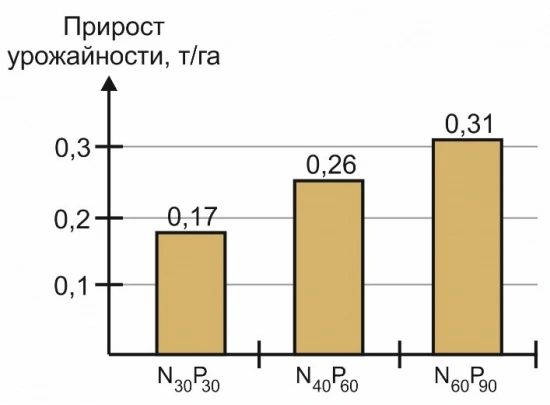
Fig.6. Increase in yield depending on the dose of basic fertilizers [10].
Figures 5 and 6 show the dependence of the yield on the seeding rate, sowing time (Fig. 5) and the dose of basic fertilizers (Fig. 6).
Foliar feeding plays a major role in increasing the productivity of oilseed flax. Without delving into the technology of this process (it is described in detail in the journal “Agronomist” [11]), I will cite the results of special studies [11] (Fig. 7) as confirmation of the above.
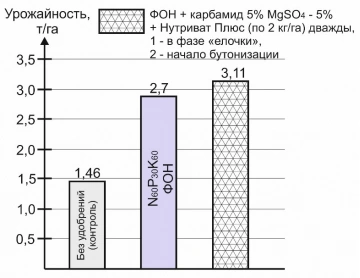
Fig.7. The influence of foliar feeding of flax against the background of Na60P30K60
Flax seeds of the first reproduction are grown in leading Ukrainian farms: SFG "Anastasia", STOV "Agro Master" (Dnepropetrovsk region), SVK "Vilnyansk", FG "Alfa-South" (Zaporozhye region), state testing stations DP "DG" "Novator", SE "DG "Elite", SE "DG "Shiroke" [12].
Dear reader, I deliberately do not touch on the method of tillage when describing any crop, because I am deeply convinced that sooner or later, plowing will be abandoned everywhere and will be replaced by Strip-till and No-till. So, no-till for flax.
When I hear objections from supporters of the traditional method of tillage, which is based on plowing, and even with a rotation of the layer: “They say, No-till is good, but the harvest is better!” So, my dear reader, we set up a seed plant in the Omsk region (Russia, everything was before the war) on the Lyuft farm (11 thousand hectares), where 7-8 crops in crop rotation have the best yields in the region. And all 11 thousand hectares are no-till. And profitability! Reducing cultivation costs by 50-80%. What are the savings on diesel fuel alone – consumption of 20 l/ha per season. Weed. Green manure – sainfoin, vetch, white mustard. This farmer's field has three colors: white in winter, green in summer, yellow before harvesting and green again before winter.
Predecessors for flax, as with conventional technology, are legumes and grains, but for a good layer of mulch - corn. The field is flat. Before sowing Glyphosate (2.5-3 l/ha). It quickly decomposes into harmless elements. Seeds germinate at +6°C. They germinate well at 10-12°C. Strong seeds germinate almost simultaneously in 5-6 days. The sowing method is the same - row 15 cm and 7.5 cm. The depth is slightly deeper than 3-4 cm. The seeding rate is 40-45 kg/ha. Simultaneously with sowing, 100-110 kg/ha of ammonium nitrate or UAN, but if no-till has already become the norm, then you can do without fertilizing. Mineralization of crop residues maintains natural fertility. From weeds before the start of budding in the herringbone phase, treatment with an insurance herbicide or tank mixtures. No pest control required.
| Table No. 1. Acceptable requirements for flax seeds [14]. | |
| 1 class | Up to 0.5% fusarium Up to 15% other diseases Purity greater than 90% Humidity 12% |
| 2nd grade | Up to 2% fusarium Up to 30% other diseases |
Harvesting at the end of July by direct combining with straw chopping. If harvesting coincides with winter grains, the flax will wait its turn - it will not fall off or lie down. If there is a high level of weeds, the cleaning is carried out separately. Start when 75% of the boxes are ready for harvesting (the grain in the box is “clanging”). Humidity 20-25%. The windrows dry out in 5-7 days. It is possible to dissect “Basta” 5-10 days before harvesting or “Purivel” 10-15 days before harvesting. Select windrows at a humidity of 12%. At a humidity of 8-10%, the seeds are injured. Store at a humidity of 10%. After harvesting, general herbicide 3 kg/ha. As is known, no-till prevents soil erosion, retains moisture, activates soil microflora, restores humus, thereby promoting the revival of natural fertility [13].
Dear reader, today you can prepare flax seeds of much higher quality than existing requirements (Table No. 1).
Purification of flax seeds using gentle fractional technology ensures purity of 99.5-100%, and separation of seeds by density on a pneumatic vibration table separates affected seeds from healthy ones.
Cleaning flax
The customer brought us flax that did not undergo primary cleaning, i.e. from under the combine. This is good, because from our experience, traumatic primary cleaning cannot but injure the seeds. While cleaning and calibration on our equipment copes with destroyed seeds, it is impossible to separate seeds with mini-traumas.
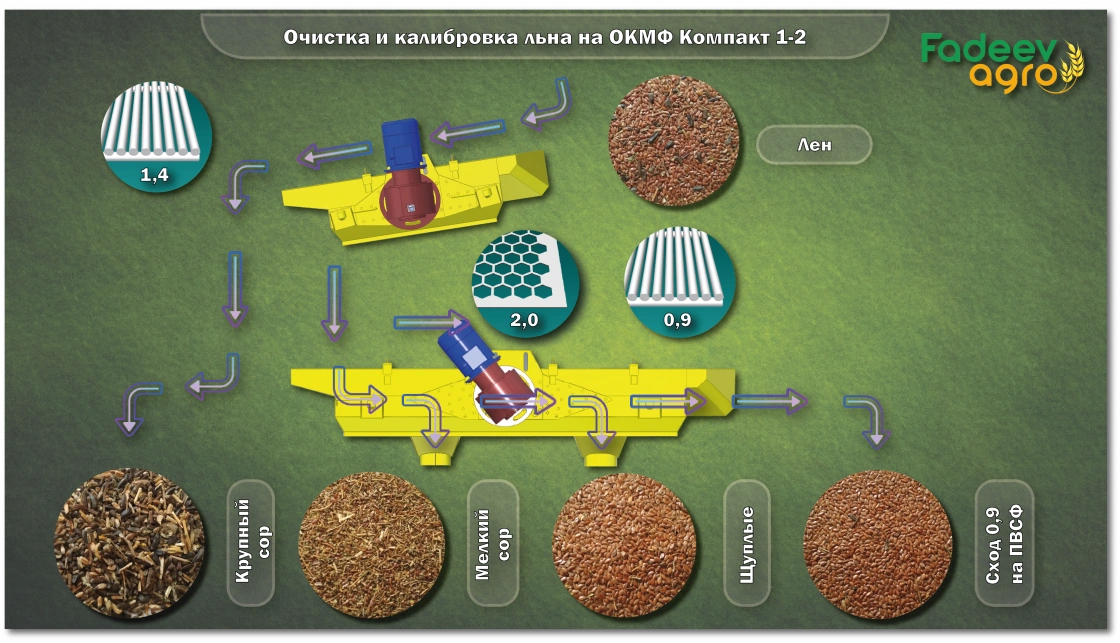
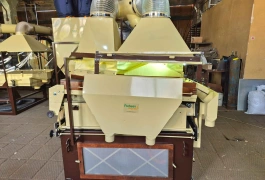
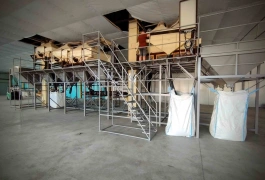
Fig.8. Cleaning and calibration of flax on OKMF 1-2
To clean flax, Fadeev sieves with a slot size of 1.4 were installed on the first cleaning calibrator. All flax and some rubbish, commensurate with the size of the gap, passed through such sieves. The rubbish larger than the 1.4 crack came off.
On the next cleaning calibrator, Fadeev sieves with a hexagonal hole of 2.0 were installed. All fine litter passed through such a sieve, then the flax was calibrated on a 0.9 sieve. It was on such a sieve that the flax seeds turned, measured their thickness, the puny ones passed through, and the large ones came off.
For final cleaning and isolation of the heaviest flax seeds, the seeds were sent to a pneumatic vibration table
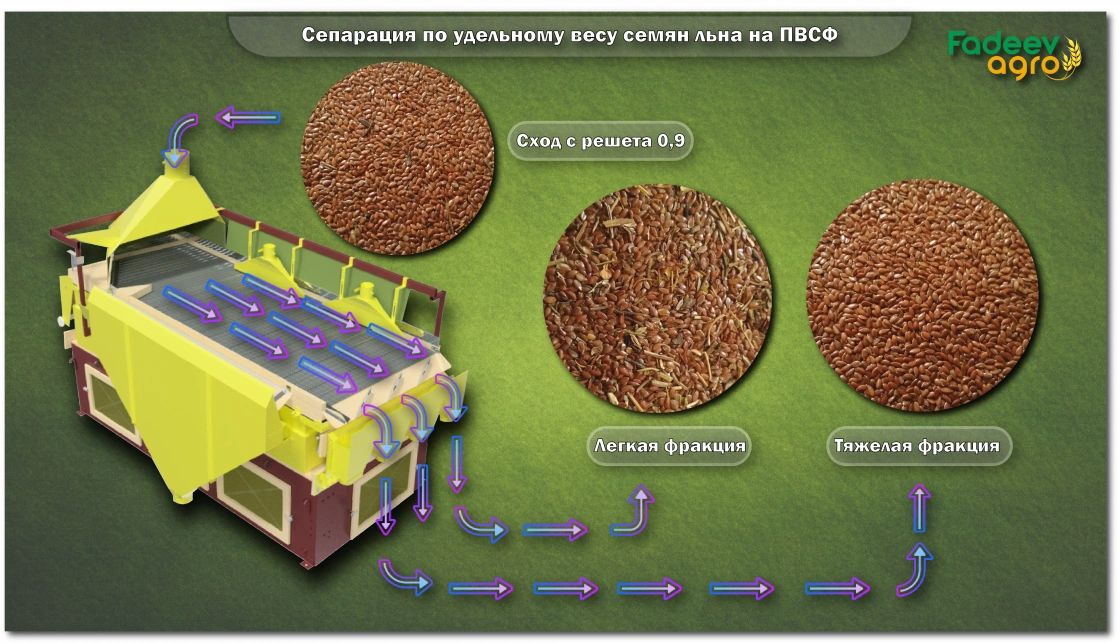
Fig.9 Separation by specific gravity of flax seeds on PVSF
The final stage of seed preparation is pre-sowing treatment.
Seed treatment no later than two weeks before sowing, with the addition of microelements (boric acid 1.0-1.5 kg/t, copper sulfate 1-2 kg/t, ammonium molybdate and zinc sulfate 2 kg/t).
Etching.
Flutriafol, 25 g/l mixed with thiabendazole, 25 g/l; caboxil, 200 g/l with tyrant, 200 g/l; fludioxonil, 25 g/l.
There is no doubt that flax will take its rightful place in Ukraine and flax seeds will be prepared using gentle fractional technology.
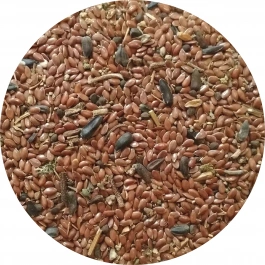
Raw material
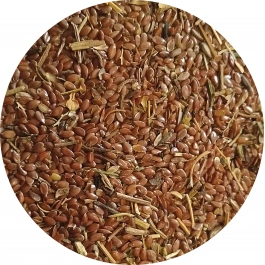
Light faction
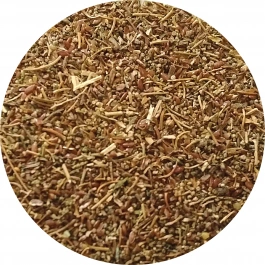
Passage Hexagonal sieve - 2.0
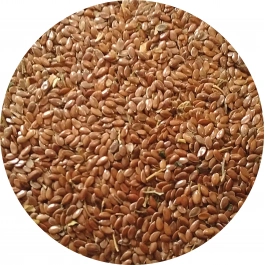
Sieve Passage – 0.9
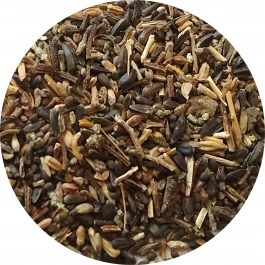
Sieve descent - 1.4
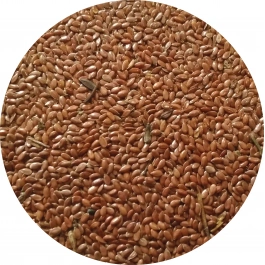
Sieve descent - 0.9
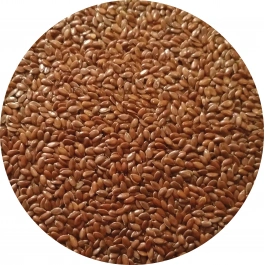
Heavy Faction
List of used literature:
- Yulia Makhno, Tetyana Tovstanovska, Evgenia Sagaidak, Marina Yaglo, Institute of Olive Cultures of the National Academy of Sciences, Zaporizhzhya. National agricultural culture./Makhno Y., Tovstanovska T., Sagaidak E., Yaglo M.// ???. - With. 52-54.
- Olga Babayats, Doctor of Biological Sciences, senior researcher, head of the department of phytopathology and entomology of the SGI-NCSS, journalist. After all, he is a wizard, blue flax / Babayats O. // ???. – No. 4 (17) – 2017. – P.6-7.
- Yurchenko O.O., Ph.D., National University of Shipbuilding named after. Admiral Makarov. Flax and products based on it as natural antioxidants./Yurchenko O.O.//Storage and processing of grain. -No. 4 (142). – 2011. – April. – P.66-67.
- Inna Biryukova. Lion with maybutny chips. / Biryukova I.//The Ukrainian Farmer. – 2018. – Spring. – P.40-43.
- Tipsina N.N., Doctor of Technical Sciences, Matyushev V.V., Doctor of Technical Sciences, Bocharova L.V., Master's student, Krasnoyarsk State Agrarian University. The use of flax flour in the production of wheat-rye bread varieties./Tipsina N.N., Matyushev V.V., Bocharova L.V. //Storage and processing of grain. — No. 9 (228). – 2018. – September. – pp. 46-48.
- Yanyuk T.I., Kozyulya I.V., National University of Food Technologies. Vikoristannaya flax and products of its processing in feed mills./ Yanyuk T.I., Kozyulya I.V.//Storage and processing of grain. -No. 2 (152) – 2012. – February. – P.44-45.
- Yulia Makhno, Tetyana Tovstanovska, Institute of Olive Cultures of the National Academy of Sciences. Fertilizer for linseed oil. / Makhno Yu., Tovstanovska T. // The Ukrainian Farmer. – 2014. – Berezen. – P.80-82.
- Khilinsky S.A., senior agronomist. Olive flax for farmers today is 100% profitable and low in other costs. / Khilinsky S.A.//Agronomist. –No. 4. - - leaf fall. – P.74-75.
- Yulia Makhno, Institute of Olive Cultures of the National Academy of Sciences of Ukraine. Kharchoviy lion. / Makhno Yu.//The Ukrainian Farmer. – 2018. – leaf fall. – P.96-97.
- Oleksandr Polyakov, Doctor of Social Sciences Sciences Institute of Olive Cultures, co-authors: Olga Nikitenko, Svitlana Vakhnenko. Agricultural technology for olive oil. /Polyakov O.//The Ukrainian Farmer. – 2017. – kviten. – P.102-105.
- O.V. Kurach, Ph.D. s.-.g. Sciences, Institute of Rural Government of the Carpathian Region NAANU. The infusion of root stimulation on the productivity of olive oil. / Kurach O.V.//Agronomist. –No. 2. - - grass. – P.158-161.
- Tetyana Tovstanovska, Ph.D. S.-G. Sciences Institute of Olive Cultures NAAS, co-author: Olga Makhno, Ph.D. S.-G. Sci. Nasinnya for flion. / Tovstanovska T.//The Ukrainian Farmer. – 2017. – worm. – P.76-79.
- Tetyana Tovstanovska, Institute of Olive Cultures of the National Academy of Sciences of Ukraine. Povniy “zero” for flion / Tovstanovska T.// The Ukrainian Farmer. – 2016. – lyuty. – P.126-127.
- Igor Storchous, Ph.D. S.-G. Sci. We're cooking in the fall./ Storchous //Agribusiness Today. -No. 15-16 (382-383) – 2018. – serpen. – P.44.