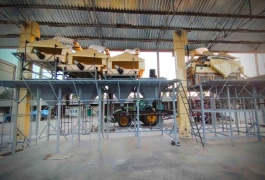
Peanuts – preparation and cleaning of seeds at the Fadeev Agro plant

Peanut. Seed Preparation and Cleaning
PREPARATION AND CLEANING OF PEANUTS SEEDS AT THE FADEYEV AGRO PLANT
"April 2020"
Quarantine is a quarantine, and it is impossible not to sow, otherwise a food crisis will be added to the problems of war and virus.
Peanuts were brought to us at the Fadeev Agro plant with a request to select seeds from the common seed.
A few words about peanuts
Firstly, this is a fairly widespread crop: peanuts are grown in more than 20 countries on all continents, the total area of its cultivation in the world is about 19 million hectares (India - 7.2 million hectares, African countries - 6 million hectares). Peanuts are native to South America (Argentina and Bolivia). The Spanish conquerors brought it to Europe, then the Portuguese brought it to Africa. From Africa, slave traders brought peanuts to North America. In the 1530s, the Portuguese brought it to India, the Spaniards to the Philippines and further to China. Peanuts came to the territory of present-day Ukraine from Turkey in 1792, and in 1825 they were acclimatized in the Odessa Biological Garden.
Today, peanuts are widely used as a raw material in many industries, but primarily in the food and feed industries. Peanuts, like all legumes (and this is a leguminous crop), in symbiosis with nitrogen-fixing bacteria after harvesting, leave unused part of organic nitrogen in the field, which helps to increase the yield of subsequent crops (wheat, corn, sorghum, etc.).
Peanut seeds composition:
- Fatty oil - up to 53%
- Protein - up to 37%
- Starch and sugar.
It is not picky about soil composition and grows in poor soils.
After fertilization, the peduncle with the ovary at the end begins to lengthen and grows into the soil, where the seed itself will grow from the ovary. Depending on the variety and weather conditions, the ripening period of peanuts from planting to harvest lasts 120–160 days.
There is one interesting event in the history of peanuts. In the USA, farmers, having suffered in the fight against the cotton boll weevil, switched to cultivating peanuts. This turned out to be much more profitable than cotton production, and farmers, as a sign of “gratitude” to the weevil, erected a monument to him. Interest in peanut cultivation in Ukraine is growing rapidly. So, a representative of Legion Company LLC (Cherkassy) approached us with the task of preparing peanut seeds for sowing: varieties “Adata”, “Kremena”, “Orpheus” and several more varieties - see Fig. 1, 2, 3.
It's worth noting that the material we received had not been cleaned and calibrated prior to shelling (separating the peanut kernels from the shells), so it contained a large number of earthen pebbles of varying sizes, some of which were the size of large peanuts. This complicated the task and meant that separating peanut kernels from such pebbles was only possible on a pneumatic vibration table.
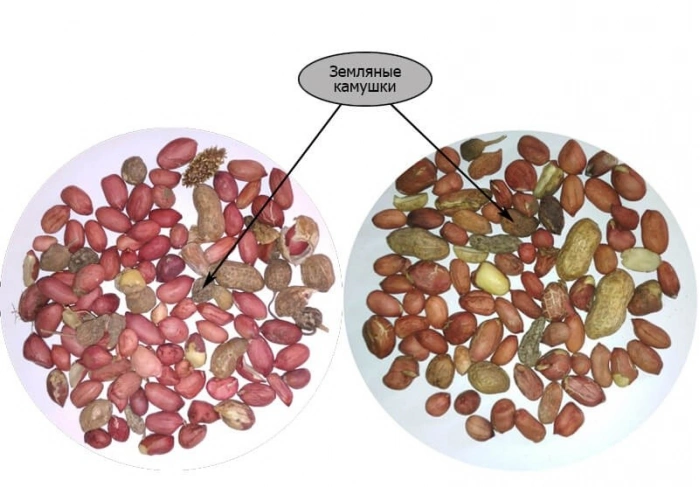
Figure 1. Source material variety “Kremena” Figure 2. Source material variety “Adata”
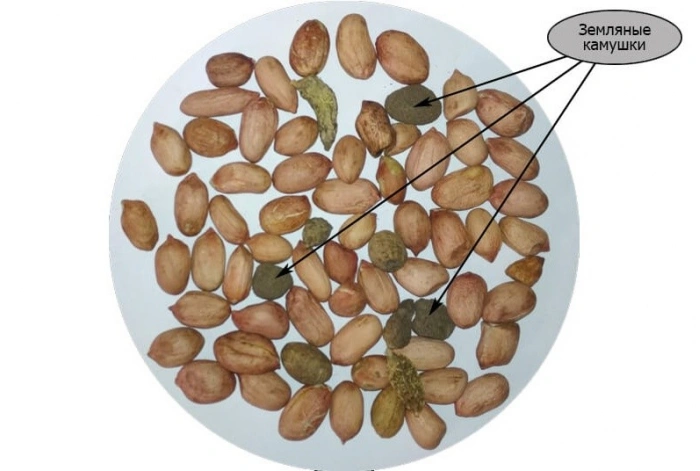
Figure 3. Source material, variety "Orpheus"
The grain-cleaning fractional technology that we offer involves the step-by-step separation of the source material (culture) into fractions (parts of the source material that are calibrated at certain stages of the process of preparing seed and commercial material). It is this method of grain cleaning that allows, in one pass, to isolate large seeds (seed material), medium seeds (commodity material) and other impurities from the source material of peanuts or any grain, legume, grass material.
You need to understand the main thing when preparing any agricultural crops for sowing - if at the stage of calibration and purification of the source material we calibrate large seeds on Fadeev calibration machines using Fadeev wire sieves, and then send this large fraction for separation by specific gravity on a pneumatic vibration table, we will receive seeds of high reproduction, which in the future will bring a high yield. Strict preliminary calibration of seeds by size is necessary so that the pneumatic vibration table receives seeds with the same washed surface, otherwise heavy small seeds and light large seeds will end up in the same company for the simple reason that the ratio of different washed surfaces to different densities will be the same, and the pneumatic vibration table will not separate them. In the case of peanuts, it is very important to separate the kernel halves and puny seeds from the full seeds.
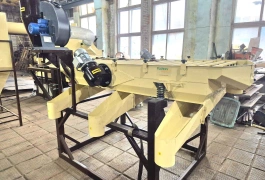
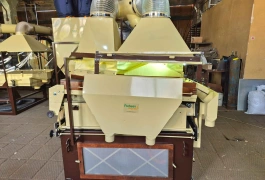
To prepare peanut seed material, we used our equipment for compact solutions: a cleaning and calibrating machine “Compact” 1-2 (with an upper single-sieve module OKMF-1 and a lower double-sieve module OKMF-2 (Fig. 4) and a pneumatic vibrating table PVSF-3 (Fig. .5)
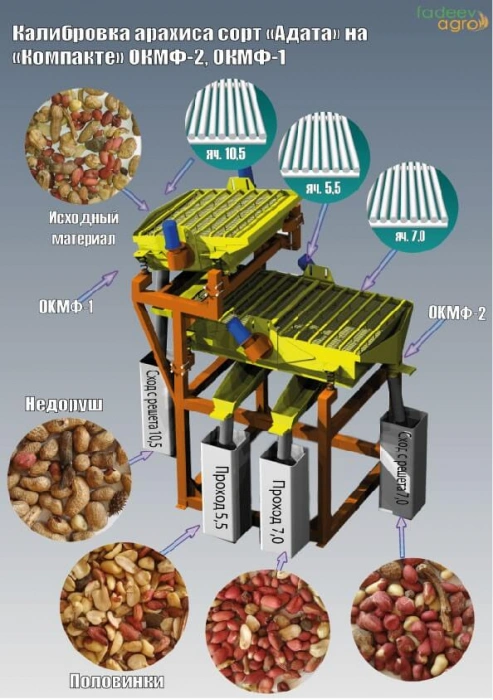
Figure 4. Calibration of Peanuts on the “Compact” variety “Adata”
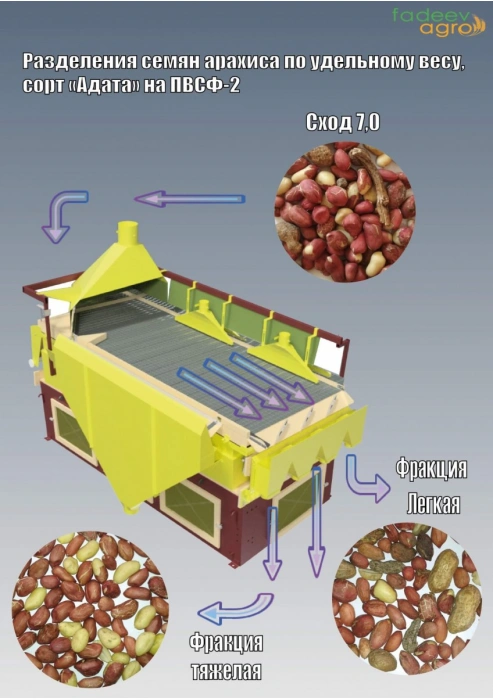
Figure 5. Separation on PVSF grade “Adata”
On the upper module we use a Fadeev sieve, size 10.5, to select unshelled peanuts . Material that is smaller than the 10.5 size passes through the sieve and ends up on the lower module, where the 5.5 sieve is placed first to separate the halves (marketable material) from the kernels. Next is a 7.0 sieve, the passage of material through it is puny seeds (commercial material). When leaving the sieve 7.0 - large seeds - we send them to a pneumatic vibrating table to select the seed. In (Fig. 4) it can be seen that the 7.0 gathering also included unhulled peanuts, commensurate with the hulled ones, sticks, pebbles - all these are the consequences of not using preliminary cleaning and calibration of peanuts before hulling - but even in this situation, our technology allows us to achieve the desired result. The descent from 7.0 is sent to a pneumatic vibration table for separation by specific gravity (Fig. 5) . On this machine, the incoming material is divided into three fractions: heavy and medium (seed material) and light (light impurities with light peanuts, light underrush, stick). In most cases, we send the middle fraction for re-processing to a pneumatic vibration table to isolate strong seeds. In our case, this is what happened, so only the heavy and light fractions will be shown for comparison.
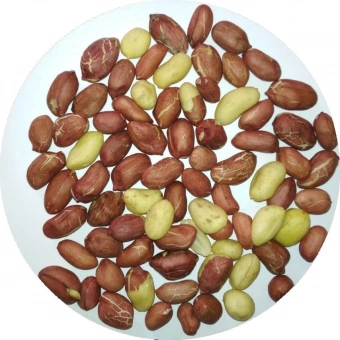
Figure 6. Heavy fraction “Adata” variety
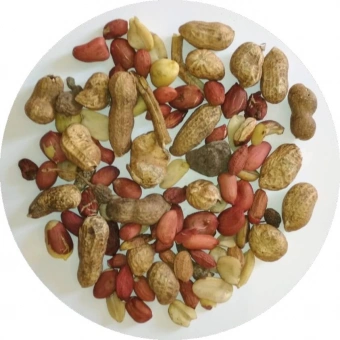
Figure 7. Light fraction of the Adata variety
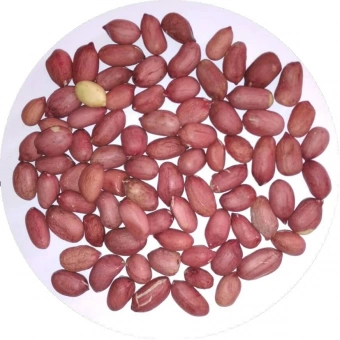
Figure 8. Heavy fraction variety “Kremena”
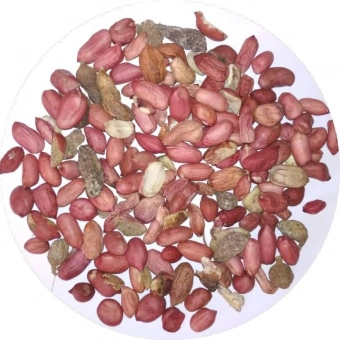
Figure 9. Light fraction variety “Kremena”
The preparation of peanut seeds has shown that selecting seeds of high reproduction is possible only with the help of fractional technology, in which you first need to calibrate large peanut seeds, and then separate them by specific gravity on a pneumatic vibrating table.
As a result of the work carried out, the yield of heavy conditioned seeds was at least 70% of the total mass of the starting material.
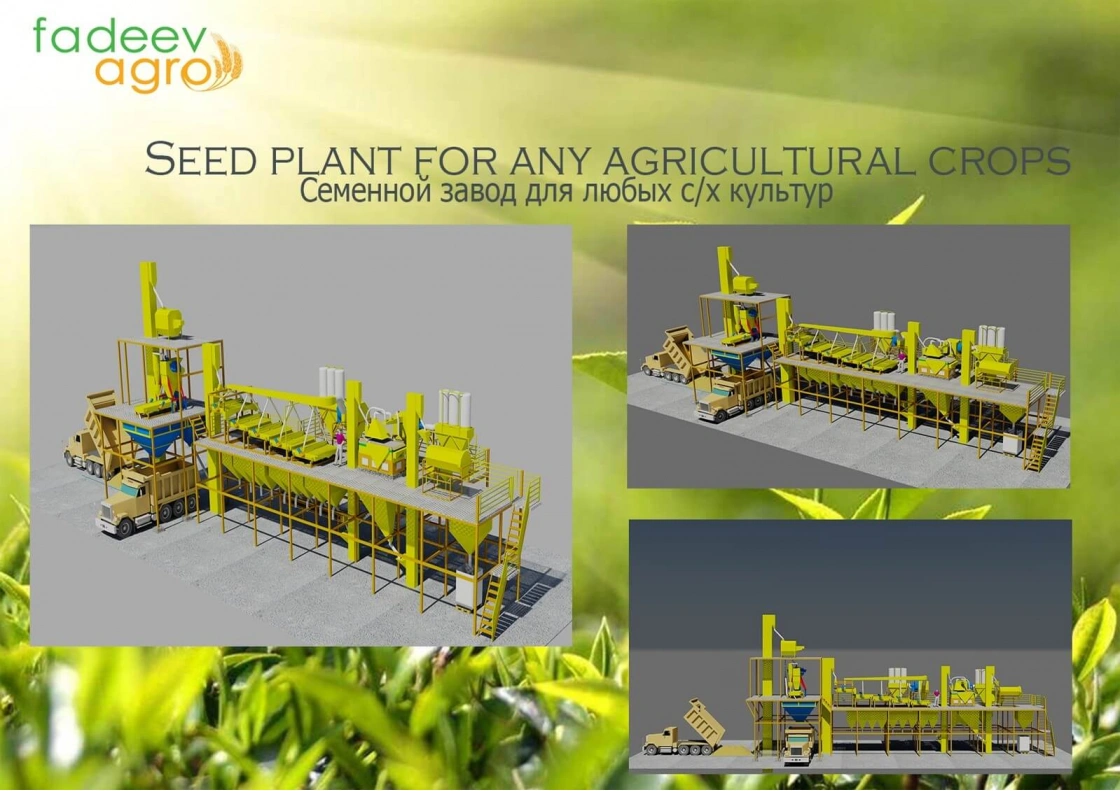
For the full cycle of preparation of seed and commercial peanuts, Fadeev Agro Plant LLC recommends fractional technology for purification and calibration of this type of legume (Fig. 10.)
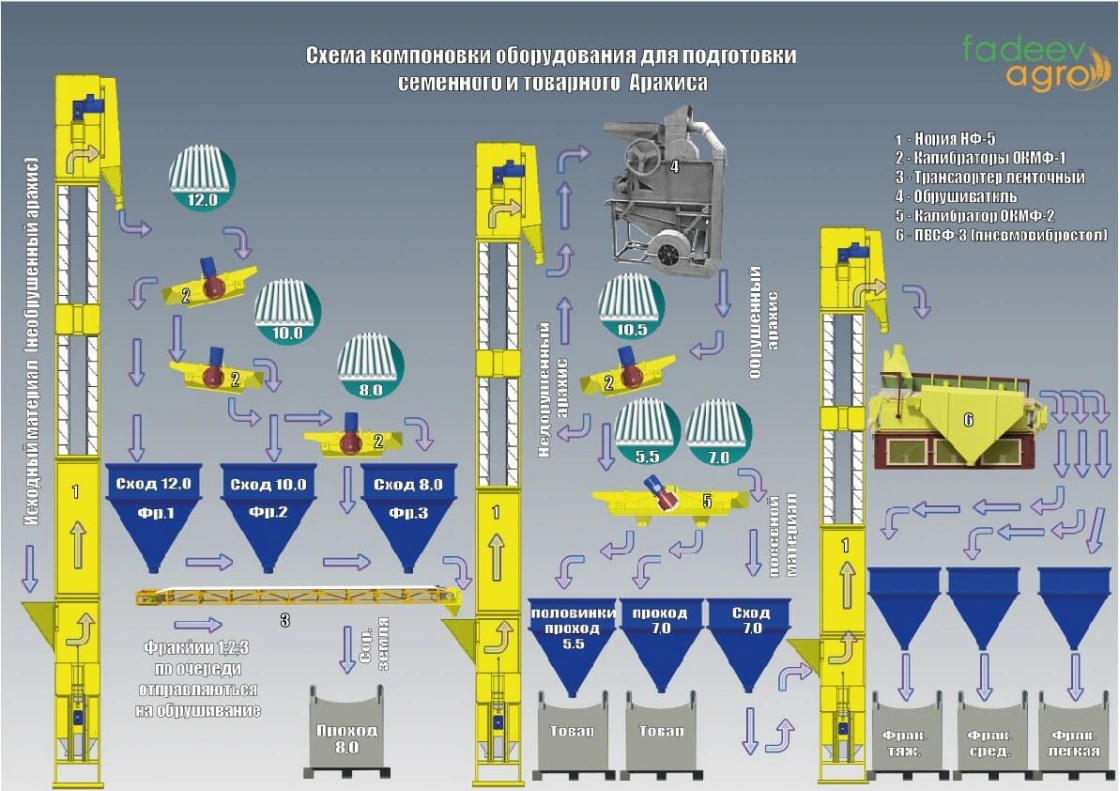
Figure 10. Layout diagram of equipment for the preparation of seed and commercial peanuts
Using an NF-5 elevator, we feed the source material to the line for calibrating unshelled peanuts. On the first calibrator with Fadeev sieves (size 12.0), we select large seeds (fraction 1) and send them to the bunker. Peanuts smaller than size 12.0 pass through the sieve and enter the next calibrator with a 10.0 sieve. The scheme is the same: we select material that is larger than size 10.0 (fraction 2) and send it to the bunker. The passage through 10.0 goes to the last calibrator with a sieve 8.0, here we select all the plant debris, pebbles, sticks - passage 8.0. Gathering 8.0 (fraction 3) is sent to the bunker. We send the fractions one by one for chopping, then to the calibration line, where on the first calibrator with a 10.5 sieve we select the undersized ones and re-send them to the chopping machine. The passage through 10.5 goes to the next calibrator, on which we select halves on a 5.5 sieve, and puny and large seeds on a 7.0 sieve. Large seeds (7.0 yield) are supplied to a pneumatic vibration table for final preparation of seed material (heavy and medium fractions). If rubbish and pebbles are found in commercial peanuts (pass 5.5 and pass 7.0), then these fractions must also be passed through a pneumatic vibration table.
You can see the entire process of cleaning and calibrating peanuts in the video we filmed:
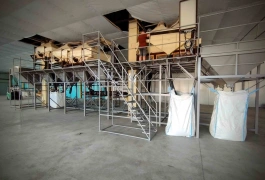
It is this gentle fractional technology that allows you to select strong seeds from the seed material. The seed plants we supply for the production of strong seeds of any agricultural crop are universal and can produce strong seeds, including peanuts.
Leonid Fadeev.