Rye is back

Dear reader, once again I am convinced that the market rules the roost in the world. Well, spelled is not threshed by a combine, it won’t be as easy as wheat after a combine to clean it up a little and roll it out to the market in large volumes, that’s why it’s not in honor. Only the high price of healthy food products has somehow predetermined the recent attention to spelled. Something similar happens with rye .
Everyone knows that rye bread is healthier than wheat, but rye does not produce the same yield as wheat and rye production decreases. I wouldn’t write about rye either, but it so happened that only our equipment made it possible to remove halves of achenes from high-reproduction rye varieties from rye seeds, propagated in the variety plots of Ukraine by the well-known company KVS, and from all the variety plots the rye was brought to the Agro-Eco enterprise to the plant where the seeds are prepared using gentle fractional technology introduced by us.
| Table No. 1 . The growth of rye production in different countries over the past 20 years. | ||
| 1995 | 2016 | |
| USA | 256 | 342 |
| Canada | 310 | 382 |
| Spain | 168 | 316 |
| Türkiye | 240 | 300 |
| Denmark | 495 | 577 |
And yet, the general trend - healthy eating - is gaining strength and in countries such as the USA, Canada, Spain, Turkey, and Denmark, an increase in rye production has been observed over the past 20 years (Table No. 1). At the same time, in the countries of the former USSR (Russia, Ukraine, Belarus) during the same period, rye production fell by 2-3 times.
As you know, the beginning of agriculture and, in general, a sedentary lifestyle occurred with the Cro-Magnons, who inhabited the region of the Fertile Crescent (countries of the Middle East). The selection of wheat and barley seeds for subsequent sowing by our distant ancestors consisted of their purification from impurities and weed seeds. Rye was a weed. But as the seeds were separated, the largest rye seeds were difficult to remove, and this ended with the rye becoming one of the cereal grain crops. And today, as a result of selection, the mass is 1000 pieces. rye seeds can be 55-60 g.
In agricultural business, Ukraine has a huge untapped resource. Rye will be in demand in the healthy food market. Our task is to preserve the school of rye selection. Scientists say that 10 t/ha for rye is a reality. Creating varieties resistant to lodging, with large grains and immunity to diseases - this is what Ukrainian breeders are working on today. Productive breeding work to create promising rye varieties is carried out at the Institute of Plant Growing named after. V.Ya. Yuryev NAAS of Ukraine, at the NSC “Institute of Agriculture of NAAS” and Nosovskaya SIS ISMAV NAAS.
It is necessary to note some features of rye . Rye has a fibrous root system that penetrates to a depth of 1.5-2 m. At the same time, rye has a strong loosening effect on the soil. Due to its high physiological activity, rye quickly absorbs useful substances from poorly soluble compounds from the soil.
When the grain is planted deep in the soil, then during germination the plant lays two tillering nodes: the first deep, and later the second - closer to the soil surface, which becomes the main one. The tillering intensity of rye is high - each plant forms at least 4-8 shoots or more. The average height of the stem is 80-100 cm. The spike of rye is non-fragile, 5-15 cm long, about 1 cm wide. The caryopsis is oblong, length 5-10 mm, width 1.5-3.5 mm, thickness 1.5-3.0 mm. Weight 1000 pcs. grains in diploid rye (2n=14) 20-35 g, in tetraploid rye 50-55 g.
Rye seeds have a characteristic feature - transverse wrinkling on the surface, it is this feature that determines the injury of the rye grain - it breaks into halves not lengthwise like wheat, but across.
Compared to wheat, seedlings are 1-2 days earlier, tillering is also 1-2 days faster, and the tillering node is closer to the surface (1.7-2.5 cm). It is less demanding on growing conditions than wheat. Rye is less sensitive to soil acidity and grows well at a pH of 5.3-6.5. Therefore, it can be grown on podzol soils that are unsuitable for wheat.
Rye is more winter-hardy than other winter breads. Withstands temperature drops at the tillering node level down to minus 19-21°C. Seeds begin to germinate at 0.5-2°C. The growing season ends in autumn and resumes in spring at 3-4°C.
Transpiration coefficient 340-450. Removal from the soil per 1 quintal of grain: 2.9-3.3 kg of nitrogen; 1.1-1.4 kg phosphorus; 2.2-3.0 kg of potassium. The composition of rye grain includes proteins, carbohydrates, fiber, vitamins B. PP, E, and minerals (Fig. 1).
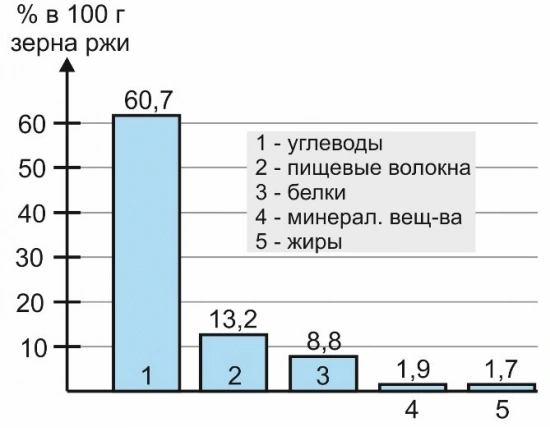
Fig.1. Composition of rye seeds.
The productivity of winter rye is higher than that of spring rye. Rye is characterized by its ability to clear debris, which makes it a good precursor for a number of crops, including cereals. The seeding rate is 500-600 productive stems per m2 .
Cleaning can be either direct or separate depending on the conditions during the cleaning period. Rye is prone to shedding, so harvesting of rye should be carried out in a short time. At the same time , rye has a longer post-harvest ripening than wheat, and it very rarely germinates in the ear, as witty farmers often say “on the stump.”
Rye bread is primarily used to produce rye bread , as well as rye kvass , starch is obtained, and it is also used as a raw material for the production of alcohol.
Nutritionists claim that, despite the small amount of protein in rye due to the amino acids it contains - lysine and threonine, rye bread is already, in a certain sense, a medicine. These amino acids are necessary for tissue growth and repair. Rye bread is recommended as a dietary product for diabetes. Rye kvass is useful, it normalizes digestion, improves metabolism, and has a beneficial effect on the cardiovascular system.
Rye is one of the most common (after mustard) and most valuable green manure. It effectively suppresses weeds and plant diseases, surpassing other well-known green manures in this indicator due to its particularly rapid development. Rye has a strong structuring (loosening) effect on loamy soils, making them lighter and more permeable to water. In addition, it partially displaces various pests (especially nematodes).
There is one more feature of rye . Due to the fact that rye straw is very resistant to rotting, it has been used since ancient times as a roof for houses. When cared for, such a roof will last for decades. Today, in the “ecology of life” trend, rye straw bales are used to build environmentally friendly houses, in the construction of which the load-bearing base is made up of wooden frames, and the walls are lined with rye straw bales and plastered with clay. By the way, my daughter’s house near Kiev was built using this technology.
During storage, rye has some differences from wheat. The main difference is that when stored, even under favorable conditions, rye reduces its sowing properties, while wheat retains them for a year or more [1].
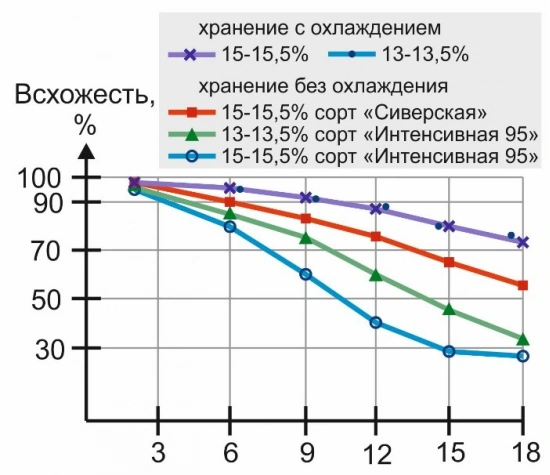
Fig.2. Changes in the germination capacity of winter rye grain at different humidity levels and under different storage conditions (Averaged data for three years, variety “Intensive 95”) [2].
Specially conducted studies convincingly demonstrate this statement (Fig. 2). The data shown in Figure 2 allows us to draw the following conclusions:
- Storing rye grain in a refrigerated environment at a temperature of 5-10°C with a humidity of up to 15.5% allows you to maintain seed germination at 90% for 12 months.
- When stored without refrigeration, the quality of rye seeds is highly dependent on humidity. So, after 9 months, seeds with a moisture content of 13-13.5% had a germination rate of about 75%, and seeds with a moisture content of 15-15.5% had a germination rate of 60%.
It turned out that the safety of the sowing properties of rye seeds greatly depends on the variety. Thus, seeds with a moisture content of 15-15.5% of the variety "Intensive 95" after a year of storage without refrigeration showed a germination rate of 40%, and seeds of the variety "Siverskaya" under the same conditions - 75%. Cooling was equally effective in suppressing the decrease in germination for all varieties [2].
Due to the fact that the cost of growing rye is lower than wheat, and its yield can be at least 7 t/ha, rye , especially recently, is grown as a fodder crop. Improved farming standards have led to a significant increase in grain quality. In particular, replacing wheat with rye in feed for pigs does not reduce the digestibility of feed or weight gain. Modern rye hybrids produce the highest yields compared to other cereals, which allows for lower costs per feed unit (even on sandy and clay soils).
If pigs are kept in good conditions, feeding using rye brings significant profits and is widely used in Denmark, Poland, and Germany. In northern European countries, farmers use rye in dry and liquid feed mixtures when feeding various livestock: sows, piglets, fattening meat pigs. At the same time, the maximum content of rye in the feed mixture for sows should not exceed 25% [3]. Naturally, the grain should not contain mycotoxins and ergot.
In compound feeds for highly productive dairy cows, it is also possible to use rye instead of wheat grain. The following studies were conducted in Germany when replacing wheat with rye . The animals were divided into two groups. In the control group, cows received 44% wheat as part of the grain feed. In another group, wheat was completely replaced by rye (an average of 4.8 kg per animal per day). The average productivity of the entire herd was 9,300 kg of milk per lactation per cow, the fat content in milk was 4%, protein 3%. These quality scores in the rye group were not significantly higher than in the wheat group [3]. This substitution has economic significance because rye has a lower cost of production compared to wheat.

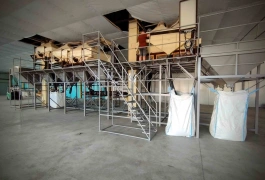
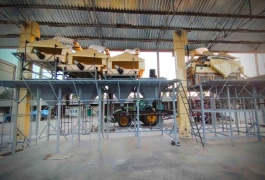
Fig.3. Construction of a seed plant of LLC PKF "Agro-Eco XXI", Khmelnitsky region.
The rye brought to us was cleaned at the seed plant using gentle fractional technology. But it all started when the well-known company KVS placed breeding sites for rye of its own selection in Ukraine. When cleaning high reproductions of rye grain, a difficulty arose - removing the halves of the grains. The seed plant we installed in the city of Kamenets-Podolsky (company “Agro-Eco XXI”) easily coped with the task (Fig. 3).
I consider it necessary to remind the reader of the following. Rye , like any cereal crop, confirms the principle laid down by nature for the formation of strong seeds. That is, these are the seeds in the middle of the ear of the first tier, which are heavier than the other seeds of the same ear and, naturally, stronger than the seeds from the second and third tiers. The data shown in Figure 4 clearly shows this.
In terms of injury , rye is no different from other cereal crops. It is also crushed and destroyed upon impact, spillage and sliding. Figure 5 clearly shows the injury to rye grain during a one-time passage through a conventional scooping and throwing elevator. It is clearly seen that the proportion of broken grains ( rye grains break across the grain) increases from 1.3% to 3.33%, i.e. the number of broken grains increased by 2%, and the share of grain dust, i.e. destroyed protective shell of grain, increased from 100 g/t before the elevator to 4.3 kg/t (43 times).
The decrease in field germination of rye due to seed injury has also been well studied. Injured seeds are easily affected by microorganisms. Soil and pathogenic biota significantly reduce the intensity of the initial growth of injured seeds. Figure 6 shows research results that convincingly confirm the above. Rye seeds with severe damage to the embryo practically do not germinate under field conditions. This is understandable - the germ is the most “tasty” part for pathogenic soil microorganisms.
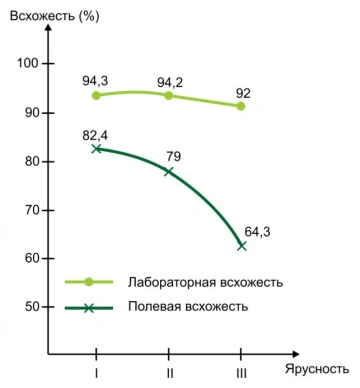
Rice. 4. Dependence of the germination of rye seeds on the layering of their position before harvesting (V.V. Grishchenko, 1984).
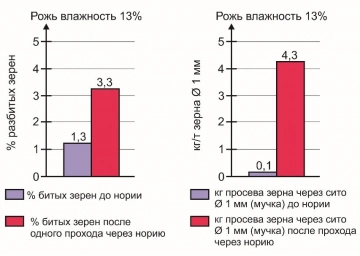
Fig.5. Macrotrauma of grain during a single pass through a bucket elevator (capacity of the bucket elevator is 50 t/h, bucket speed is 2.5 m/s) [5].
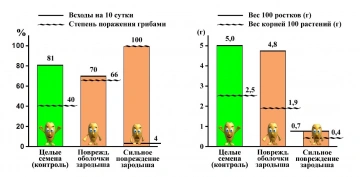
Fig.6. The intensity of initial growth and infection of rye seeds by fungi (Chazov S.A.) [6].
Scheme of cleaning and calibration of rye on OKMF Compact 1-2
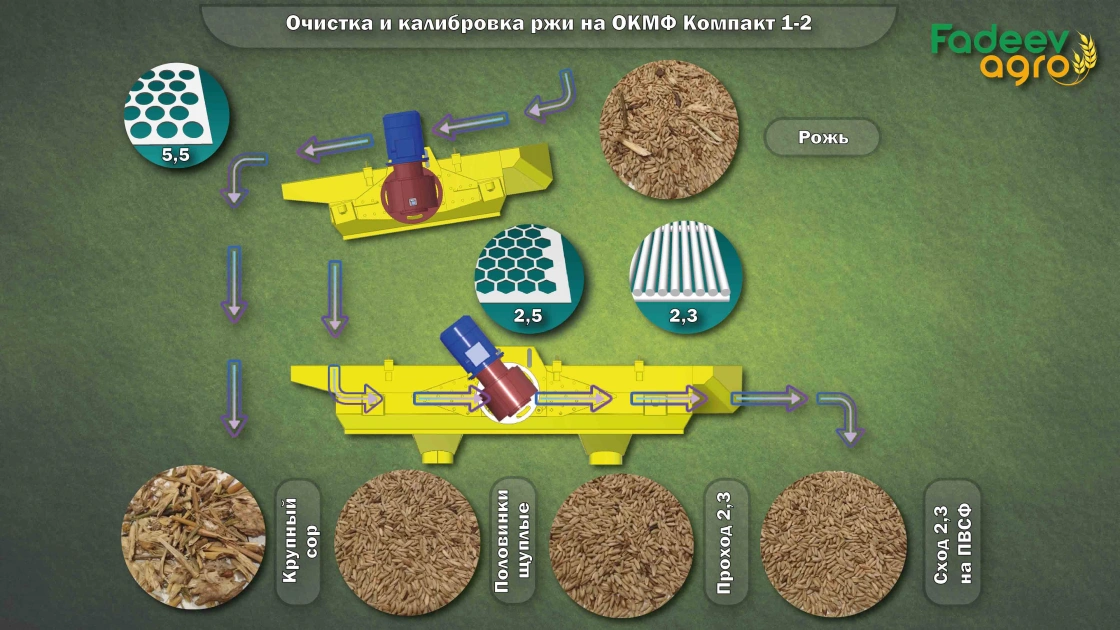
the litter is cleaned on sieves with round holes 5.5, then the rye is cleaned and calibrated on sieves with hexagonal holes 2.5 and sieves 2.3
The difficulty in cleaning rye is that it splits in half. There are few halves in the seeds, since they appeared only as a result of threshing by a combine, and it did not reach subsequent traumatic machines. Half of the rye is removed on sieves with a hexagonal shape on Fadeev sieves with a characteristic size of 2.5.
The large fraction of 2.3 is sent to PVSF for density separation into heavy and light fractions.
Separation by density of rye seeds on PVSF

Thus, at a plant for the production of strong seeds (gentle fractional technology), it is possible to prepare seeds for sowing any agricultural crops without injury and with high sowing and yield potential.
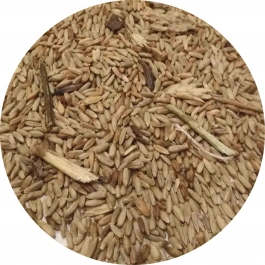
Source material
Drain, round sieve 5.5 OKMF
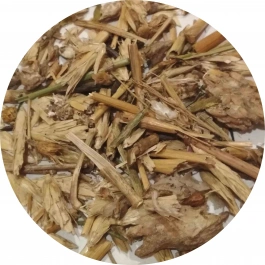
Large litter
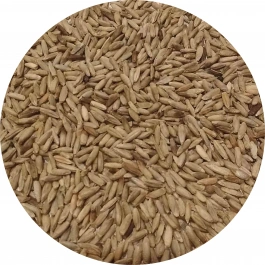
Pass sieve hex. 2.5 OKMF
The halves are puny
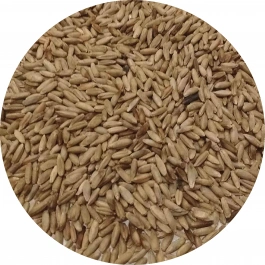
Pass sieve 2.3 OKMF
Sieve drainage 2.3 OKMF
On PVSF
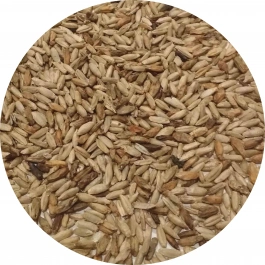
Light fraction PVSF
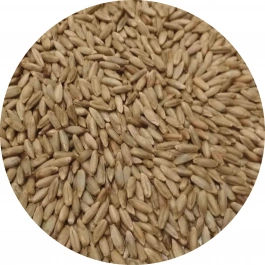
Heavy fraction PVSF
List of used literature:
- https://ru.wikipedia.org/wiki/%D0%A0%D0%BE%D0%B6%D1%8C
- G.I. Podpryatov, candidate of agricultural sciences; NUBiP, N.M. Voloshchuk, Ph.D.; NUBiP, N.O. Yashchuk, aspirate, NUBiP. Rye seeds without fungal attack./ G.I. Podryatov, N.M. Voloshchuk, N.O. Yashchuk//Grain. – May 2009. – P. 102-108.
- Alexey Orlov, Candidate of Agricultural Sciences. Winter rye-3, current technology./ Orlov A.//Grain. – pp. 75-79.
- Natalia Bunyak, director of the Institute of Agricultural Microbiology and Agro-Industrial Production of the National Academy of Sciences of Ukraine. So that the rye is not mowed down by old-timers and illegal immigrants./Bunyak N.//Grain. – P. 80-81.
- M.M. Tukhvatullin “Improving the quality and ensuring the safety of grain during processing and storage by using polymer materials in equipment, silos and bunkers.” (official website address: agropolimer1993.ru).